State-run development finance is behind 80 per cent of infrastructure funding in Africa, with China heading the list of investors, according to a report.
Despite steady growth in private sector funding in the past decade, the grip of the public sector could tighten further, with the Export-Import Bank of China having pledged $1tn to Africa in the coming decade, according to analysis by Baker & McKenzie, a law firm, and the Economist Corporate Network.
The Chinese lender’s pledge, if it materialises, would dwarf the investment flows currently provided by all public and private bodies globally.
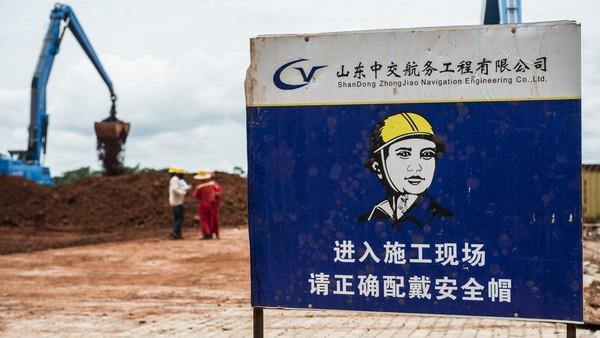
Chinese institutions are already the largest single source of funds for African infrastructure, accounting for $13.4bn in 2013, the most recent year for which data are available, according to the report, Spanning Africa’s Infrastructure Gap, to be published on Monday.
But that could yet prove a drop in the ocean. Zhao Changhui, chief country risk analyst at the Export-Import Bank of China, told a conference in 2013 that his country would invest $1tn in the continent in the coming decade.
Zhao reiterated that commitment when questioned by Herman Warren, Africa chief economist for the Economist Corporate Network and author of the report.
In particular, Zhao said that as a result of China’s “one belt, one road” initiative, east African countries such as Ethiopia, Kenya and Tanzania were starting to receive more attention.
Calvin Walker, global head of project finance at Baker & McKenzie, said “there is not a lot of visibility on these numbers, but Chinese investment is clearly significantly disproportionately large compared to the money coming in from other countries.”
Overall, the report found that development capital funding for African infrastructure totalled about $328bn between 2009 and 2014, some $54bn a year.
However, commercial lending is estimated to account for only an additional $9bn-$12bn a year, well below the projected $23bn cost of Crossrail, a single transport project in London.
In total, the annual flows are markedly below the $90bn a year of infrastructure investment that the World Bank estimated in 2009 was required in sub-Saharan Africa alone.
“Put bluntly, Africa cannot fulfil its economic potential without more and better infrastructure, particularly in the power, transport, and water and sanitation sectors,” said Gary Senior, chair of
Baker & McKenzie in the region. “This needs funding one way or another for the ‘Africa rising’ growth narrative to come to fruition.”
The World Bank has estimated that Africa’s infrastructure gap reduces productivity by 40 per cent, cutting economic growth by 2 percentage points a year.
Analysis of 2013 suggests that flows from development institutions that year were $44bn, with the private sector contributing an additional $9bn.
Asia accounted for the lion’s share of the public money, some $15.9bn, with China accounting for $13.4bn of this, well ahead of Japan, the next largest investor, at $1.5bn. Multilateral development banks, the Americas and Europe also invested significant sums, ahead of the Middle East and Africa’s own regional development banks.
South Africa, Egypt, Nigeria, Morocco, Kenya, Ethiopia and Ghana have received more than 70 per cent of development finance institution funding since 2009.
Marc Fèvre, a Baker & McKenzie partner focused on project development and financing, argued there was a “huge amount” of commercial, private sector money earmarked for African infrastructure, but those investors such as private equity groups “can’t find projects that meet their expectations”.
“We are increasingly seeing interest from private equity groups but the returns are not commensurate with the risk. There are not enough bankable projects,” added Mr Walker.

Join BusinessDay whatsapp Channel, to stay up to date
Open In Whatsapp