Analysis of Tax Collection per State for Nigeria.
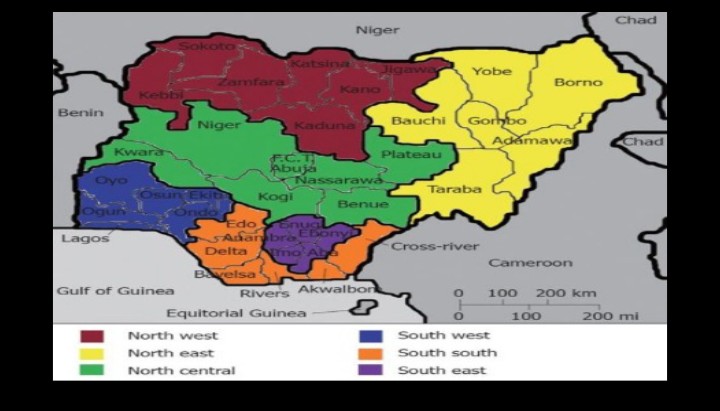
When people talk about taxation in Nigeria, the conversation usually stays at the federal level. But the real differences show up at the state level. Across Nigeria’s 36 states and the FCT, tax performance is not evenly spread at all. In reality, only a handful of states are responsible for the majority of internally generated revenue. Most others still rely heavily on monthly allocations from Abuja, in some cases covering between 70 and 90 percent of their budgets. This imbalance is one of the main reasons the IMF keeps pushing for subnational tax reform. The strength of Nigeria’s economy is not just about federal revenue—it depends heavily on whether states can fund themselves.
Lagos and a Few Others Are in a League of Their Own.
At the top of the list is Lagos State, and it is not even close. In 2024, Lagos generated about ₦651 billion in internal revenue, which represents roughly three-quarters of all internally generated revenue across Nigerian states. What makes Lagos different is not just population or size—it is structure. The state has built one of the most advanced subnational tax systems in Africa. Through the Lagos Internal Revenue Service, tax collection is integrated with banks, telecoms, and corporate registries. PAYE compliance in the formal sector is estimated to be as high as 85 percent. Beyond income tax, Lagos also generates significant revenue from property taxes, land use charges, consumption taxes in hospitality, and business operations. Lagos treats taxation as economic survival, not policy choice. That mindset alone separates it from most other states. Rivers State comes next with about ₦226 billion in IGR in 2024. Its advantage comes from its industrial and oil-linked economy. Oil and gas servicing companies, ports, and corporate operations form a strong tax base. The Rivers Internal Revenue Service is known for aggressive enforcement, particularly around withholding tax and company income tax.
The Federal Capital Territory also performs strongly, generating about ₦160 billion, largely due to its concentration of federal workers, formal businesses, and high-value property taxes. Abuja benefits from structure and income density more than industrial activity. Ogun State has also emerged as a quiet success story, generating around ₦120 billion. Its proximity to Lagos has turned it into an industrial corridor. Manufacturing plants, logistics hubs, and factories have created a steady corporate tax base that continues to grow.
The Middle Performers Are Improving, but Slowly.
A second group of states—including Delta, Kwara, Kaduna, and Edo—sit in the middle range, typically generating between ₦60 billion and ₦90 billion annually. These states are not necessarily resource-rich, but they are beginning to build systems that work. Kaduna and Kwara, for example, have invested in digitizing tax collection and improving taxpayer registration. Edo has focused on property taxation and internal levies, while Delta benefits from oil-related business activity. What stands out in this group is growth potential. Many of these states are increasing their internally generated revenue by 20 to 30 percent annually simply by improving administration and data systems, not by raising tax rates.
Then There Are the Low Performers.
At the other end of the spectrum are states such as Bayelsa, Ebonyi, Taraba, Yobe, Kebbi, and Zamfara. Many of these states generate between ₦8 billion and ₦15 billion annually, and some even less than ₦1 billion per month. Their economies are smaller, more informal, and less industrialized, but the bigger issue is administrative capacity. Weak tax systems, limited data on properties and businesses, and political interference all contribute to low performance. In many cases, there is no reliable property database or structured collection system. This creates a serious long-term risk. If federal allocations reduce or become less predictable, these states will struggle to sustain basic services like salaries, healthcare, and infrastructure without external support.
The Real Pattern behind the Numbers.
Once you look across all states, a few clear truths emerge. Urban and industrial states consistently outperform rural ones. Lagos, Rivers, Ogun, and the FCT all benefit from dense economic activity, formal employment, and corporate presence. That economic structure naturally produces more taxable income. Technology also matters more than population. Lagos and Kano are often compared because both have large populations, but Lagos collects several times more revenue. The difference is not people—it is systems, digitization, and enforcement. Property tax remains one of the most underused revenue sources in Nigeria. In many states, land and real estate are either poorly documented or not effectively taxed. Estimates suggest Nigeria loses trillions of naira annually from uncollected property-related revenue alone. At the center of all of this is a deeper issue: dependence on federal allocation. Most states still rely heavily on monthly transfers from Abuja, which reduces the urgency to build strong internal systems. The IMF’s concern is that this model is not sustainable in the long run.
What Tax Reform Looks Like at the Local Level.
Beyond the big economic numbers, the real impact of tax reform happens at the community level.
A functional tax system at state or local government level does not begin with higher rates. It begins with structure, trust, and visibility. The first step is expanding the tax base. Many businesses and properties still operate outside formal registration systems. Using tools like national identity data and banking records to register businesses properly can significantly widen the base without increasing pressure on existing taxpayers. The second step is eliminating multiple taxation. In many communities, small businesses pay several overlapping levies to different agencies. A single, unified digital payment system would reduce harassment and improve compliance because people would know exactly what they owe and why. The third step is visibility. Citizens are far more likely to pay taxes willingly when they can see where the money goes. Fixing a market road, equipping a clinic, or improving a school—and clearly showing that it was funded through local taxes—has a far stronger impact on compliance than enforcement alone.
The Bigger Picture.
Nigeria’s tax challenge is not just about numbers. It is about structure and trust. States like Lagos show what is possible when systems are taken seriously. Others show what happens when tax administration is weak or underdeveloped. The gap between high-performing and low-performing states is not just financial—it is developmental. It affects infrastructure, healthcare, education, and long-term economic opportunity. At the core, taxation is not simply a government function. It is a reflection of how organized an economy is. And in Nigeria today, that organization is uneven.
Final Thought
Taxation is often treated as a burden, but at its core, it is a form of participation in how a society is built. The real question is not whether states should collect more tax. It is whether they can build systems that make people willing to pay it. Because when citizens see results, compliance increases naturally. When they don’t, no policy is strong enough to force it. The future of Nigeria’s fiscal stability will not be decided in Abuja alone. It will be decided in Lagos markets, Rivers industrial zones, Ogun factories, and even the smallest local governments where trust between citizens and government is either built—or broken.
The 2026 Tax Efficiency Gap
According to Hussaina Umar, The NRS must bridge a ₦12.41 trillion gap this year without necessarily raising tax rates. The solution lies in the “Unified Tax ID” and real-time transaction tracking.
Metric
2025 (Actual)
2026 (Target)
% Growth
Total Revenue
₦28.3 Trillion
₦40.71 Trillion
+44%
Active Taxpayers
~1.2 Million
Targeting 10M+
733% Potential
Enforcement Style
Random Audits
Risk-Based Profiling
N/A
Conclusion
Lagos ranked highest in VAT generating States in Nigeria, based on data collected in 2024 from VAT contribution reports based on FAAC/Agora Policy figures. A summary of the data is captured below:
Lagos generated about ₦2.75 trillion, far ahead of every other state.
Rivers was second with about ₦832.69 billion.
Oyo ranked third with about ₦272.41 billion.
The lowest reported contributors were Imo, Abia, and Kebbi
The lower contributing states need to improve on their internal generated revenue drive. Recent data from Imo and Abia tell a much better story, based on 2025 and 2026 reports.
For more information, clarifications and support, Contact Prof. Prisca Ndu on +234 8033086190 or [email protected]

Join BusinessDay whatsapp Channel, to stay up to date
Open In Whatsapp