The rituals of British democratic practice are watched with faint bemusement by outsiders who often do not understand what is going on, such as the fiery cut and thrust of Prime Minister’s Question Time. Interviews with television anchors who are themselves potentates are like the aggressive thrust of a knife pointed at a poor Minister’s throat.
The original ‘Night of the long knives’ in British politics occurred in 1962 when Prime Minister Harold MacMillan, under pressure, ruthlessly sacked seven members of his cabinet, including his Chancellor of the Exchequer Selwyn Lloyd, in one fell swoop.
22nd November 2009 was another ‘Night of the long knives.’ This was the day Margaret Thatcher was forced by a palace coup to leave 10 Downing Street. The day before, she had held individual meetings with members of her cabinet. It became clear to the Iron Lady that they were all ready to stab her in the back. On the 22nd she capitulated, announcing her resignation in a live broadcast. She was in tears, as were several of her supporters and admirers across the nation. At the same time, many people who hated her guts in London and other places were opening magnums of champagne to celebrate the end of the Thatcher era.
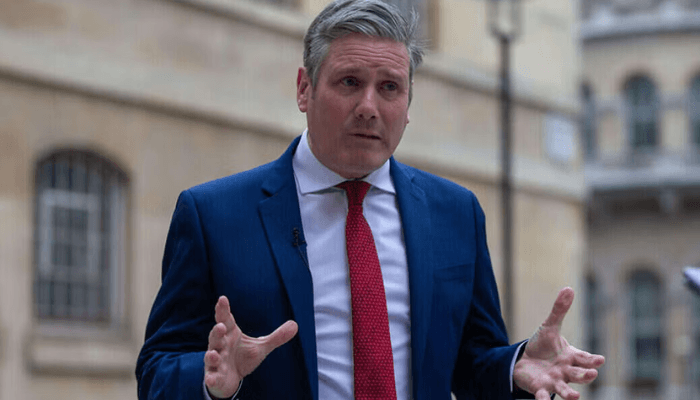
On another 22nd , this time in June 2026, Sir Keir Rodney Starmer, Prime Minister of the United Kingdom since 5th July 2024, stood in front of Downing Street to announce his resignation from the leadership of the Labour Party, and eventually from the position of Prime Minister.
Starmer was a buttoned up, earnest man who looked like the civil servant sitting next to you in the Underground, having a polite conversation about the weather on a regular morning as you both headed to the office. He wore the same dapper suits that he must have worn two decades ago when he served as the Director of Public Prosecution.
This time, for the first time, his voice broke, and he held back the tears. He announced to his countrymen he would be leaving office to do the most important work in his life – to spend time with his long-suffering wife and his children. He stepped away from the lectern to embrace his wife, who was standing in the shadows, with tear-laden bags under her eyes.
Word had gone out since the previous day that the Sir Keir was going to leave, at last, despite his oft-repeated mantra that he would not quit his landslide mandate.
He had come into office with high expectations two years ago, promising positive change for a country which had experienced severe difficulties under a long stretch of Conservative rule latterly characterised by instability and frequent change of leadership. There were economic difficulties following COVID and BREXIT.
Illegal Immigration was out of control, and the NHS was in shambles.
It appeared that the stage was set for a long period of Labour rule to bring peace and harmony to the land.
Sir Keir had prepared himself. He was brimming with ideas reminiscent of New Labour – the so-called Third Way associated with Tony Blair. Sir Keir wanted to get Britain working again. He wanted to tighten up on freebies and the freewheelers burdening Social Security, who were draining the public’s purse. Under pressure from a mercurial Donald Trump, he wanted to increase Defence spending. Doctors wanted more money. He wanted to pre-empt agitation by offering them an increase even before they started to agitate. He did. The agitation still came, because they wanted more, as did every other sector.
Sir Keir had committed himself from the outset to be different from the traditional ‘tax-and-spend’ Labour leader. He courted the City. He wanted the economy to grow.
Since he needed more money for NHS, Defence and sundry other urgent matters, it was a no-brainer that he would have to make cuts somewhere. These would be painful, he warned, as he began, though the pain would ease as his government grew the economy over time.
Every time Sir Keir announced a cut somewhere, howls of outrage arose everywhere, especially from his own back benchers. He was going against the Holy Grail of Labour. Fuel Winter cuts would freeze the elderly to death in their homes because they could not afford the heating. Welfare cuts would be neglecting the fundamental commitment to the poor. Requiring people on Welfare to show rigorous proof that they could not work was demonising people with mental health problems. And so on.
Sir Keir, sadly, lacked the spine to muscle through the implementation of his theoretical convictions. It proved his undoing. The howls on his Left flank forced him into U-turn after U-turn. In the end he came across as an irresolute ditherer.
Pilloried on the left, mocked relentlessly for his flim-flam from the Right by a perpetually adversarial Kemi Badenoch, leader of the Conservative Opposition, he had a growing image problem that was painful for those who believed in his cause to behold. All too soon, his party was bleeding support across the land, and his approval ratings were in the doldrums.
Achievements, such as there were, included calibrating the transatlantic relationship with Donald Trump, not getting Britain dragged into the Iran imbroglio, supporting Ukraine, recognising Palestine even as he supported the right of Israel to exist – all of these began to pale beside the image of the ambivalent leader, ready to U-turn, unable to deal with a declining economy and a fractious party.
Sir Keir liked to be liked, which was not always a virtue for a leader facing, and trying to execute, tough choices.
Soon, his nemesis Andy Burnham will take charge. The euphoria will abate.
Labour will borrow more, and tax more, especially the rich.
Looking in the crystal ball, the Budget will struggle. Labour will lose the next election.
Even that will not be the end of the story.
There is never an end to the story in politics.

Join BusinessDay whatsapp Channel, to stay up to date
Open In Whatsapp