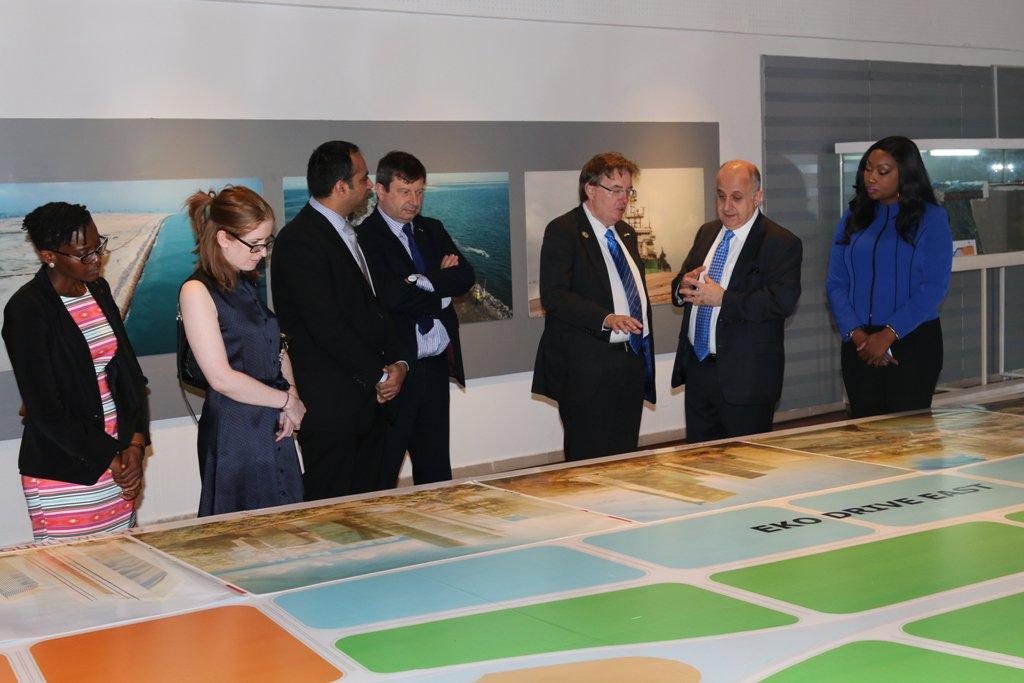
John Howell, the new British Prime Minister’s Trade Envoy to Nigeria, says he targets to push up the value of UK trade with Nigeria. Checks show the value of UK bilateral trade with Nigeria currently stands at £7 billion, which experts say can be expanded to £20 billion before 2020.
Howell says his target is to increase prosperity in Nigeria, saying that UK is still a member of the European Union (EU), having triggered Article 50 that gives the country two years to negotiate with the EU.
This was said at a breakfast meeting organised by the Nigerian-British Chamber of Commerce (NBCC) last week in Lagos.
According to Howell, there are yet untapped opportunities entrepreneurs of both countries can latch onto, as the UK is in the top 10 of the globally competitive countries and is home to 18,000 Nigerian students.
The trade envoy further says Nigeria offers UK entrepreneurs enormous opportunities, being the biggest economy in Africa, and expected to grow phenomenally by 2030, saying, “the UK is ready to assist President Buhari’s anti-corruption. We believe that corruption is bad for Nigeria and is bad for the UK.”
He says tackling corruption will help reduce poverty and inequality in the country, urging the government to develop an operating environment that is fairer and more predictable.
“Our bilateral relation is strong. It cannot be altered by Brexit. UK can support Nigeria through the Department for International Trade (formerly UK Trade and Investment). UK wants to continue doing business in Nigeria, because Nigeria’s success matters to the UK,” he adds.
On his part, Yaw Nsarkor, CEO, Unilever Nigeria plc, says Nigerian businesses can build competitive models in these challenging times by focusing on consumers, embarking constantly on short-term planning cycles, while eliminating complexity and integrating the value chain.
According to Nsarkor, Nigerian businesses must focus on competing effectively, rather than constantly asking the government to shut doors on other countries in order to grow.
“No country in the world has any reason to set up for itself systems that are short of world class. When we keep protecting, people will find other means of bringing in what we protect. You do not build prosperity through mediocrity. This is why businesses must now change their models by focusing on customers. Be humble enough to learn from others,” he says, adding that businesses should pay less attention to what the government or the central bank does but concentrate on building models to suit the country currently challenged by dwindling oil revenue, forex scarcity, insecurity, and rising inflation.
Adedapo Adelegan, president, Nigerian-British Chamber of Commerce, says Nigeria and the UK are yet to tap potential in both countries, stressing that British export to Africa’s largest economy can do a lot better, just like Nigeria’s export to the country is still a scratch.
Adelegan adds that the chamber will continue to look at areas of improving trade between both countries, while bringing better offerings to members.

Join BusinessDay whatsapp Channel, to stay up to date
Open In Whatsapp