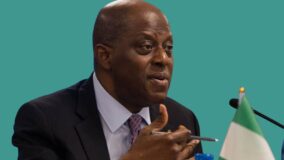
Trade experts from the European Union want Nigerian manufacturers to eschew protectionism and support moves that will enable them tap into global opportunities.
According to these experts, who spoke at the international investment forum organised by the Lagos Chamber of Commerce and Industry (LCCI) last week, local manufacturers need to support the Economic Partnership Agreement (EPA) that will enable them to import quality machinery and inputs at cheaper rates.
“EPA will play a positive role in importation of machinery and raw materials,” said Michel Arrion, European Union Ambassador to Nigeria.
“If Côte d’Ivoire can export two million tonnes of cocoa, why not Nigeria? If they are able to export 400,000 tonnes of cashew, why not Nigeria? There are still opportunities in cocoa, like in rubber, palm oil, where Nigeria can invest a lot for international market. What you need to process cocoa is the machinery, which the EPA offers. The import duties will be progressively dismantled,” said Arrion.
According to John Clarke, director, International and Bilateral Relations for the EU, Nigeria needs to learn the European industrialisation model, which is more sustainable than what is obtainable in China or Indonesia. Clarke based his argument on the fact that the Chinese and even the Indonesian industrialisation models have come at a high human and environmental costs.
He said Nigeria and Europe will continue to be partners without EPA, but reminded Nigerian exporters that their products could face the World Trade Organisation (WTO) tariffs without the agreement.
The EPA is a free trade agreement between the Economic Community of West Africa States (ECOWAS) and the European Union (EU), which will enable the Europe to open its market completely from day one, while West Africa will remove import tariffs only partially over a 20-year transition period.
One of the elements of the EPA is that manufacturers in West Africa will have improved access to inputs, and can produce goods for exports to Europe using materials sourced from other countries without losing the free access to the EU.
Abiodun Adedipe, chief consultant at Biodun Adedipe and Associates Limited, said the EU is competing with China in Nigeria and the country is looking for who will bring a better value.
He urged the government to recognise that agriculture is now a business, stressing that Nigeria should be clear on what it wants.
Nike Akande, president of Lagos Chamber of Commerce and Industry (LCCI) , said with the oil market slump, Nigeria now needs to build a non-oil economy, which is inclusive, integrated, more stable, more growth-oriented and sustainable.
Akande said she is hopeful that the efforts of the Federal Government, including the Ease of Doing Business Committee being set up, will inspire productivity and competitiveness.
Reuben Bamidele, representative of the United Nations Industrial Development Organisation (UNIDO), said for economic diversification to gain traction, government must build infrastructure such as roads and rails, urging the present administration to invest in industrial parks.
“At a time like this, investors are not averse to any country. They move to where returns and profits are high. The environment has to be good. Economic diversification does not happen by chance. It requires a deliberate intervention by the Economic Management Team,” Bamidele said.

Join BusinessDay whatsapp Channel, to stay up to date
Open In Whatsapp