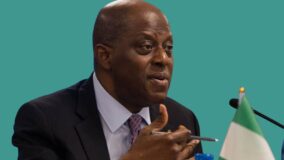
The drop in foreign direct investment (FDI) inflow to Nigeria may not be unconnected with the inadequate alignment of the country’s fiscal and monetary policy structure to unlock its economic opportunities, according to the Nigerian Economic Summit Group (NESG).
Laoye Jaiyeola, chief executive officer, NESG, made this submission while speaking on “NESG and the advocacy for an inclusive Nigerian economy”.
According to Jaiyeola, Nigeria has not achieved much in a robust monetary policy, as the issues of liquidity in the foreign exchange management persist alongside multiple exchange rates.
He called on the federal government to open its economic management strategy, which will provide clarity for investors and achieve an effective public-private sector partnership.
The NESG CEO described as a welcome development the advocacy role played in the actualisation of the Petroleum Industry Act (PIA), for the oil and gas industry. He called for transparency in the industry, especially with the incorporation of the state-owned oil company, Nigerian National Petroleum Corporation (NNPC).
Minister of finance, budget and planning, Zainab Ahmed, however, was of the opinion that more emphasis should be placed on the non-oil sector of the economy.
She stated that the country posted positive growth in Q1 and Q2 of 2021, representing the country’s strongest exit from recession since 2021 while the non-oil sector contributed most to this growth.
Read also: How businesses can deliver exceptional payment experiences to customers
She, however, stated that regardless of the current growth could be termed ‘fragile’ as deviation from the non-oil sector to total dependence on the oil sector could create a relapse in the country’s current growth.
For the business environment, Jaiyeola acknowledged the efforts of NESG, which led to the signing of the CAMA Act 2020, but stated that socio-economic issues like insecurity, epileptic power supply, and the multiplicity of tariffs must be addressed.
He believed that for the nation to move forward, the mutual distrust between the public and private sectors would have to be drastically reduced to enable strategic partnerships for socio-economic development.
“The public sector looks at the private sector and says they are coming to take our commonwealth, while the private sector looks at the public sector and believes that they are just stealing our money. We need to go beyond that mutual distrust”, he added.
Jaiyeola believed that it would take an “elite consensus” to lead Nigeria on the path of economic stability, through effective social safety nets, access to basic education, and pragmatic poverty alleviation measures.

Join BusinessDay whatsapp Channel, to stay up to date
Open In Whatsapp