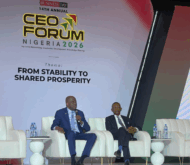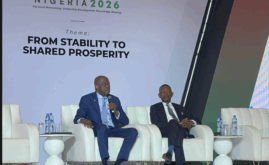
African businesses seeking to scale across the continent continue to face major structural barriers ranging from poor logistics and weak financing systems to limited investor confidence, despite growing optimism around regional trade integration and digital innovation.
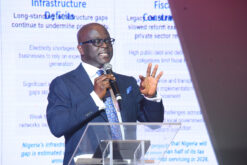
This formed the centre of discussions at the Arcadia Africa Day 2026 Conference held in Lagos on Friday, where finance executives, venture capital investors, wealth managers and cross-border trade experts examined the realities confronting African businesses trying to expand and attract funding.
The panels highlighted that while initiatives such as the African Continental Free Trade Area (AfCFTA) are opening new possibilities for intra-African trade, infrastructure bottlenecks, high borrowing costs and fragmented financial ecosystems continue to constrain growth for small and medium-sized enterprises (SMEs).
Logistics remains biggest trade barrier
Speaking during a panel session, Omodola Aderibigbe, head of Africa Business and Structured Finance at Wema Bank, said “logistics not access to finance,” remains the single biggest obstacle to African cross-border trade.
He cited a case in which a Nigerian commodities supplier lost competitiveness in Kenya because shipping products from Europe was cheaper and faster than shipping goods from Nigeria.
“The buyer said it was cheaper for him and faster for him to bring it in from Europe than from Nigeria. Lead time from Nigeria is over 40 days, but from Europe you get it in less than two weeks,” he said.
According to him, African businesses continue to struggle with multiple customs checkpoints, illegal road stoppages and inefficient transport systems across borders.
He said that despite the existence of regional frameworks such as ECOWAS and AfCFTA, implementation challenges continue to slow regional integration.
The finance experts argued that African economies have become too accustomed to “working around” problems instead of solving them structurally, warning that resilience alone cannot sustain long-term growth.
Power, trust and infrastructure gaps slowing growth
Waliyah Abiola, executive managing director of Hendecagon Consulting Group, said African governments must deliberately create enabling environments for businesses through stronger regulation, infrastructure investment and improved digital systems.
“Digital infrastructure needs to be better. Everything needs to be interconnected and cyclical because governments need to foster an environment policy-wise, regulation-wise and compliance-wise to boost commerce,” she said.
She added that many SMEs also fail to maintain proper financial records and governance systems required to attract investors.
“Capital markets need to be stronger. We don’t have enough angel investor networks and there is still a major trust gap,” she said.
Cultural barriers still affecting African trade
Farida Alabo, chief executive officer of Trifecta Management Services Limited, said language and colonial divisions still affect how African businesses collaborate across borders.
According to her, tensions between Anglophone and Francophone African markets continue to create unnecessary business barriers.
“One of the big barriers we have is this almost colonialist idea embedded in us. If you’re Francophone, you’re better than Anglophone, or vice versa,” she said.
She argued that speaking multiple languages should be seen as a bridge-building tool rather than a threat to identity.
Investors now prioritise structure over hype
The conversations also examined why African SMEs continue to struggle with financing despite growing global interest in African innovation.
Arnold Dublin-Green, managing director of RC Asset Management Limited, explained that Nigerian banks are heavily incentivised to lend to the government rather than businesses because treasury bills currently offer returns as high as 20 to 22 percent.
“If I buy a treasury bill yielding 20 to 22 percent, the incentive to lend to a business is actually quite low,” he said.
He described the situation as a “crowding out effect,” where heavy government borrowing reduces private sector lending.
According to him, many SMEs cannot survive borrowing at interest rates approaching 30 percent, noting that investors are increasingly demanding stronger governance, transparency and evidence of sustainable business models before committing capital.
“The first thing is transparency,” Dublin-Green said. “A lot of businesses want money but are not necessarily open with their books.”
He explained that investors increasingly require regular financial reporting, governance structures, cash flow visibility, compliance systems, and operational transparency.
Venture capital is becoming more selective
Olu Oyinsan, founder of Oyi Capital, said the African startup funding environment has become significantly tougher than it was between 2018 and 2021 when foreign capital flowed aggressively into emerging markets.
According to him, only the top five to 10 percent of startups now attract funding easily.
“For the remaining 90 percent, it’s harder than ever before because the market has become more selective,” he said.
He explained that global investors are no longer funding weak business models simply because they are tech startups.
“There’s simply more money around there,” Olu said. “People invest in what they understand.”
He explained that many African entrepreneurs still rely heavily on friends-and-family funding, bootstrapping, cooperative societies, and informal support systems.
SMEs remain backbone of African economy
Despite growing attention around billion-dollar startups and venture capital, the speakers all stressed that SMEs remain the true backbone of African economies.
Oyinsan warned against overfocusing on “unicorn” startup narratives while ignoring small businesses that drive employment and commerce.
“Most of the SMEs that actually employ people and move economic growth forward are not tech startups,” he said.
Adding her voice to the significant role of SMEs in Nigeria’s economy, Feyisayo Alayande, chief executive officer of Lagos State Employment Trust Fund, said SMEs contribute about 46 percent of Nigeria’s gross domestic product, account for 96 percent of businesses in the country, and provide roughly 88 percent of employment across states.
“When we all speak about the unemployment numbers in Lagos, solving that problem lies with the SMEs. So if you’re an investor who has said a ‘no’ to an SME owner, please reconsider, because you’re probably denying the 10 jobs and 20 jobs that would be benefited from that SME you’re supporting,” Alayande said.
The speakers called for African governments, investors and business leaders to focus on practical reforms that improve logistics, infrastructure, financing access and investor confidence across the continent.

Join BusinessDay whatsapp Channel, to stay up to date
Open In Whatsapp