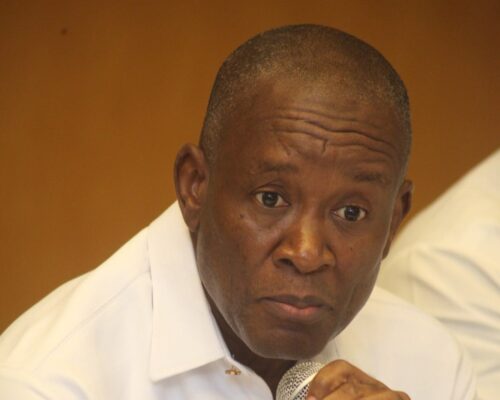
The federal government has introduced a new industrial policy aimed at reviving dormant factories, strengthening domestic manufacturing, and repositioning Nigeria as a competitive industrial hub.
John Owan Enoh, minister of state for industry, announced the framework during an engagement with the Nigerian Guild of Editors. He said industrialisation remains central to Nigeria’s economic transformation, adding that trade and investment alone cannot deliver lasting prosperity without strong productive industries.
The policy aligns with President Bola Tinubu’s ‘Renewed Hope’ agenda, with a focus on local content, import substitution, and industrial self-sufficiency.
Enoh said he recently visited inactive factories that once operated successfully to identify operational challenges and develop strategies to restore them under the new framework.
The policy introduces a structured implementation plan with defined timelines, responsibilities, and measurable outcomes.
Ayo Omotayo, director-general of the Nigerian Institute for Policy and Strategic Studies, said weak execution undermined past industrial policies. He noted that the new framework addresses this gap through clearer accountability and delivery mechanisms.
Bank of Industry recapitalisation, funding expansion planned
The framework proposes recapitalising the Bank of Industry to N3 trillion and increasing sector-specific intervention funds to the same level.
It also targets annual industrial development spending of between 3 percent and 5 percent of gross domestic product.
Other measures include:
- Enforcing the ‘Nigeria First’ policy to promote locally made goods
- Reducing dependence on imported raw materials
- Expanding access to low-interest financing for small and medium enterprises
- Harmonising tax systems and incentives
- Establishing industrial clusters with shared infrastructure and energy
These measures aim to lower production costs, improve competitiveness, and attract new investment.
Skills development, private sector partnerships included
John Uwajumogu, special adviser to the president on industry, trade and investment, said the policy will drive faster industrial growth to match Nigeria’s expanding population.
He said an industrial revolution working group will coordinate implementation and ensure stakeholder alignment.
Officials also plan to expand vocational training and partnerships with technical institutions to address skills shortages in manufacturing.
The government said it will strengthen collaboration with the private sector to attract investment, encourage joint ventures, and promote technology transfer.
Stakeholders identified energy shortages, limited financing, bureaucracy, and weak patronage of local products as major barriers. Economists said the policy’s success will depend on political will, structured financing, and consistent implementation.

Join BusinessDay whatsapp Channel, to stay up to date
Open In Whatsapp