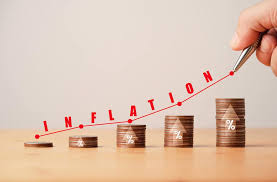
Analysts have projected a rise in inflation for April 2026, which has reinforced expectations that the Central Bank of Nigeria (CBN) will likely retain its benchmark interest rate at the next Monetary Policy Committee (MPC) meeting in May.
Analysts forecast that headline inflation will rise further in April after March halted the country’s eleven-month disinflation streak, suggesting that the inflation battle remains far from over, despite months of aggressive monetary tightening.
Meristem Research projects April headline inflation at 15.89 percent, while the Financial Markets Dealers Association (FMDA) expects a steeper increase to 16.42 percent, compared with the 15.38 percent recorded in March.
Read also: Nigeria seen holding rates despite inflation risks from oil windfall
Adding to the growing consensus, Bismarck Rewane, chief executive officer of Lagos-based consultancy Financial Derivatives Company (FDC), said inflation could rise to 16 percent in April, reinforcing expectations that consumer prices remain under pressure.
“The rising prices are a result of the pass-through effect of petrol prices that have risen more than 50 percent. That has also increased food prices, piling pressure on household spending,” Rewane said.
He added that the Central Bank of Nigeria is likely to leave its benchmark interest rate unchanged at its MPC meeting scheduled for May 19 and 20, while continuing to rely on liquidity management tools such as open market operations to contain inflationary pressures.
The outlook significantly reduces the possibility of a near-term rate cut, while also leaving policymakers to weigh whether inflation pressures are severe enough to justify further tightening.
Nigeria had shown encouraging signs of inflation moderation in recent months, raising cautious optimism that the CBN’s restrictive monetary stance was beginning to deliver results. That optimism was interrupted in March.
According to the National Bureau of Statistics (NBS), headline inflation rose to 15.38 percent in March from 15.06 percent in February, ending an eleven-month disinflation streak. The rise was driven by increases in both food and core inflation, indicating broader cost pressures across the economy.
Food inflation accelerated sharply to 14.31 percent from 12.12 percent, driven by higher logistics costs and tighter seasonal supply of staples, including pepper and tomatoes.
Core inflation also rose for the first time in nine months to 16.21 percent from 15.88 percent, reflecting increased transport and service-sector costs. Restaurant and accommodation inflation surged to 25.17 percent from 17.02 percent, while transport inflation climbed to 16.89 percent from 14.70 percent.
Meristem said, “Against this backdrop, we expect headline inflation to rise further on a year-on-year basis in April, primarily driven by sustained increases in both core and food inflation.”
FMDA projects a sharper increase to 16.42 percent, citing elevated domestic energy prices, food inflation, and risks of imported inflation.
Despite expectations of higher annual inflation, analysts note that month-on-month price acceleration may ease compared with March’s spike.
FMDA expects month-on-month inflation of 2.78 percent in April, below March’s 4.18 percent.
Meristem also said month-on-month pressures could soften due to the high base effect from March and relatively more stable energy movements later in April.
A slower monthly increase would suggest inflation pressures remain elevated but are not accelerating uncontrollably.
Exchange rates provide some relief
One factor helping to moderate inflation is the exchange rate. Both analyst reports noted that the naira appreciated modestly in April.
Meristem said the local currency strengthened by 1.42 percent month-on-month, averaging N1,361.51/$, compared with N1,381.18/$ in March. FMDA reported a similar average exchange rate of N1,361.22/$, reflecting a 1.36 percent appreciation.
This improvement could help soften imported inflation pressures, especially for foreign exchange-dependent goods. But analysts say the gains are unlikely to fully offset the impact of rising fuel and food costs.

Join BusinessDay whatsapp Channel, to stay up to date
Open In Whatsapp