He rode to power last year on the crest of his crusade to rid Nigeria of corruption. President Muhammadu Buhari came into office at a time when Nigeria was writhing under the excruciating pain of economic woes occasioned by many years of mismanagement of stupendous wealth that had accrued to the country through crude oil sales; it was also a time when a few public office holders emptied the commonwealth into their pockets; corruption had been elevated to state-craft, and these were done with impunity.
President Buhari also came to the stage when the Economic and Financial Crime Commission (EFCC) and other graft-fighting agencies had been compromised, and the judiciary so pocketed by corrupt politicians, that judgment is never secured against any of the high profile individuals paraded before the television cameras as looters of the public till.
The President has also continued to receive sharp criticisms from many Nigerians who are not comfortable with his “naked truth” about Nigeria whenever he travels outside.
On many occasions, the President had told the outside world how corrupt his country has been and why things appear not to be working in a country touted as the giant of Africa.
Apparently in his determined effort to convince the world that the Goodluck Jonathan administration was a huge liability to his government, the President has found it convenient to cry aloud each time he travels outside how the economy was messed up before his arrival.
Although since assumption of office, he has moved from one country to the other in search of investors, his utterances have been viewed as capable of scaring away those he is seeking to woo.
While in Addis Ababa, Ethiopia, the other day, Buhari said the judiciary remained his main headache in his administration’s anti-corruption war.
He told the Nigerian community in that country at a town hall meeting that his administration’s fight against corruption could be effectively tackled with strong support of the judiciary.
“On the fight against corruption vis-à-vis the judiciary, Nigerians will be right to say that is my main headache for now,” he said.
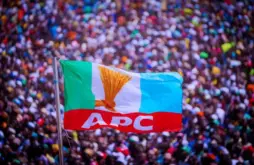
Buhari further said: “If you reflect on what I went through for 12 years when I wanted to be the president, I attempted three times and on the fourth attempt through God and the use of technology, it was possible for Nigerians to elect an APC candidate as president.
“In my first attempt in 2003, I ended up at the Supreme Court and for 13 months I was in court. The second attempt in 2007, I was in court close to 20 months and in 2011, my third attempt, I was also in court for nine months.”
“All these cases went up to the Supreme Court until the fourth time in 2015, when God agreed that I will be president of Nigeria,” he further recalled.
The President’s outburst came on the heels of the recent carpeting by Mahmud Mohammed, chief justice of Nigeria, of Courts of Appeal over what he termed “conflicting judgments” emanating from them, urging that: “As the guardians of the law, we must not only be just but also convey certainty in our justness.”
Mohammed had also pleaded with his colleagues: “My Lords, it bears reminding that the overriding objective of every legal system in the world is to do justice. However, this cannot be achieved where there is confusion as to the state of the law as pronounced by the court.
“As your lordships will agree, where an aggrieved person perceives, whether rightly or wrongly, that they will not receive justice, such a situation can indeed bode ill for the community in which he lives and can lead to acrimony and anarchy.
“We must not ignore the negative perception that is occasioned by conflicting judgments delivered at various divisions of the Court of Appeal. Such judicial contradictions only result in untold hardships to litigants in their quest for justice. They further cast your lordships in an unfavourable light and leave the judiciary at the mercy of innuendos, crass publications and editorials.”
The story about the judiciary frustrating the fight against corruption did not start today.
It would be recalled that Farida Waziri, a former chairperson of the EFCC, had alleged that some senior lawyers were frustrating the fight against corruption by stalling the prosecution of their clients docked by the anti-graft agency.
Waziri had also lamented the activities of such lawyers, who, according to her, fraudulently obtained money from their clients under the guise of delivering same as bribe to officers of the EFCC to kill cases under investigation.
She had also revealed that the lawyers often exploit the weakness of the judiciary by filing frivolous applications to frustrate the trial of suspects for corruption and money laundering.
Waziri further said that endless injunctions by courts did not help matters when she was the head of the Commission.
Buhari’s frustration was re-echoed recently by a traditional ruler, His Royal Highness, Oba Sule Idaiye, the Imah IV of Somorika in Akoko Edo Local Government Area of Edo State, who alleged that the judiciary had been characterised by flaws to the extent that it is no longer regarded as the last hope of the common man.
Idaiye also said that the workers, especially the judges, had subjected themselves cheaply to the whims and caprices of politicians without recourse to the oaths of allegiance and office they sworn to.
He noted that the Judiciary was no longer what it used to be, saying that corruption, tribalism, nepotism and others had been the order of the day when discharging their responsibilities as enshrined in the constitution.
Analysing Buhari’s frustration, a professor of political economy who spoke with BDSUNDAY on condition of anonymity, said the President may not have weaned himself of military mentality.
“It all shows that President Buhari is yet to get into the mood as a civilian leader where rules are followed. Buhari is still thinking himself 30 years ago when it was possible to constitute a tribunal and try an individual and execute such an individual hastily. In a democracy, it is easy to buy justice. That is his frustration,” the Professor said.
The don, who teaches with one of the nation’s universities, however, said: “Buhari has a point. If you check well, every ‘big man’ that has been arrested since the new crusade began has been granted bail. What we have been seeing, even before now, is a situation where those arrested for stealing billions of Naira are released after the plea bargain arrangement. They simply drop infinitesimal part of what they have stolen and walk home free men and women.
“I think that President Buhari must be commended. How many of the Nigerian leaders come to office saying they want to fight corruption? Those that said so in the past ended up not doing anything. The challenge in Buhari’s case is that he appears to be alone in this war.
“The judiciary must realise that this is an extraordinary time. All hands must be on the deck. It must not be business as usual. It is easier to do things the shabby way; it is easier to continue to do things the way we have done it over the years, but change we must.”
Some critics, however, blamed President Buhari for some of the excesses of the judiciary in the present dispensation. They accused the President of covertly aiding and abetting the excesses of some of the judges.
“We saw some instances where the President never reacted to obvious faulty rulings by some courts, simply because such judgments favoured his party. The APC also manifested obvious impunity in some rulings that did not favour the party. And the President’s body language, I must say, was not very clear to many judges who went about giving the type of judgments the CJN categorised as contradicting. Has he said anything to condemn the judgments of the Appeal Court that were totally skewed against the opposition party; it must not only be corruption, the President must be interested in the enthronement of the rule of law, holistically,” an analyst said.
Perhaps, to really key into the mould that Buhari would want the judiciary to operate henceforth, the Supreme Court has, by quashing the rulings of the Appeal Courts in the gubernatorial legal tussle involving some states, drawn a line, assuring the President that it is a brand new day.
Zebulon Agomuo

Join BusinessDay whatsapp Channel, to stay up to date
Open In Whatsapp