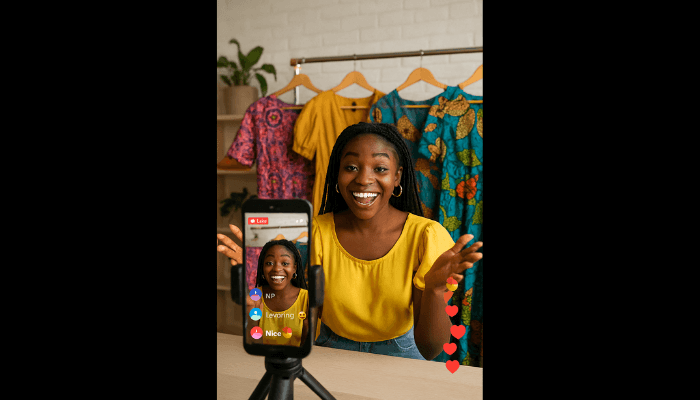
Nigeria’s fashion market is being reshaped by young designers and vendors offering style inspirations and various clothing options and this has really changed how young consumers discover products. TikTok has emerged as a key entry point into the fashion buying process, altering demand patterns for both fast fashion vendors and Nigerian designers.
Among Gen Z and younger millennials, TikTok now functions as a visual search engine. Users actively search for outfit ideas, thrift finds, styling tips and designer recommendations using keywords rather than relying solely on curated feeds. This behaviour signals a shift away from traditional e-commerce discovery, which depends on structured listings and brand-led navigation.
The advantage TikTok offers is informational efficiency. Short-form video compresses multiple decision-making inputs into seconds: fit, fabric movement, styling options and perceived quality. With rising prices and declining discretionary income, this reduces purchase risk. Consumers are less willing to experiment blindly and more inclined to buy after visual confirmation.
Live selling has further accelerated this shift. Fashion vendors in Nigeria increasingly use TikTok Live as a sales interface, even though the platform does not support in-app checkout in Nigeria. Transactions are completed externally via direct transfers and messaging apps, but the discovery, negotiation and trust-building stages happen on TikTok.
This mirrors informal market structures long familiar to Nigerian consumers. Sellers demonstrate goods, answer questions in real time and adjust pricing dynamically. What has changed is scale. A single live session can attract hundreds or thousands of viewers, extending the reach of micro-businesses without requiring advertising spend or physical space.
For fast fashion vendors, TikTok rewards speed and volume. Sellers who can quickly source trending items and price competitively benefit from algorithmic visibility and impulse buying. The economics favour low margins, high turnover and rapid content output.
For Nigerian designers, TikTok plays a different role. It allows them to justify higher price points by showing process rather than product alone. Videos of tailoring, fittings and fabric selection help reposition garments as value-based rather than trend-based purchases. This has enabled some designers to compete not on price, but on differentiation and narrative.
Consumer behaviour suggests that most buyers are not choosing between fast fashion and local designers in absolute terms. Spending is segmented by use case. Everyday wear is increasingly sourced from fast fashion and thrift sellers, while Nigerian designers retain relevance for workwear, events and statement pieces. TikTok collapses these options into a single discovery environment, intensifying competition for attention rather than loyalty.
The platform is also influencing business operations. Successful sellers are those who treat content as infrastructure: regular posting schedules, live session programming, clear pricing communication and fulfilment processes outside the app. TikTok does not replace logistics, but it has become central to demand generation.
From an economic perspective, TikTok lowers entry barriers into fashion retail while increasing competitive pressure. Visibility is no longer gated by capital or storefronts, but by content performance. This favours adaptability over scale and rewards businesses that understand audience behaviour.
What is emerging is a hybrid model where informal selling practices meet algorithmic distribution. The implications extend beyond fashion. TikTok’s role in shaping consumer search behaviour suggests broader shifts in how young Nigerians will approach commerce, branding and trust across sectors.
Shop owners in major markets now leverage Tiktok live, young students in their hostels also leverage this platform and this is not only fashion items, it includes household items and other goods. For now, fashion provides the clearest signal. In Lagos’ crowded market, discovery has become the most valuable currency, and TikTok is where it is increasingly minted.

Join BusinessDay whatsapp Channel, to stay up to date
Open In Whatsapp