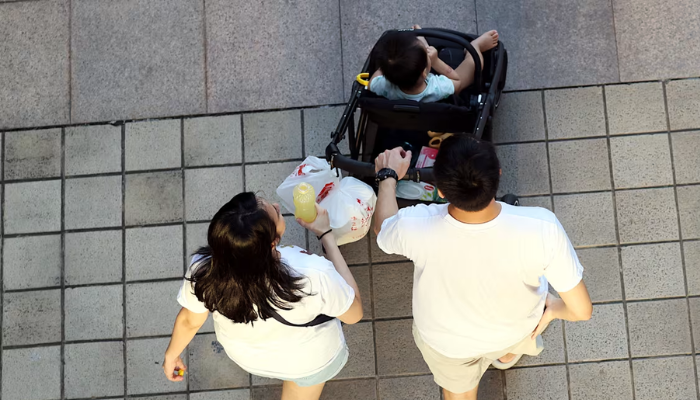
Families in Singapore, ranked as the world’s second-richest country by GDP per capita in 2025 according to The Economist, are set to receive S$500 (US$386) in credits for every child aged 12 or younger, as the government continues its effort to ease the burden of raising a family.
The Child LifeSG Credits will be issued from 14 July to families with children born between 2014 and 2025, Singapore’s Ministry of Social and Family Development said on Monday. Families with children born this year will receive the credits in April 2027.
The ministry confirmed that the funds will be credited automatically to each child’s Child Development Account trustee, meaning parents will not need to submit an application. The process is designed to remove paperwork from a system that already reaches hundreds of thousands of households.
This latest round follows a similar S$500 top-up distributed to more than 450,000 children last year, as reported by The Straits Times. Prime Minister Lawrence Wong first announced the new credits in February, during the presentation of the national budget.
Read also: Singapore edges Hong Kong, U.S to become world’s most competitive economy
Wider support for families
The credits form one part of a broader set of measures aimed at helping parents manage the cost of raising children. Among these is a change to household income ceilings for several childcare subsidy schemes, which will take effect next year.
The income ceiling for the Infant and Childcare Additional Subsidy Scheme, along with the Kindergarten Fee Assistance Scheme, will rise to S$15,000 from S$12,000. The ceiling for the Student Care Fee Assistance Scheme will increase to S$6,500 from S$4,500, according to AsiaOne. These adjustments mean more families will qualify for support as income limits are lifted.
Speaking at the budget announcement in February, Wong explained the reasoning behind the government’s approach to family policy.
“Many young couples hope to become parents. We want to create the right conditions, so they feel confident and ready to start a family,” Wong said, as quoted by Channel News Asia.
He added that the choice to marry and raise children remains a private one, but pledged continued government backing for those who choose that path.
“The decision to get married and have children is deeply personal. But for those who wish to take the step, the government will do more to support them along the way,” he said.
Additional cost-of-living relief
Beyond support for parents, the government has introduced other payouts this month to help residents with everyday expenses. Households living in public flats will receive S$110 to S$190 (US$86 to US$148) in U-Save utility rebates, along with up to one month of service and conservancy charges rebates.
Separately, eligible adults will receive cash payouts of up to S$850 next month under a scheme intended to help lower- and middle-income citizens manage the Goods and Services Tax and daily costs of living.
A long-term strategy
Singapore has faced a persistent decline in birth rates for years, a challenge shared by many developed economies. The government’s response has combined direct payments to families with structural changes to subsidy eligibility, an approach intended to reduce both the immediate and ongoing financial pressure of parenthood.
For families with young children, the latest credits provide a modest but tangible contribution towards costs such as childcare, education and daily essentials. Combined with the expanded subsidy ceilings, the measures reflect a policy direction the government describes as one of encouragement rather than obligation, aimed at supporting choices that Wong has called deeply personal.
Whether these steps will meaningfully affect long-term birth trends remains uncertain, but for now, thousands of families across Singapore will see the credits appear automatically in their children’s accounts starting this week.

Join BusinessDay whatsapp Channel, to stay up to date
Open In Whatsapp