For many Nigerian families, putting nutritious meals on the table every day remains a daily struggle that affects children’s growth and future potential.
Nigeria bears one of Africa’s heaviest burdens of child malnutrition. Approximately 32 percent to 34 percent of children under five are stunted due to chronic undernutrition, affecting their physical growth and cognitive development, according to the United Nations Children’s Fund (UNICEF) report.
Acute malnutrition (wasting) impacts around seven percent to 11 percent of young children, while millions more face micronutrient deficiencies often called hidden hunger.
Projections suggest that up to 35 million Nigerians could experience acute food insecurity in 2026, with northern regions hit hardest.
These challenges lead to lost human capital, higher healthcare costs, and reduced national productivity.
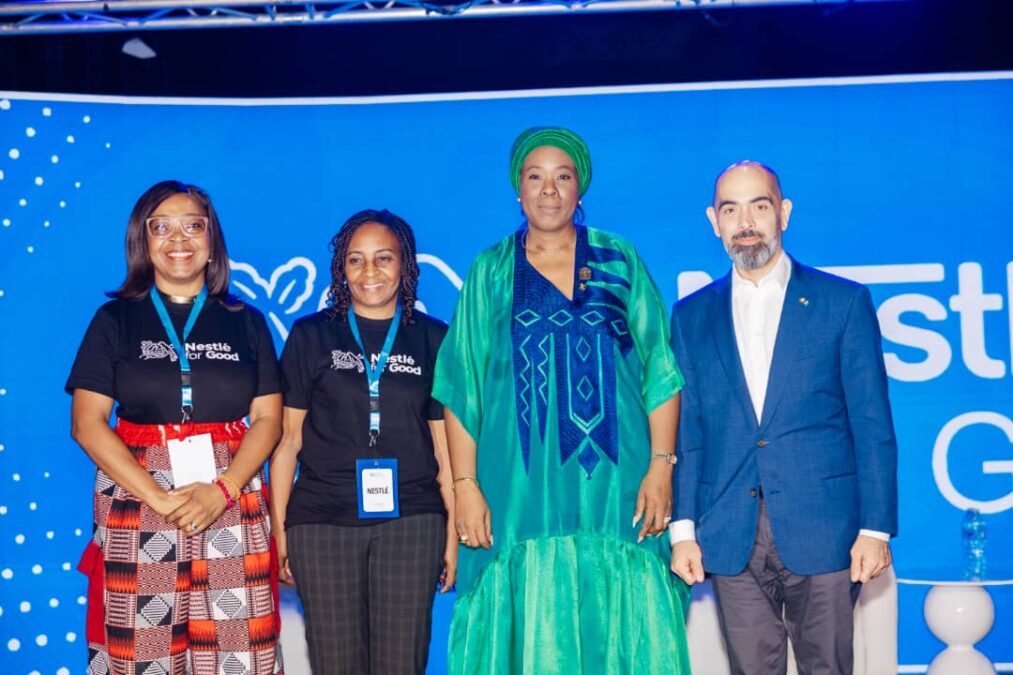
Against this backdrop, Nestlé Nigeria convened government officials, healthcare professionals, development partners, academia, industry leaders, civil society, and media at the Nestlé for Good Summit 2026 in Lagos.
The gathering focused on practical pathways to improving nutrition across the life stages, strengthening local food systems, and building more resilient communities. Participants explored the role of partnerships in addressing interconnected challenges spanning nutrition, livelihoods, and environmental sustainability.
Speaking at the event, Wassim Elhusseini, the managing director and chief executive officer of Nestlé Nigeria PLC, said the Summit reflects Nestlé’s long-standing belief that creating shared value is fundamental to how the company operates.
“At Nestlé, we are guided by a simple but powerful purpose: to unlock the power of food to enhance quality of life for everyone, today and for generations to come. Delivering good food consistently and at scale depends on strong systems across the value chain — from responsible sourcing and manufacturing to distribution, livelihoods, capability development, and environmental sustainability,” he said.
He added that Nestlé for Good provides a clearer, more connected expression of how the company delivers impact across Nutrition, Thriving Communities, and the Planet.
In her keynote address, Folashade Bada Ambrose-Medebem, the commissioner for Commerce, Cooperatives, Trade and Investment, commended Nestlé Nigeria for convening stakeholders around issues critical to both public wellbeing and economic development.
“The conversations we are having today are not only about food. They are about human capital, productivity, public health, economic growth, and ultimately, the future of our society,” she said.
She also underscored the importance of sustained collaboration across government, industry, development institutions, and communities in delivering improved nutrition outcomes at scale.
Providing further perspective on the company’s approach, Victoria Uwadoka, corporate communications, public affairs and sustainability lead at Nestlé Nigeria, noted that the platform helps bring together the full scope of Nestlé’s impact.
“Nestlé for Good is not simply about showcasing individual initiatives. It is about demonstrating how our products, sourcing, partnerships, and community investments connect in practical ways to support healthier lives and more resilient communities,” she said.
Patricia Ekaba, head of corporate communications, Public Affairs and Sustainability for Central and West Africa, highlighted the importance of long-term, system-focused thinking.
“Sustainable progress requires looking beyond short-term interventions. Business growth and social progress are interconnected, and lasting impact comes from creating value for both the business and the communities it serves,” she said.
A key feature of the Summit was an impact showcase, where participants engaged with real stories of beneficiaries connected to Nestlé’s initiatives in women empowerment, youth capability development, dairy development, and environmental sustainability.
For instance, Amina, (surname withheld) a rural woman in Nigeria whose family once faced constant worry over her children’s health. Limited income and poor access to diverse foods left her youngest ones vulnerable to malnutrition.
Through Nestlé’s Empowering Rural Women initiative, Amina received business training, mentorship, and product grants. She scaled up her small retail business, increasing her earnings significantly. With better income, she now provides more balanced meals for her children, including fortified staples that help combat nutrient deficiencies.
“The training changed everything. I can now support my family better and even help other women in my community,” she shares.
Another story comes from the dairy development programme. A smallholder dairy farmer and mother named Fatima joined Nestlé-supported cooperatives that provide training, better animal husbandry practices, and reliable market access for milk.
Her household income rose steadily, allowing her to afford nutritious foods and invest in her children’s education. “Before, my children were often sick and small for their age. Now they are stronger, and I feel more hopeful about their future,” Fatima says.
In Ogun state, 24-year-old Yusuf dropped out of school early but joined a Nestlé youth capability programme focused on agribusiness and food processing. “I used to think farming had no future,” he recalls.
Today, he works with smallholder farmers improving grain quality and has started his own small enterprise. “I can now support my younger siblings with better food. It feels good to break the cycle,” Yusuf says.
These stories, shared at the summit’s impact showcase, put faces to the data and show how targeted interventions in women’s empowerment, youth skills, dairy farming, and sustainability create ripple effects.
These real beneficiary stories, illustrated how targeted interventions across the value chain are contributing to improved livelihoods, stronger communities, and more sustainable practices.
The Summit also provided an opportunity for stakeholders to experience how Nestlé’s products and initiatives contribute to nutrition, livelihoods, and sustainability across different stages of the food system.
For instance, Nestlé tackles malnutrition through multiple integrated approaches:
Fortification of popular consumer products to fight hidden hunger; dairy development supporting thousands of smallholder farmers through cooperatives, training, and market linkages; women empowerment programmes that have supported hundreds of rural women retailers with training, mentorship, and grants, boosting household incomes and nutrition; youth skills development via technical training initiatives in agribusiness and food processing and sustainable sourcing and regenerative practices that strengthen local food systems and resilience.
These efforts align with Nigeria’s national nutrition priorities and demonstrate the Creating Shared Value (CSV) approach, generating business success while delivering societal benefits.
Stakeholders at the summit left with renewed commitment to turn dialogue into measurable action: fewer malnourished children, stronger rural livelihoods, and more resilient food systems.
For families like those of Amina and Fatima, such partnerships offer practical hope for healthier, brighter futures.

Join BusinessDay whatsapp Channel, to stay up to date
Open In Whatsapp