…Mentorship is the Competitive Edge Our Workplaces Need, Says Robert Ogirri
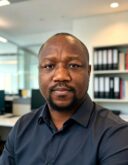
Robert Ogirri, an expert in manufacturing and supply chain is committed to nurturing future leaders. He balances his professional pursuit, academic works and mentorship, a way he redefines what leadership and legacy mean in practice. Currently at the University of Lagos Business School (ULBS) he guides emerging executives to navigate real-world industry challenges.
The global corporate space today is experiencing a positive shift. Organizations are carefully rethinking how they operate and the type of talent they nurture to remain resilient and competitive. Increasingly, companies are now prioritizing individuals who can combine technical expertise with sound judgment, ethical leadership, and the ability to navigate complex, fast-changing environments. Even Nigeria, like many other countries, is experiencing this shift firsthand.
As a result, seasoned leaders are deepening the conversation on developing the human side of leadership. Many are intentionally investing time in mentoring and equipping younger professionals with capabilities that go beyond traditional management training.
These include emotional intelligence, the creation of psychologically safe environments where ideas can flourish, strong leadership fundamentals, and cross-functional exposure that broadens perspective. With time, these competencies have shown to be essential in preparing aspiring executives for the uncertainties and opportunities of the global business landscape.
As leadership thinker Tony Dungy observed in his quote, “Mentorship empowers you to impart your legacy”, today’s leaders have recognized mentorship as a strategic investment in the future of their organizations.
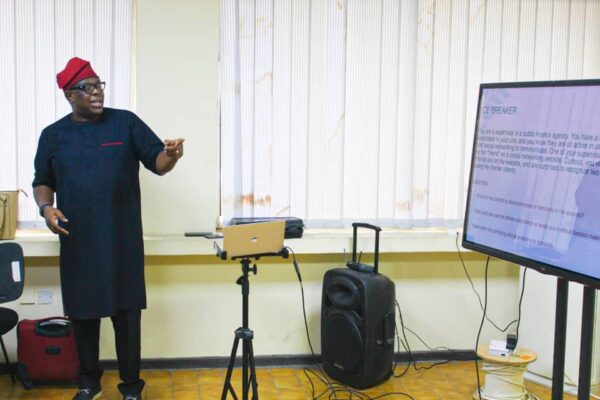
Ogirri shares this sentiment. As a respected voice in manufacturing and supply chain management, he views mentorship as a driver of growth. For him, guiding emerging professionals is not an afterthought but a deliberate commitment. “I have always wanted to share my knowledge and insights with others to help them get to their next stage,” he expressed during a conversation on mentorship at the UNILAG Business School.
He strongly holds that by sharing his knowledge and experience with those just beginning their journey, he is able to help build a new generation of leaders prepared to meet the demands of tomorrow’s business world.
Ogirri’s Journey from boardroom to classroom
“The idea of mentorship takes me back to some of the most meaningful moments in my academic journey,” Ogirri said. “It has always been a dream.” Part of the attributes that make him a transformative leader is looking at opportunities to teach the shop floor workers, opportunities to show others how we could do it better. That just became part of my lifestyle.
“It was easier for me because it was something I have always wanted to do, share knowledge and to be able to shape the next generation, to be able to get people to be better in what they do. That was already a lifestyle.”
After 33 years of focusing on his career, he is now balancing his professional life with his passion for academia, taking on the role of adjunct facilitating Executive MBA courses in Operations Management at the Unilag Business School in 2024. It was at that moment, a certainty settled over Ogirri. “It was time,” he heaved a sigh of relief, smiling brightly.
“I jumped at it. A lifestyle that now culminated in my mentoring and teaching. I was teaching executives. I was able to pass knowledge. I was able to inspire them with some words of affirmation, “You can do it. I did it before. I’m still doing it. So you can do it”.
Thanks to his career and work experience, becoming a transformational leader came naturally for Ogirri.
“I was always looking for opportunities to teach shop floor workers and show others how we could do things better. The IL6S journey reinforced this because I was at the top of the leadership pillar. I had to guide, teach, and develop them, and that experience was truly deep.”
Executive MBA learning
For Ogirri, showing these participants the ropes is the most important. “A lot of the cases we have from Harvard, Yale, and many other places are live examples. Sometimes some of these cases are from foreign companies, but I often tell participants, ‘Some of the things you are reading here, I did it in my career and these are the examples’.”
He is able to blend these cases with his own experiences to corroborate them, thereby giving them a view of reality.
As a top-executive and mentor, Ogirri is confident about total quality management (TQM), which is about getting it right the first time, every time.
“You are showing them that this is achievable. You are putting systems, processes, and standards in place.
“One of your key responsibilities is to ensure that these systems, processes, and standards actually work. Standards are essentially your rules. Operations management is embedding quality, cost, delivery, sustainability, safety, and your people’s agenda, your morale, tying it all together as the foundation upon which you build. It talks about efficiency, effectiveness and continuous improvements and how you can get it done better.”
Mentoring emerging CEOs and operations leaders
2024 was a year to remember for Ogirri when he began to coach and mentor future leaders besides those he has had the opportunity to impact in the work space.
“I work closely with a group of CEOs, who know they can reach me anytime; my door is always open. We often meet over lunch, exchange ideas, and share practical insights drawn from experience.
“The world today is very competitive. And what gives organizations an edge is mentorship. I often say the ‘half-life’ of a CEO is getting shorter because the weight of responsibility rests squarely on their shoulders. That is why adaptability is not optional; it is an essential skill they must continuously sharpen.”
For Ogirri, being a CEO demands qualities like speed, focus, and flexibility essential for success. He describes flexibility as an adaptive skill that must be woven into daily work life. “I try to be as practical as possible,” he emphasized.
Shaping an African management mindset with other future leaders
When Ogirri attended the first Global CEO Program for Africa in 2018, he said it came with fulfilment because he met like-minded entrepreneurs and career professionals where he networked and made meaningful connections.
He said the experience was really about seeing themselves as future leaders in Africa; future CEOs of African corporations, where they asked important questions, “How do we make Africa a shining example to the world? How do we ensure that Africans take charge and successfully run organizations? We must break the stereotype that Africans cannot manage corporations. That is simply not true.”
Top of the discussions that these leaders dissected were trade policies, the African Free Trade Agreement, and how to break barriers within the continent. African countries should be able to sell goods to each other more easily. Goods from Nigeria should move to Kenya without unnecessary obstacles. Travel within Africa is still too expensive, and it should not be that way.
With the continent’s youthful population, Ogirri pointed out that Africa has a huge advantage that the continent is not yet fully tapping into. “It is a powerful market on its own. Another important part of their discussions was ethics.
He frowned at the corruption label Africa is often associated with. “But as emerging leaders, we believe change can start with how we run our organizations. By putting strong governance structures in place – rejecting bribery, corruption, and cutting corners – we can begin to shift the mindset around leadership in Africa.”
Ogirri recalled that there were leaders from across the continent including South Sudan, Ethiopia, Uganda, Kenya and South Africa. “Together, we agreed that the mindset must change. We already have examples of Africans who have built successful global businesses. We must believe in our younger generation and create platforms that enable them to succeed.”
Leadership legacy beyond corporate roles
Leadership becomes legacy through how you lead. Ogirri told this reporter he did not set out to build a legacy. “It grew naturally through being accessible, listening well, and valuing community.
“Good leaders are accessible, emotionally intelligent listeners, and they are transformational. Leadership is not just about achieving results; it’s about continuous improvement. More importantly, it is about how results are achieved.
Indeed, Ogirri views legacy not as titles or achievements but as the lasting impact one has on people. He believes true leadership means developing others, caring about their growth, and supporting their futures. Many of those he’s mentored still reach out for guidance, which he finds deeply fulfilling. This is because he believes that legacy is built through people.

Join BusinessDay whatsapp Channel, to stay up to date
Open In Whatsapp