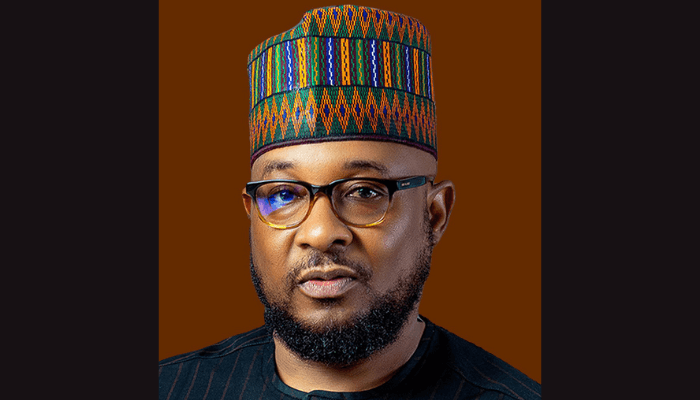
Garba Mohammed, executive director (Commercial and Institutional, Middle, South and East), The Alternative Bank, speaks on the bank’s plan to deepen its footprint with more branches and relationship offices in commercial hubs, complemented by a wider agent network and more insights, in this interview with Hope Moses-Ashike. Excerpts
You have been at the forefront of non-interest banking in Nigeria for years, previously heading the non-interest banking window at Sterling Bank. How has that experience informed your mission at The Alternative Bank, particularly in Northern Nigeria?
My background has been all about pioneering ethical finance in conventional institutions, and now I get to apply that in a bank built entirely around those principles. At Sterling, as Group Head of Non-Interest Banking, I learned what works and what doesn’t in introducing our model to a broad market. That experience is like a toolkit I carry with me. Now, in the middle belt, southern and eastern regions, where the concept of interest-free banking doesn’t naturally resonate due to cultural and religious affinity, my mission is to deepen trust and understanding of our model and our organisation’s promise. The vision of my role at The Alternative Bank is clear: to show people that this bank is a partner that shares their values of fairness and equity. We often talk about forging a third way in banking, and I think non-interest banking is exactly that. A hybrid model guided by ethics and professionalism. My journey has taught me the importance of community engagement, so I’ve been very hands-on, meeting traditional leaders, local businessmen, clerics, and even students across the country to communicate how our systems work. The reception has been fantastic.
The Middle Belt, South, and East cover an enormously diverse commercial landscape. How is The Alternative Bank making an impact across these markets, and what achievements are you proud of so far?
You’re right. The diversity of these regions is what makes the work both challenging and rewarding. Agriculture remains central in the Middle Belt; states like Plateau, Benue, Kwara, Nasarawa, Niger, and Kogi are critical to Nigeria’s food security. Meanwhile, the South-South and South-East are dominated by trade, manufacturing, marine services, and a vibrant SME ecosystem. Our approach has been to design commercially-driven solutions that meet each of these segments where they operate.
In the Middle Belt, we developed an agriculture financing programme that works with farmers’ cooperatives where, instead of charging interest, we provide inputs – seeds, fertiliser – and working capital under a profit-sharing arrangement after harvest, using non-interest finance models. Farmers aren’t crushed by repayments if a season is bad; we share the risk and the reward. We’ve extended this framework to processors and aggregators along the value chain, which is where a lot of the commercial opportunity sits.
Across the South-East and South-South, our focus has leaned heavily into trade finance and SME financing. The trading clusters in Onitsha, Aba, and Nnewi run on access to working capital and import financing, and our non-interest trade finance structures, particularly Murabaha (cost-plus financing) for inventory and raw materials, have resonated strongly because they are transparent and asset-backed. Along the Edo-Delta corridor, we’ve also extended tailored financing to operators in marine services and maritime trade, an often-underserved but commercially vital segment of the South-South economy. We’ve been intentional, too, about supporting women entrepreneurs through partnerships with microfinance institutions and NGOs on a Qard Hasan basis (interest-free loans), giving them room to grow without the burden of debt.
In terms of achievements, building meaningful corporate and institutional relationships across these regions in a relatively short window is one I’m particularly proud of. We’ve collaborated with state governments on financial inclusion pilots, partnered with development agencies, and onboarded a growing roster of mid-market and large corporates who chose us specifically because of the ethical, partnership-driven nature of our model. The progress tells me there is genuine appetite for what we offer when it’s positioned correctly.
Non-interest banking is often associated with Northern Nigeria, but you’re now driving its growth in regions where it’s less culturally embedded. How do you make the case for it to commercial and institutional clients in the Middle Belt, South, and East?
This is one of the most interesting parts of my current role, and frankly, the conversations are more nuanced here. In these regions, we lead with value, not faith. The reality is that ethical banking is just good banking, and once a CFO, a finance director, or a business owner sits down and looks at the structure of what we’re offering, the religious framing falls away quickly. What they see is a financing model that is asset-backed, transparent, and shares risk fairly between bank and customer. That speaks the language of business universally.
I’ll give a few practical examples. When we present a Murabaha (cost-plus financing) trade finance facility to an importer in Port Harcourt, what they appreciate is that the cost is fixed and disclosed upfront. There is no exposure to fluctuating interest rates, which is a real concern in this market. When we offer Ijarah (lease financing) for equipment to a manufacturer in Aba or a logistics operator in Enugu, they value that they can use the asset, preserve their cash, and take ownership at the end without conventional interest accumulating. For institutional clients, our Profit-Sharing Investment Account offers competitive returns tied to real economic activity, which several treasurers have told me they actually find more transparent than conventional placements.
Adherence to non-interest banking principles is, of course, non-negotiable. It’s our identity and a regulatory requirement, and our Advisory Committee of Experts oversees everything. But operating in a competitive sector forces innovation, and our mindset is that principle drives innovation; it doesn’t hinder it. We invest in technology to keep our cost-to-serve low, we price fairly, and we make sure customers fully understand every contract. There are no hidden charges and no fine print surprises.
What I find most encouraging is that a meaningful share of our commercial and institutional customers in these regions are not Muslim. They chose us because the model works for them commercially, and because they see the principle of partnership over predatory lending as a healthier basis for a long-term banking relationship. Staying true to our principles has, somewhat counterintuitively, become a competitive advantage in markets where people assumed it would be a barrier.
Can you talk about sustainability efforts or community initiatives AltBank has spearheaded? How do these reflect the Bank’s values?
Absolutely. As a responsible institution, we are deliberate about ensuring our sustainability and community work show up everywhere we operate, and not just in one region. Our approach is shaped by what each community actually needs, but the underlying philosophy that capital should solve real problems and improve real lives.
One initiative I am especially proud of is Mata Zalla, which we launched in Kano in partnership with the UK government’s Foreign, Commonwealth & Development Office and the electric mobility company Qoray. The Mata Zalla Cooperative is a women’s cooperative with thousands of members drawn from across all 44 local government areas of Kano State, and many of the women at the heart of it are widows, divorcees, and breadwinners with limited access to formal economic opportunity. We co-financed the deployment of a fleet of electric tricycles to women from the cooperative, paired with proper training in driving, servicing, and maintenance, so that each woman owns not just a vehicle but a viable, self-sustaining livelihood. It is one of those rare programmes that is simultaneously a financial inclusion play, a women’s economic empowerment story, and a clean mobility intervention. For us, that is what ethical banking is supposed to look like in practice.
Our Alfalfa initiative, executed in partnership with Plateau State University, is redefining the future of animal feed in Nigeria. Early field trials show this high-protein crop can grow successfully in the country’s temperate zones, producing yields comparable to those of leading livestock-producing nations. Researchers and agricultural experts believe this development could drastically cut feed costs, boost dairy and beef productivity, and open new ranching and agribusiness investment opportunities. We believe this initiative can be scaled to modernise Nigeria’s livestock industry and improve food supply resilience, with knock-on benefits for national food security.
The Walk4ZeroPlastic campaign also continues to gain traction. Following the success of the Lagos edition, we have organised clean-up walks in cities including Abuja and Kano, drawing in youth groups, market associations, and government agencies to pick up waste and raise awareness about plastic pollution. We are also exploring commercial financing for circular economy and waste-to-value businesses, particularly in the South-South, where the marine plastic challenge is most acute.
Sustainability for us isn’t only external; it’s embedded in how we operate, too. Several of our newer branches are designed with renewable energy in mind, and a number of them already run partially on solar power. Across our offices, we encourage a paperless culture, and our digital-first service model is itself a sustainability play. These efforts show that we don’t view ourselves narrowly as a business; we see The Alternative Bank as a platform for positive change. Whether we are creating female engineers in Kano, helping farmers in Plateau unlock new income streams, or backing a young entrepreneur in Aba, we are living out our values in tangible ways. That, ultimately, is what we stand for.
What is your vision for The Alternative Bank’s commercial and institutional business over the next few years? How do you see its impact and presence evolving?
I see our commercial and institutional business growing significantly, and becoming a defining part of how AltBank is recognised in the market. In a few years, I envision The Alternative Bank being a serious, considered choice for any business or institution evaluating a banking partner anywhere in the country – whether that’s a manufacturer, an agribusiness, an exporter, or a state government. We plan to deepen our footprint with more branches and relationship offices in commercial hubs, complemented by a wider agent network so that even smaller business owners in tier-three and tier-four locations can transact with us seamlessly.
On the product side, we’ll continue to tailor solutions to what the market actually needs. I anticipate strong growth in agri-finance and value-chain financing, non-interest trade finance for exporters and importers, equipment and SME financing, and structured corporate finance for mid-market and large corporations. Technology will also drive our evolution. We’re investing in the digital infrastructure that lets a CFO transact at scale and with confidence, while preserving the relationship-led approach that commercial clients value.
Importantly, I see our impact growing beyond finance; we want to be a developmental partner in Nigeria’s progress. If a state wants to build solar-powered schools, we’d like to be the bank that makes the project happen. If there’s a drive to boost entrepreneurship among young people, we want to be at the forefront with funding and mentorship. Another aspect of my vision is unity. The Alternative Bank has a unique positioning of bridging communities, and in a country often looking for common ground, being an institution that everyone can trust, regardless of region or faith, is powerful. With the solid foundation we’ve built and the Almighty’s guidance, I’m confident the next few years will have even more meaningful achievements to celebrate.

Join BusinessDay whatsapp Channel, to stay up to date
Open In Whatsapp