Last Friday, Fitch, a rating agency based in London affirmed the national rating of eight Nigerian deposit money banks.
The banks include First Bank of Nigeria (FBN), United Bank for Africa (UBA), Fidelity Bank (Fidelity), Diamond Bank (Diamond), First City Monument Bank (FCMB), Union Bank (Union) and Stanbic IBTC Bank (SIBTC) and Bank of Industry (BOI) as well as the bank holding company Stanbic IBTC Holdings (SIBTCH).
With this development, Godwin Emefiele, governor of Central Bank of Nigeria (CBN)’s stance that ‘Nigerian banks are safe and sound’, has come to limelight, industry watchers said.
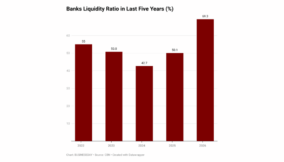
Emefiele had at the last Monetary Policy Committee (MPC) meeting said strategic health of the bank is strong. Naturally, when economists face global shock like the entire world economy is facing today, financial institutions will have their own share of that squash. No doubt there has been weakening in capital adequacy ratio, liquidity and NPL but not to the extent that it creates any panic or worry to anybody, or any stakeholder in the Nigerian banking industry. I seize this opportunity to say that the strategic health of the Nigerian banking or financial institution remains strong at this time. There is no need for anybody to begin to panic or worry that any bank is in distress.
The rating actions follow Fitch’s downgrade of Nigeria’s Long-Term Local Currency Issuer Default Rating (IDR) to ‘B+’ from ‘BB-‘, as a result of which it is now equalised with the Long-Term Foreign Currency IDR.
Following the sovereign criteria change and rating action, Fitch has recalibrated the National Rating scale for Nigeria. As a result, the National Ratings for these banks are affirmed, as there is no change in their relative creditworthiness.
The National Rating of UBA is based on its standalone creditworthiness and is also underpinned by potential sovereign support. The National Ratings of FBN, Fidelity, Diamond, FCMB and UBN are based on potential sovereign support given their systemic importance. The National Ratings of SIBTC and SIBTCH are based on the probability of support from their parent, Standard Bank Group Limited (SBG; BBB-/Stable). SBG has a majority 53.2% stake in SIBTCH, which in turn owns 100% of SIBTC. Fitch believes that SBG’s support would extend equally to both the bank and the holding company. The National Ratings of BOI are driven by potential sovereign support reflecting its 99.9% state ownership, its policy role and the bank’s strategic importance to Nigeria’s economic and industrial development.
What the CBN will need to do is to monitor the Nigerian banking system, monitor the activities of director, shareholders, members of management of the Nigerian banks and when we find that we are not happy with the dealings or activities of some shareholders, or that directors have undermined their positions to the detriment of that bank, we will take action by removing that management, director, or shareholder and see to it that he does not by his activities precipitate a distress in that bank,” Emefiele said.
HOPE MOSES-ASHIKE

Join BusinessDay whatsapp Channel, to stay up to date
Open In Whatsapp