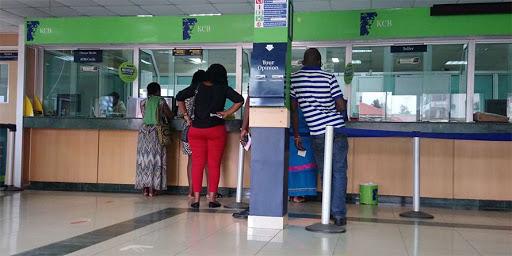
Customers are not finding it easy to carry out their various transactions at bank branches across the country as they spend longer hours outside and inside the banks.
Investigation shows that many bank branches have been closed since the COVID-19 pandemic lockdown. Some of the banks’ staff members are observing work shifting as a measure to guard against contracting coronavirus.
Access Bank Plc and FirstBank of Nigeria at Point Road Apapa have been closed since the lockdown. Customers who visited the banks were redirected to other branches in the area.
Many of the affected customers went to the social media to cry out. Lagos Traffic Reports claimed at GTBank, Ikorodu branch, the security and cleaners were selling slot numbers to individuals at N1,000 to access the bank and there was no orderliness of any kind. The veracity of this claim, however, could not be ascertained.
A customer of FirstBank with a Twitter name, Adaniel, tweeted, “I was baffled at what I experienced at FirstBank Limca Road, Isolo today (Monday). The attendant was rude and unethical. Spoke as if I came to beg for money. Please are we supposed to spend two hours standing at your bank to get one transaction done?”
In response FirstBank said, “Hello AdeosoAdenola28, we appreciate your feedback, apologise for your ill experience and any inconvenience caused. Kindly state if your complaint/request/enquiry has been treated, to enable us advise as appropriate.”
Also, Kuforiji Olugbenga, tweeted on Monday, “Come to GTBank branch at Iju Road, you will queue till you start wondering why you are yet to get into banking hall after three hours to get hold of your own money. I still wonder…”.
One of Access Bank’s customers at Ajao Estate, said, “I was in a bank twice last week. I spent two hours or more on each of my visits. I had to wait for almost two hours outside before spending almost an hour inside on my second visit. There is always a long queue outside and inside. One of the reasons for being inside is the inefficiency of the cashless economy because apart from cash deposits and other transactions, the ATM may be faulty or someone might have pilfered money from someone else’s account online.”
Uche Uwaleke, a professor of capital market at Nasarawa State University Keffi, said the reason for the long queues are: first, social distancing rules, and second, failure of points of sale (POS).
“You find queues also in supermarkets as a result of this,” he said.
He said failure of POS transactions has become frequent due to network challenges, which is why a number of people are found inside the banking hall just to lodge one complaint or the other.
The solution, he said, is to improve internet bandwidth and for banks to upgrade IT infrastructure.
“Third is poor service from ATM either due to malfunction or insufficient cash provision which often happens when a particular branch is experiencing liquidity challenges,” Uwaleke said.
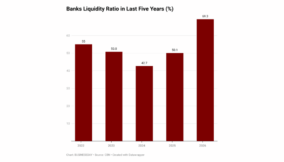
He said to improve liquidity of deposit money banks, the Central Bank of Nigeria (CBN)’s Monetary Policy Committee (MPC) should consider reducing the Cash Reserve Requirement (CRR) at its next scheduled meeting in September.
Uju Ogubunka, president of Bank Customers Association of Nigeria (BCAN), said a serious institution that sees what is happening will make amends. He said banks should deploy more hands and recall some staff to speed up customer service.

Join BusinessDay whatsapp Channel, to stay up to date
Open In Whatsapp