The joint United States–Israel strikes on Iranian targets in early 2026 represent one of the most consequential escalations in Middle Eastern geopolitics in recent years. While Washington and Tel Aviv framed the operation as a targeted effort to degrade Iranian military capabilities, the implications extend far beyond the Gulf.
For Africa, the impact is not immediate battlefield spillover. Instead, it lies in the structural consequences of rising geopolitical polarisation: volatility in global energy markets, pressure on diplomatic alignments, potential security reverberations through ideological networks, and renewed scrutiny of maritime trade routes.
The key question for African governments is not whether they will intervene in the conflict. It is how they position themselves in a global system where strategic rivalries are becoming increasingly explicit.
A regional strike with global signalling
The strikes followed months of rising tensions between Iran, Israel and Western powers. Israeli officials described the operation as a preemptive measure to prevent future threats, while U.S. officials framed it as part of a broader deterrence strategy.
Yet the political messaging surrounding the operation quickly expanded beyond its immediate tactical objectives.
On February 28, 2026, former U.S. Secretary of State and CIA director Mike Pompeo urged countries “trying to figure out which side to be on” to align with what he described as “Western civilisation” rather than China, Russia or Iran.
The statement reflects a broader strategic framing emerging in Western policy discourse. Increasingly, geopolitical competition is being portrayed not merely as a contest of interests but as a contest of civilisational alignment.
For Africa, such framing creates diplomatic complexity. Many African governments maintain security relationships with Western states while simultaneously expanding economic partnerships with China and other emerging powers.
The continent’s strategic posture has traditionally been one of pragmatic multi-alignment. Escalating geopolitical rivalry risks narrowing that diplomatic space.
Energy markets: Opportunity and exposure
The most immediate global consequence of the strikes was volatility in oil markets. Iran sits close to the Strait of Hormuz, through which roughly one-fifth of the global oil supply passes.
Any confrontation involving Iran inevitably raises fears of disruption to this critical maritime chokepoint.
For oil-exporting African states such as Nigeria, Angola and Libya, rising oil prices can bring short-term fiscal relief. Higher export revenues may strengthen foreign exchange reserves and temporarily ease budgetary pressures.
However, volatility introduces significant uncertainty. Insurance premiums on shipping often rise sharply during periods of tension, increasing transportation costs and affecting investor confidence.
For oil-importing African countries, the consequences are more severe. Higher fuel prices feed inflation, widen trade deficits and strain already fragile public finances. In debt-vulnerable economies, energy shocks can quickly translate into broader macroeconomic stress.
Instability in the Gulf, therefore, reverberates directly across African economic systems.
Maritime trade and strategic chokepoints
The Middle East occupies a central position in the architecture of global trade routes. Escalation involving Iran affects several key maritime corridors, including the Strait of Hormuz, the Red Sea route and the Suez Canal.
Africa sits along these arteries of global commerce. Ports across the Red Sea, East Africa and West Africa depend heavily on stable shipping networks linking Asia, Europe and the Americas.
Even limited conflict can raise freight costs and insurance premiums for vessels transiting these routes. Sustained instability could force shipping companies to adjust routes or increase naval escorts.
For export-oriented African economies, higher transport costs translate directly into reduced competitiveness in global markets.
Infrastructure initiatives such as the International North–South Transport Corridor intersect with China’s Belt and Road Initiative, reinforcing Iran’s role as a logistical hub connecting Asia to Europe.
Prolonged instability in Iran could disrupt these corridors, affecting trade flows and investment patterns across Eurasia.
African economies increasingly integrated into global supply chains must therefore consider how geopolitical tensions in distant regions can reshape the architecture of global commerce.
Military lessons for African defence planners
Beyond diplomacy and economics, the strikes also illustrate the evolving character of modern warfare.
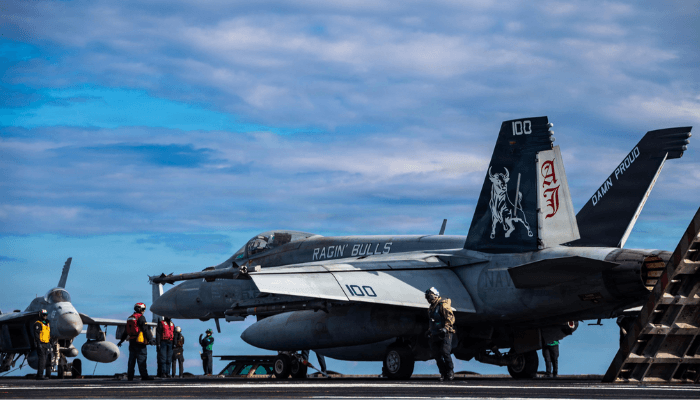
The operation highlighted the importance of integrated intelligence, surveillance and reconnaissance (ISR), rapid targeting cycles and precision airpower.
Modern conflicts are increasingly defined by the ability to integrate sensors, data and strike platforms into a coordinated network.
For African militaries confronting insurgencies across the Sahel, Lake Chad Basin and the Horn of Africa, the lesson is doctrinal rather than political. Traditional troop-heavy counterinsurgency models are increasingly supplemented by intelligence-driven operations combining drones, satellites, cyber capabilities and precision munitions.
States that fail to modernise their intelligence architecture risk falling behind adversaries who are often more agile and technologically adaptive.
The religious dimension: Iran’s ideological reach in Africa
Beyond geopolitics and energy markets, the Iran confrontation also carries a religious dimension that resonates within parts of Africa.
Across the continent, Shia communities are estimated to number between 15 million and 25 million people, representing roughly five to ten percent of Africa’s Muslim population.
Nigeria hosts the largest concentration. The Islamic Movement in Nigeria (IMN), led by cleric Sheikh Ibrahim Zakzaky, gained influence over several decades following inspiration from Iran’s 1979 Islamic Revolution.
The movement developed a network of schools, religious centres and social services across northern Nigeria and neighbouring countries.
Periods of Middle East tension often generate political mobilisation among segments of these communities. In early March 2026, demonstrations linked to the Iran conflict were reported in several Nigerian cities. The U.S. Embassy in Abuja issued a security advisory warning of potential protests tied to the escalating confrontation.
The IMN has previously clashed with Nigerian authorities. The 2015 Zaria incident, in which hundreds of IMN members were killed during a military operation, remains one of the most controversial episodes in Nigeria’s recent security history.
For African governments, the concern is not sectarian identity itself but the possibility that external geopolitical conflicts could activate transnational ideological networks capable of triggering protests or political tensions.
Diplomatic balancing in a divided world
Africa’s diplomatic challenge is therefore becoming more complex.
Many African states rely on Western security cooperation and financial systems while simultaneously pursuing infrastructure partnerships with China and expanding trade ties with emerging Eurasian markets.
A binary geopolitical framing — West versus alternative blocs — does not reflect the diversity of African interests.
Maintaining strategic autonomy will require careful diplomatic balancing as global tensions intensify.
Nigeria’s strategic position
As Africa’s largest economy and a major oil producer, Nigeria occupies a particularly sensitive position in this evolving landscape.
Higher oil prices may generate short-term revenue gains, but inflationary pressures and global uncertainty could offset those benefits.
Nigeria also maintains security partnerships with Western states while expanding economic ties with China, Turkey and Gulf countries. Preserving this balance requires diplomatic discipline and strategic clarity.
At the same time, Nigeria’s immediate priorities remain domestic: countering insurgent groups, stabilising its economy and strengthening institutional resilience.
External conflicts should not distract from those internal imperatives.
A more polarised global system
The US–Israel strikes signal a sharpening of geopolitical divisions in an international system already shaped by great-power competition.
For Africa, the implications are indirect but significant: energy market volatility, maritime trade risks, ideological reverberations and growing diplomatic pressure.
The prudent response is strategic calm.
African governments must protect economic resilience, maintain diversified partnerships and avoid entanglement in polarising geopolitical narratives.
Great-power confrontations rarely remain confined to their immediate theatres. Yet they do not require automatic alignment.
Africa’s challenge is to navigate a more divided world while preserving sovereignty, stability and strategic flexibility.
The long-term consequences of the Iran confrontation will not be measured solely in military outcomes in the Middle East. They will be measured in how effectively states across the world — including those in Africa — adapt to an evolving geopolitical order.

Join BusinessDay whatsapp Channel, to stay up to date
Open In Whatsapp