


How governance standards must move beyond rhetoric to measurable ethical performance.
If standards do not capture ethics, talk is then empty and baseless. Change in governance will only occur if actions change over time. Where words once ruled, measurement now does. The present proof is more important than the promises made in the past. The system calls for proof, not repetition. Results replace announcements, sharpening the focus. Readjustment occurs when results lead to decisions. Truth stands clear—major institutions face growing doubt due to repeated corporate misconduct and technological upheaval, while political disorder adds pressure. News cycles now carry frequent reports of deception and failed safety checks, alongside harmful work environments.
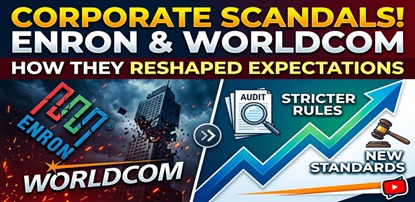
Though cases such as Enron and WorldCom appear distant, stricter rules including Sarbanes-Oxley did little to stop what followed. Consider Madoff’s long-running fraud; reflect on the housing market collapse. Such events were never isolated incidents rather they reveal lasting weaknesses beneath the surface.
A strange contradiction stands clear. Public polls indicate trust shifting toward corporations, rating them far above government in both competence and ethics. Yet alongside that shift sits widespread doubt about executive sincerity. Many believe company figures twist facts – or ignore them altogether. This clash forms the core of current skepticism. Dependence grows on large firms to manage issues like environmental threats and social order. Still, confidence in leadership claims fades under scrutiny of intent and openness. Here, leading ethically matters far beyond appearances. Should firms aim to survive, acting with honesty becomes essential. Without question, trust shapes outcomes more than policies ever could. To navigate challenges, doing what is right stands unavoidable. Integrity defines direction when uncertainty rises. Simply put, choices reflect values whether intended or not.
Exploring the Context of Corporate Ethical Leadership
Failures such as those seen at Enron, WorldCom, and Parmalat reshaped expectations – today, clarity, monitoring, internal checks matter more. Yet later missteps, witnessed in firms like Volkswagen or Wells Fargo, reveal a deeper issue: written policies alone achieve little. When leaders ignore misconduct, worse, encourage it, compliance loses meaning. Procedures exist, certainly – but without integrity at the top, they stand empty.
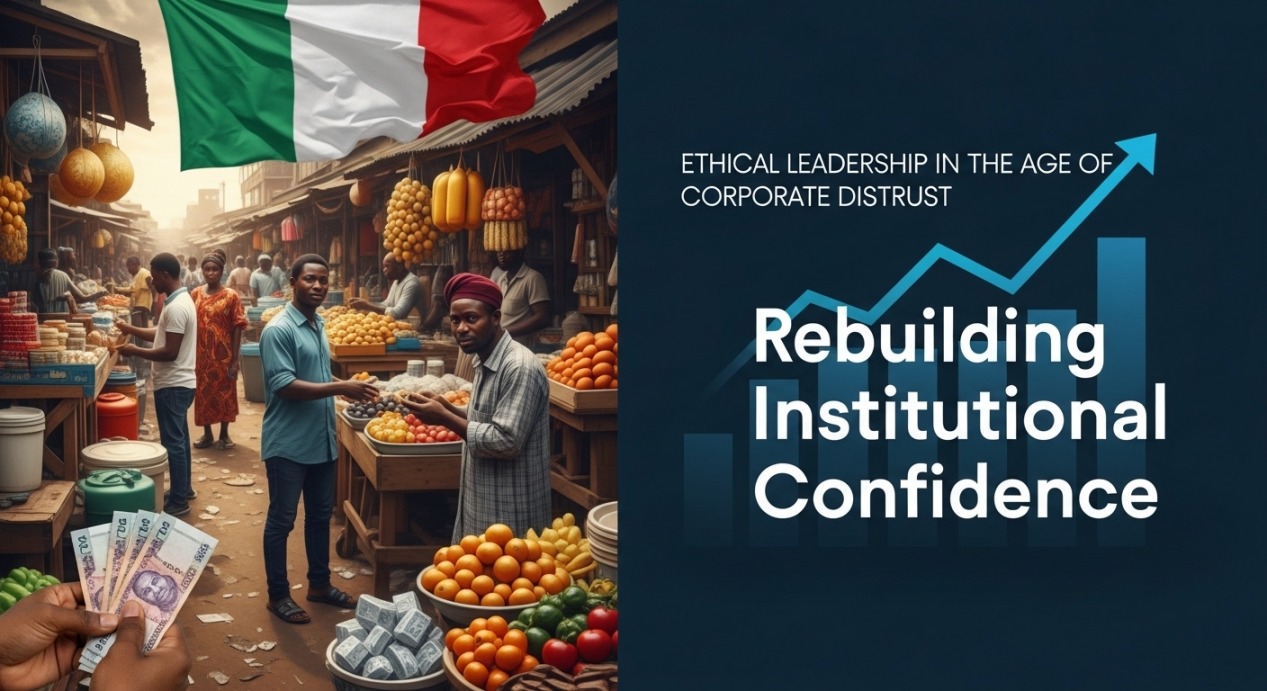
Evidence supports this claim. Where leadership reflects genuine ethics, integrity becomes common, followed by stronger accountability and greater public confidence. Consider Nigeria’s banking sector – analyses reveal that principled guidance improves organizational results alongside societal impact. Rather than merely stating ideals, top leaders act in alignment with those principles, shape choices accordingly, while establishing clear outcomes tied to adherence.
Yet trust in technology firms exceeds confidence in artificial intelligence itself, according to recent findings. Still, belief in personal workplaces remains strong across nations. Although overall perception of corporate integrity wavers globally. While competence gets acknowledged broadly. Yet ethical reliability draws doubt repeatedly. Where health organizations rank higher than genetic treatments they develop. Under such conditions leadership faces intense scrutiny quietly. Even when performance seems accepted widely. Expectations include progress, employment, fairness – yet clarity and answer-ability remain central. Ethical guidance emerges quietly here, aligning spoken promises with visible actions. What is said must match what happens. Behind every decision, a trail forms. Trust grows only when that path can be followed. Leaders shape culture by allowing line of sight into choices made. Visibility matters more than slogans ever could. When results reflect values, confidence follows without being asked.
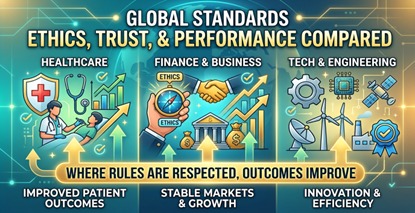
Comparison of Ethics, Trust and Performance amongst top export countries.
From one sector to another, a pattern appears. Wherever rules are respected, outcomes improve. Mistakes happen less often in firms focused on fairness. Workers avoid being pushed toward shortcuts. Speaking up becomes easier when retaliation is off the table. The trend holds whether borders shift or stay fixed.
Honest numbers speak louder. Big export nations see belief fade – China now at 30 percent, the United States near half, and Germany just above six in ten. From cities to villages, voices grow skeptical: actions of corporate giants feel less truthful, and words from executives ring hollow. What stands clear? Confidence erodes where it once seemed firm
Within Singapore, trust in employers sits at 76 percent—slightly below the worldwide figure. Yet just 28 percent view innovation efforts as weak. This contrast, local faith compared to general skepticism, suggests steady belief forms within firms—not overnight, but through consistent choices rooted in integrity.
A well-documented insight emerges from public institutions: when accountability systems are strong, trust begins to return. Where leaders act consistently with shared values, confidence grows slowly. Oversight that is seen to work—this shapes perception more than policy texts ever do. Decisions made openly tend to endure longer scrutiny. Cultures that welcome diverse voices often avoid deeper fractures later. Integrity shows not in statements but in repeated choices. Structures alone cannot produce legitimacy; behavior fuels it.
A close look at how leaders learn ethics shows that lessons in moral principles can sharpen their ability to act wisely. Not only do such teachings shape judgment, they also open paths to rework skills when change is needed. Instead of simply raising awareness, these experiences build deeper thinking about choices. What emerges is less about rules, more about readiness—preparing those in charge to meet complex demands. Far from being just theory, this learning becomes practical strength during shifts in direction. Often overlooked, its real effect lies beyond right or wrong, touching how strategy takes form.
Key Insights and Analysis
A present condition of confidence reveals three connected difficulties facing corporate leadership. Though shaped by complex factors, these issues influence one another directly. Their interplay forms a pattern not easily separated into distinct parts.
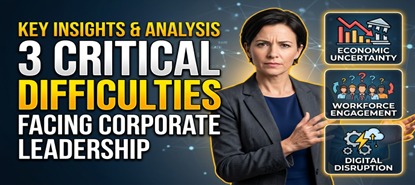
1. The trust–innovation gap
Lately, findings from the Edelman Trust Barometer point to growing unease around progress. Not managed with care – that’s how many now view advances in technology. Across varied regions and economic levels, more than half feel left out by modern breakthroughs. Only 22 percent see innovation under sound guidance; 39 percent say otherwise. Such skepticism spreads faster than confidence in oversight. Still, expectations shift toward corporate leaders when it comes to guiding transformation. Voices rise demanding clarity on what future work may require. Automation’s role draws attention, especially its fairness and consequences. Ethics in emerging tools becomes a topic leaders can no longer avoid. Public explanation, once optional, now forms part of leadership duty.
A divide forms between trust and progress. When shifts in technology and society arise, attention turns to company leaders – yet questions grow about their intentions and truthfulness. Although guidance is expected, confidence often fails to follow. In fact, more than six out of ten respondents expect top executives to guide societal change, not just internal business matters. Should choices around data, automation, or new products lack openness, inclusion, or principle, skepticism deepens. Clarity of purpose, demonstrated through consistent actions, helps close the distance. Where values shape decisions, trust finds ground.
2. Ethical leadership as culture, not communication
Proof drawn from business failures and studies on moral conduct shows policies, speeches, or initiatives bring small change unless leadership acts in alignment. Culture shapes integrity most – what directors allow passes silently; rewards given by senior figures signal true priorities; reactions to wrongdoing reveal underlying norms.
Repeatedly, workplace atmosphere stands out as key in shaping moral conduct. When leaders act honestly, support open dialogue, one sees fewer staff feeling forced to lower expectations. Fair consequences tied to actions tend to increase reports of misconduct. Focus on goals alone – without regard for how they’re met – often leads to repeated lapses. Environments ignoring process while chasing results display consistent breakdowns in judgment. Where integrity is modeled, silence becomes less common among workers. Pressure fades when fairness guides decisions at higher levels. Outcomes driven purely by speed or numbers invite foreseeable missteps. Attention to method matters just as much as achievement in maintaining standards. Ethical slips occur more often where only results are praised.
Beginning with assessment, the Ethics & Compliance Initiative’s model examines five central domains: strategy, risk oversight, cultural dynamics, communication channels, employee responsibility. When applied, results show institutions achieve stronger integrity outcomes – proof emerging only when culture is measured and guided with deliberate structure. Ending here.
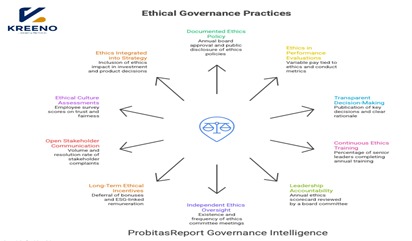
3. Measurable ethics as a governance necessity
Evidence now matters more than promises, seen across stakeholder expectations. Ethical leadership takes shape not through ideals but observable actions within governance structures. Defining clear markers becomes necessary, showing how values affect choices and results. Whistle-blower reports offer one lens; retaliation trends another. Training completion rates reveal engagement levels. Oversight patterns in misconduct cases reflect accountability depth. Incentive designs tied to lasting outcomes signal alignment. Measurement shifts talk into structure.
Research by Ethisphere suggests oversight weakens even within firms having established ethics frameworks. Though programs exist, updates reach trustees infrequently – sometimes just annually. Interaction with supervision group leaders remains sparse, which narrows perspective. Executive-only discussions rarely occur, leaving gaps in evaluation. Limited dialogue diminishes governance clarity over time. Effectiveness declines when review cycles stretch too far apart
A connection appears between ethical leadership practices and governance metric. Governance outcomes often reflect the presence of principled decision-making within organizations. Where leaders act with integrity, oversight mechanisms tend to strengthen. Oversight improvement sometimes follows consistent transparency in actions. Institutional trust may rise when accountability is visibly applied. Practices rooted in fairness frequently align with stronger compliance results. Clarity in conduct commonly supports more predictable regulatory performance.
What emerges is a link between moral goals and measurable policies. Through these markers, oversight bodies gain insight so do financial backers, along with assessment firms into how institutions uphold their standards.
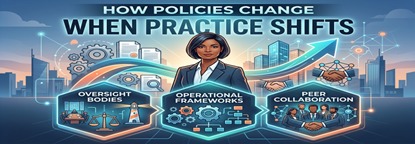
How policies change when practice shifts
Ethical leadership, within times marked by corporate skepticism, depends on alignment among oversight bodies, operational frameworks, and peer collaboration. From study-backed findings and global standards emerge ten methods detailed here. These steps form one possible path forward—useful to governing panels, rule makers, and those who allocate capital at scale.
1. Governance Recognition and Independent Ethical Oversight
An ethics framework gains credibility when formally endorsed at the highest governance level and integrated into official reporting systems. Independent ethics committees and governance scorecards strengthen accountability by ensuring that ethical commitments are monitored, reviewed regularly, and separated from day-to-day operational influence.
2. Ethical Incentives and Leadership Accountability
Ethical conduct becomes more consistent when executive evaluations and compensation structures include integrity benchmarks. Deferred rewards, conduct-based metrics, and clawback provisions align leadership behaviour with long-term organisational values rather than short-term financial outcomes.
3. Transparency and Stakeholder Engagement
Clear communication about strategic decisions, risk choices, and governance actions builds trust across organisations. Open dialogue through stakeholder meetings, digital feedback channels, and consultation forums allows leadership to detect emerging issues early while strengthening credibility and organisational legitimacy.
4. Continuous Ethics Education and Culture Assessment
Ongoing ethics training for leaders improves decision-making in areas affected by technological change, regulatory evolution, and global uncertainty. Regular culture assessments and internal surveys help identify gaps between declared values and actual behaviour, enabling organisations to address weaknesses and reinforce ethical standards.
5. Ethical Integration in Corporate Strategy and External Accountability
Ethical reasoning must guide decisions on technology adoption, artificial intelligence, data governance, and market strategy. Regulators and institutional investors increasingly evaluate how deeply ethics are embedded in governance structures, requiring transparent disclosures, governance-level supervision, and measurable evidence of organisational integrity.
Conclusion.
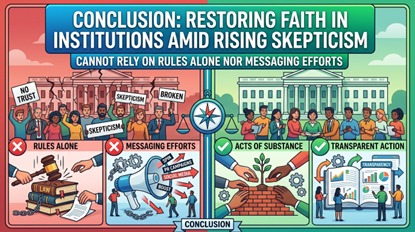
Restoring confidence in institutions demands leadership integrity beyond mere formal rules or public messaging. Evidence from governance reviews, ethical audits, and trust assessments confirms that senior leaders aligning actions with declared values, supported by visible, testable oversight mechanisms, build lasting credibility through demonstrated accountability rather than empty promises. Institutional stability strengthens as trust grows gradually in such environments.
Collaboration between businesses and public authorities further enhances public confidence, particularly when regulatory frameworks evolve alongside innovation through shared governance structures. Here, oversight and enterprise mutually reinforce one another, fostering responsible technological and economic development.
Ethical governance cannot remain a compliance checklist but must integrate core principles into strategy, decision-making, and institutional design, ensuring organizations consistently align performance with responsibility to create mutually reinforcing societal expectations and long-term value.

Join BusinessDay whatsapp Channel, to stay up to date
Open In Whatsapp


