


Bridging the Nigerian Infrastructure Finance Gap
According to the National Integrated Infrastructure Master Plan, the Nigerian infrastructural gap stands at $2.3 trillion by 2043. That is more than $120 billion annually. The federal government’s budget scarcely hit $30 billion annually. Public money alone will never bridge this divide.
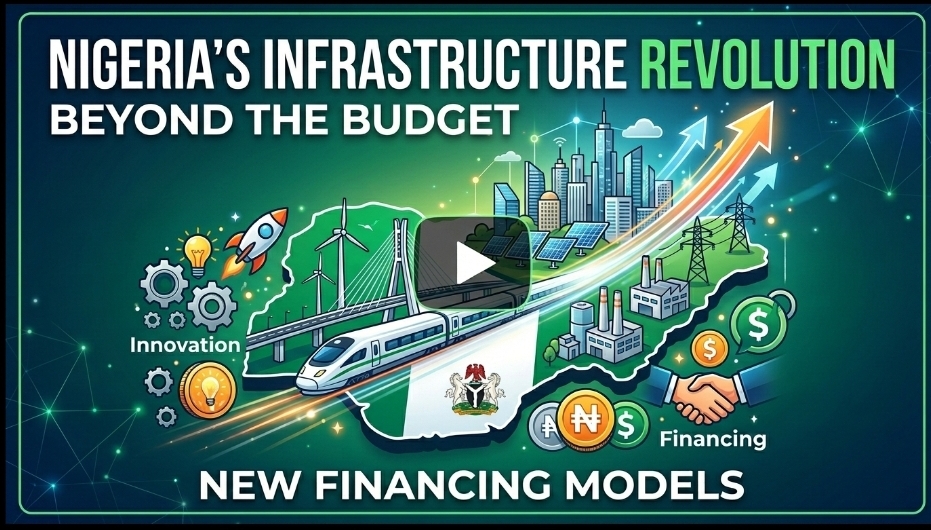
The evidence is everywhere. Highways crack and crater. Power grids collapse weekly. Ports choke on cargo backlogs. Rail lines remain skeletal. Nigeria’s infrastructure stock sits at 35 percent of GDP. Most African peers exceed 50 percent. This shortfall bleeds 2-4 percent of GDP yearly in lost productivity.
Government cannot spend its way out. Private capital must do the heavy lifting. Smart financing models pull investors in, spread risk, and deliver projects faster. Singapore and Kenya have proven this works. Nigeria must follow suit, and quickly.
The PPP Imperative: Government as an Enabler
Public-private partnerships (PPPs) are reshaping infrastructure delivery in Nigeria by shifting execution from government to private firms. Since 2005, the Infrastructure Concession Regulatory Commission (ICRC) has overseen projects across key sectors, approving 45 deals worth about ₦2.5 trillion by 2024. Under this model, government provides policy support, land, and guarantees, while private investors bring capital, technical expertise, and operations, reducing public debt while ensuring long-term returns.
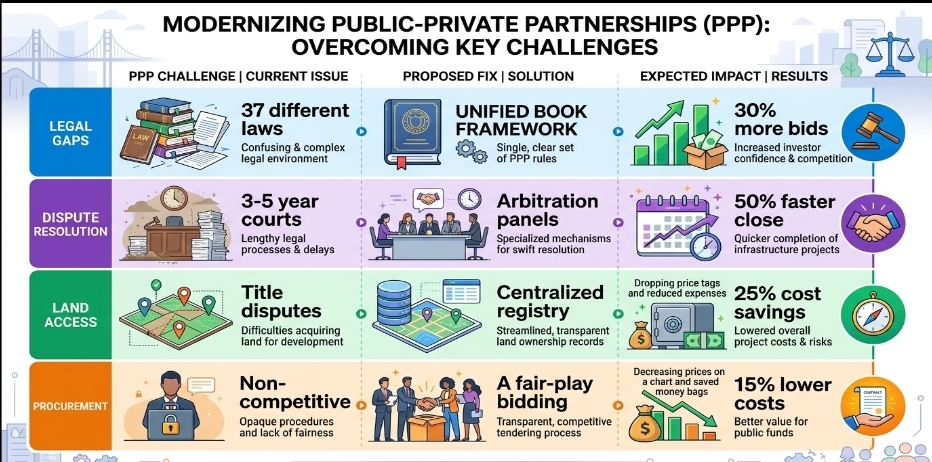
Momentum is growing with the 2024 IFC partnership to develop bankable projects, supported by global structuring expertise. The Lekki Deep Sea Port highlights PPP success, cutting ship waiting times and boosting trade capacity. However, fragmented laws and slow dispute resolution still hinder progress. Harmonizing regulations, strengthening the ICRC Act, and establishing independent arbitration systems would improve investor confidence, lower risk, and accelerate infrastructure development across both federal and state levels.
Blended Finance: Lower Risks, Draw More Cash
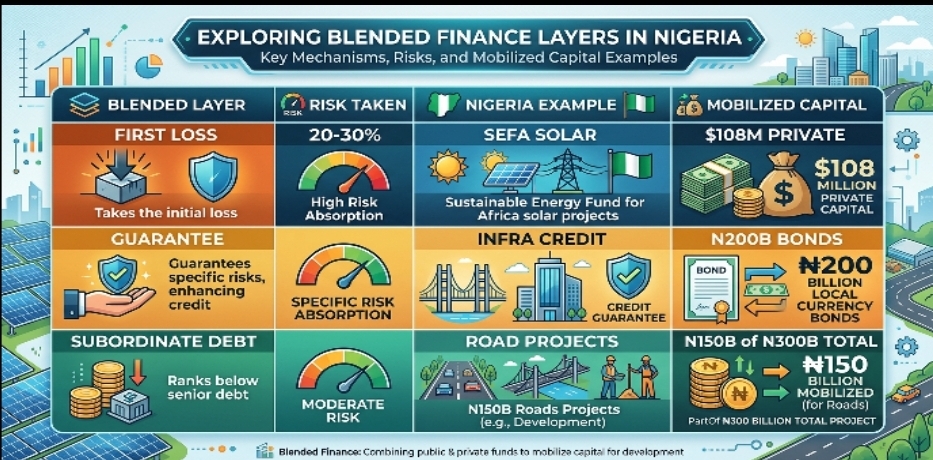
- Commercial lenders avoid high-risk projects. Blended finance changes this. Development banks provide grants and cheap loans. These cover first losses. Private money joins for higher returns.
- Global blended finance hit a five-year high in 2023. Africa’s share grew 25 percent. AfDB’s SEFA approved $108 million across 14 projects in 2024.
- InfraCredit leads in Nigeria. This AAA-rated guarantor enhanced N200 billion in bonds by 2025. Pension funds bought 60 percent. A N50 billion rural solar bond drew N85 billion in bids.
- The structure works. AfDB funds absorb 20-30 percent losses. Banks provide senior debt. Returns hit 12-14 percent for equity.
- Expand to smaller projects. N30 billion funded 500 kilometers of rural roads. AfDB covered 40 percent concessional debt. Local banks added 60 percent.
Capital Markets: Bonds Tap Long-Term Funds
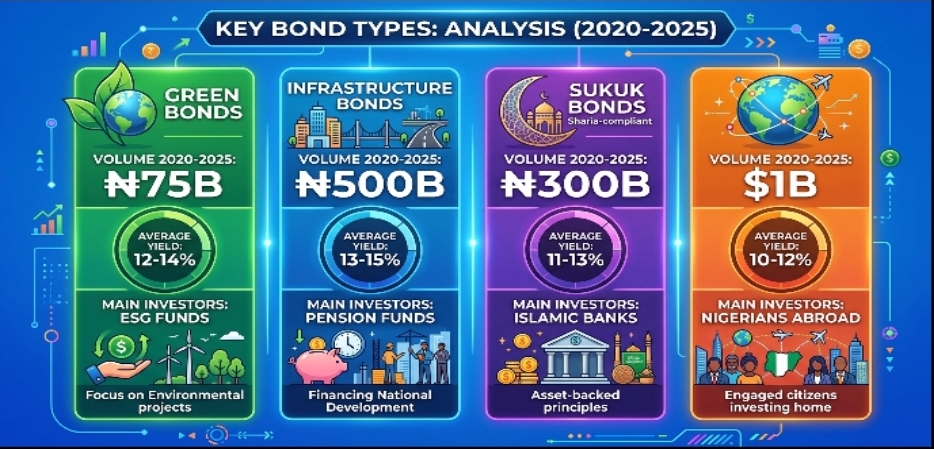
Nigeria pioneered Africa’s sovereign green bond market in 2017 with a ₦10.69 billion issuance for solar and reforestation, followed by another in 2019. By 2025, total green bond issuance reached ₦75.69 billion. Corporate participation is growing, with Access Bank’s ₦15 billion certified green bond attracting international ESG investors, while plans are underway for a $250 million sovereign issuance in 2026. In the 2026 Appropriation Bill approved by the National Assembly the Federal Government raised its borrowing plan for 2026 by ₦11.31 trillion, pushing the total projected borrowing for 2026 to ₦29.20 trillion from an initial projection of ₦17.89 trillion, thus reflecting a significantly higher fiscal deficit estimated at ₦31.46 trillion, compared to the earlier figure of ₦20.12 trillion. From the projected budget, total government expenditure for the year is projected at ₦68.32 trillion, while expected revenues stand at ₦36.87 trillion. With the windfall from the increased price of crude, as a result of the closure of the Strait of Hormuz, this figure is expected to increase, thus closing up the deficit gap, though not completely.
Regulation by the SEC since 2018 ensures credibility through third-party verification and annual audits, contributing to strong investor demand, with oversubscription averaging 150%. Beyond green bonds, alternative instruments are expanding: infrastructure bonds raised – ₦500 billion between 2020 and 2025, SUKUK (Islamic Bond) financed ₦300 billion in road projects, and diaspora bonds attract about $1 billion annually. With pension assets at ₦20 trillion, increasing infrastructure allocation to 10% could unlock ₦2 trillion for development.
Case Studies: PPP Projects That make the case for PPP in Nigeria.
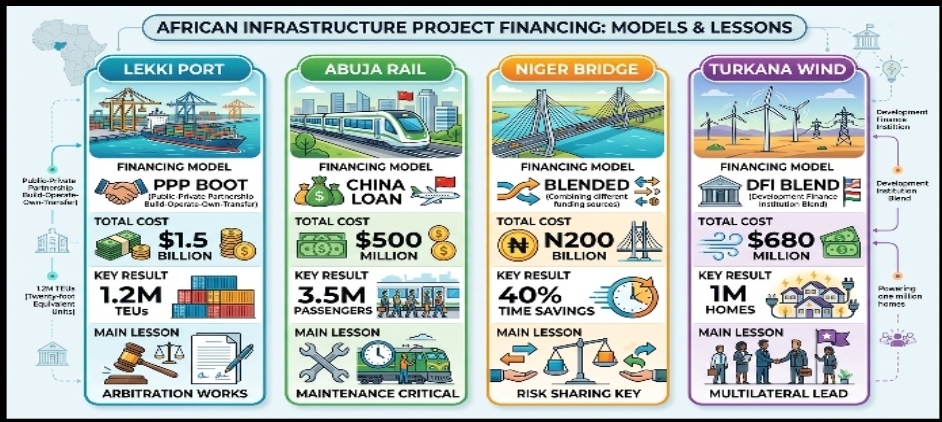
- Lekki Port phase one cost $1.5 billion. Private investors covered 80 percent. Year one revenue hit N120 billion. This project created 12,000 direct jobs thus reducing the unemployment rate.
- Abuja-Kaduna railway used a $500 million Chinese loan. Passenger traffic reached 3.5 million by 2024. Freight volumes grew by 25 percent annually.
- Second Niger Bridge blended N200 billion. AfDB provided 30 percent concessional funds. Travel time from Lagos to Onitsha dropped 40 percent.
- Kenya’s Lake Turkana wind farm cost $680 million. AfDB, EIB, and Clean Technology Fund blended capital. The 310MW plant powers 1 million homes. Equity earned 12 percent IRR.
- Failures show gaps. Katampe housing stalled on land disputes. Power PPPs fail 60 percent on tariff fights – price controls that prevent the providers from charging market driven tariffs.
State-Level Action: Where Budgets Meet Innovation
- 15 states budgeted N10.7 trillion for 2026 capital projects. Loans and PPPs fund 60 percent. Lagos leads with N1.2 trillion – a mixture of green bonds and concessions.
- Rivers State signed three road project PPPs worth N400 billion. Kano uses SUKUK financing for housing projects. Enugu blends AfDB funds for water plants.
- States need capacity. Train 2,000 officials in PPP structuring. Create state InfraCredit copies. Link to federal pipelines.
Five Steps to Boost Infrastructure Funding, Plus Implementation Timelines.
- Strengthen ICRC: Add 50 project staff. DFI funds prep facilities. Timeline: 12 months.
- Tax incentives: Zero equipment duties. Bond tax breaks. Impact: 200 basis points lower yields. Timeline: 6 months.
- Pension reforms: Raise cap to 15 percent. Unlocks N3 trillion. Timeline: Q3 2026.
- Blended facility: N500 billion seed capital. Standard contracts. Timeline: 18 months.
- Data platform: Track 1,000 projects online. Costs, revenues, timelines. Timeline: 24 months.

Answers to Key Questions
Pension funds in infrastructure?
N20 trillion assets. 10 percent allocation yields N2 trillion. Average returns: 13 percent.
Bankable PPP traits?
Clear user fees. Full feasibility. Competitive bids. 20-year contracts.
State green bonds?
Lagos oversubscribed 98 percent. Ebonyi plans N20 billion. Follow SEC framework.
Sukuk potential?
N300 billion issued. Northern states favor Islamic finance.
InfraCredit results?
N200 billion guaranteed. Bond costs fell 25 percent.
Infrastructural Development and Energy Company Ltd, INDECO’s Role
INDECO is and infrastructure solution provides, focused on providing services to States and Federal Government, in the area of road constructions, maintenance and equipment procurements, housing developments, new town developments, agriculture, oil and gas fabrication works, waste management, energy solutions and technology innovations. Its core focus is on turning Nigeria’s infrastructure gaps into practical, investment-ready projects. Rather than waiting for proposals, it develops initiatives in power, transport, and industrial sectors from the ground up, especially in areas often overlooked but critical for growth. Each project is carefully structured through feasibility assessments, financial modelling, and detailed risk analysis to meet the expectations of both local and international investors. Energy remains central, covering generation, transmission, and evolving renewable solutions.
For more information, clarifications and support, Contact Prof. Prisca Ndu on +234 902 148 8737 or [email protected].

Join BusinessDay whatsapp Channel, to stay up to date
Open In Whatsapp


