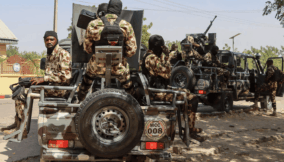
In the fullness of time, Niger Delta will define the Buhari presidency. It’s a toss-up between fate and hard choices! So, it behoves the presidency to think of how best to skirt the Niger Delta quagmire, by ensuring that the solution to the present crisis is politically, economically and humanly salubrious. They should consider soft power ideas, while remaining mindful that seeking military solutions to domestic problems is not always prudent.
Nigeria’s stressed economy is creeping toward stagnancy. The oil sector stands decimated by agitating Niger Delta Avengers (NDA) and Red Egbesu Water Lions. The recidivism in militancy is not an aberration, since there’s cause and effect. Unfortunately, the lines between agitation and criminality are now blurred. Ahead of Buhari’s presidency the status quo in the Niger Delta was forecasted. As Eloho Otobo observed presciently, “renewed militancy in the Niger Delta would be deadly because the federal government still depends on oil and gas from Niger Delta for 70 percent of government revenue. If oil production in the Niger Delta were to be interrupted at a time of falling oil prices, the economic consequences for Nigeria would be dire.”That moment is here; and the situation could worsen.
Inexplicably, President Buhari cancelled his visit to Ogoni on 2nd June 2016. Speculatively, the cancellation was “because of ill-health” or “because of a credible threat by militants.” Regardless, cancelling such a strategic visit was a lost opportunity. That the President cancelled two scheduled visits southern parts of the country consecutively, is also not good; not as an omen and not as policy. After all, Niger Delta remains Nigeria’s ground zero. By not going to Ogoni, the President gave the militants a psychological edge, while unwittingly creating the impression that he “does not believe our military is capable of securing his visit.”Awkwardly, our Niger Delta policy makers seem inclined to pro forma bureaucratic acts, and less so, strategic considerations. Thus, they make tackling the Niger Delta conundrum seems all too confounding. It should not be, if our policymakers dare to drop their blinkers.
Nigeria must draw lessons from history. Just as the Niger Delta crisis can’t be wished away; it can’t be solved militarily. The crisis is replete with broken promises that match broken communities; and broken lives that match a blighted environment. Niger Delta noxiousness is also proportionally matched by Niger Delta policy toxicity. The Rivers State people repudiated secession in 1967, and by foreswearing Biafra, helped to keep Nigeria one. Their latter day reward is environmental disfigurement and squalor; officious indifference and pious reassurances. But Niger Delta is not Nigeria’s only peculiar challenge. There was Bakassi. Despite his brusqueness, former President Olusegun Obasanjo spared Nigeria by negotiating the 12 June, 2006 Green tree Agreement on Bakassi. Without that accord, Bakassi would today be a war-torn territory. Though Niger Delta crisis seems intractable, what Buhari needs are seminal ideas for ending the crisis, not its militarization.
Meanwhile, the activities of Niger Delta Avengers are deemed “a serious threat to the Nigerian economy that the government must address with utmost speed and seriousness.” Besides reducing our oil production capacity from 2 million to 1.2 million barrels per day, there is clear and present danger of the crisis escalating. These challenges offer Buhari a unique opportunity to exert leadership. However, the resort to militarism as a solution is ill-advised. As British Foreign Secretary Philip Hammond warned, “Moving big chunks of the Nigerian army to the Delta simply doesn’t work.”
Militarization and militancy aside, two other issues compound government’s efforts in the Niger Delta; poor strategic communications and dearth of creative problem solving ideas. Whereas Buhari extended the amnesty programme from 2015 to 2018, there was neither proper communication of the decision nor a white paper on it. Hence the agitators believed that a policy reversal was in the offing, more so, since the decision to “crush the militants” was being underscored. Secondly, creative ideas for tackling a strategic crisis like Niger Delta must be anchored on collaborative negotiations, not resort to the use of force. Government can’t abandon what works, without an alternative or blueprint of its own for creating peace; when securing peace remains the ultimate goal.
Ongoing Niger Delta processes reflect dissonance, incongruities and absurdities that dog policy. The absence of creative problem-solving ideas remains a critically missing link, despite the overused cliché of “thinking outside the box”. It’s the non-application of creative ideas that led the government into the trap of brickbats, muscle-flexing, threats and use of force, all amounting to a quagmire of conflicting and confusing policies that triggered ultimatums. There’s also the mislaid perception that policies of the Jonathan administration were skewed, simply because President Jonathan was from that region. Fraught as the policy were with leakages, it brought some reprieve. Moreover, the 2009 Amnesty programme were negotiated under President Umaru Yar’Adua. Admittedly, there are legitimate concerns that ongoing agitations now border on criminality, and transcend constitutional and human rights demands. Yet, it’s spurious to use such concerns as basis for ending amnesty. Also, such concerns hardly make militarization of the crisis preferable to dialogue. If the government can’t handle the Niger Delta crisis directly, it should secure the services of international arbiters, who can map the crisis, and proffer acceptable solutions.
Buhari needs urgent solutions. A ‘Marshall Plan’ type plan-of-action that confers unfettered ownership of restorative plans, projects and programmes on the inhabitants is imperative. The plan must tackle legacy and residual issues, especially tail-end-liability of oil companies that contributed to the blight. They must underwrite the 2011 UNEP Environmental Restoration Fund. Because successive governments tried military solutions and failed, it should be avoided. Government’s engagement must aim at bridging the distrust gap and improving infrastructural, economic, social and environmental conditions of Niger Delta. In any case, any Niger Delta peace process that does not have a full buy-in by the inhabitants will fail. While the Ministry for Niger Delta Affairs and the NDDC should retain their statutory roles, Buhari should appoint an independent high-level Special Envoy or Joint-Envoys, to drive the Niger Delta peace process, do the heavy lifting and help in settling the Niger Delta crisis at the negotiation table.
Oseloka H. Obaze

Join BusinessDay whatsapp Channel, to stay up to date
Open In Whatsapp