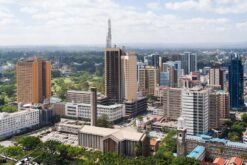
Managing a complex city such as Lagos can best be described as an exercise in fuzziness. Until the coming to power of Asiwaju Bola Tinubu in 1999, Lagos was almost on auto-pilot as informality, lawlessness, bricolage, haphazard development, crime, congestion, slum and decay held sway. Clearing these distortion and mess that years of unplanned development and lawlessness produced is definitely a difficult job whose execution must inevitably cast a long trail of destruction and disaffection.
But you can’t make omelet without breaking eggs. As Lagos envisions itself as a globally competitive megacity with modern infrastructure and amenities that could help attract and retain global talents and resources, correcting the acephalous development is compelling. Doing this is not a mean task: It takes a lot of courage and determination to tackle the conundrum of Lagos. However, while this rebuilding is in progress, it is important to insist that the right approaches are adopted to ensure a sustainable outcome for the future. Failure to do so would certainly undermine the efforts and resources expended on such a costly undertaking. Our objective in this piece is to interrogate some of the development efforts of present administration in Lagos in the background of new economic geography (NEG). Specifically, we want to examine the rationale behind recent evictions, relocations, and planned unscrambling of existing clusters of economic activities such as the Ikeja computer village and their implication for sustainable development, economic growth and pro-poor livelihood systems.
More than any other state in the Nigerian federation, Lagos has been on a continuous and meticulous rise since the beginning of the third republic in 1999. Whether by default or design, Governor Bola Tinubu initiated the transformational process that has seen the turn-around of Lagos state, from a chaotic amalgamation of decrepit urban slums characterized by contagion, congestion, dirt, and crime to an increasingly, organized and better-managed megacity, boasting of significant improvements in livability conditions. Governor Fashola, who succeeded Bola Tinubu in 2007, built on the same foundation and the current governor of Lagos, Mr Akinwunmi Ambode, has taken it to an entirely new height.
Lagos undoubtedly enjoys a relative advantage in its development – emerging as the centre of British colonial administration and later becoming the country’s capital on independence until 1991 when the nation’s capital was moved to Abuja. As a political capital, Lagos attracted significant investment in modern infrastructure including housing, roads, bridges, transport systems and railway. But at the same time and as a result, it continued to pool large numbers of people and businesses such that it eventually became the economic and commercial centre of Nigeria, serving both the country and the entire West African sub region. Even as the capital moved to Abuja in 1991, Lagos remains the country’s primal city and the commercial centre. The explosion in population and economic activities following on this status continues to exert enormous pressure on the city’s civil infrastructure. Currently, Lagos infrastructure is greatly inadequate to serve the needs of its teeming population of more than 23 million people with some sources determining that in Lagos “infrastructure and services remain at levels that support no more than six million people.” With a meagre 0.012% of Africa’s land mass, Lagos now hosts 1.8% of the continent’s population. Density per square kilometre is estimated at 4,193 persons over the entire metropolis and 20,000 per square kilometre in built-up areas. According to some estimates, the population is increasing by 70 people per hour, consisting mainly of a youthful population with an average age of 19 years. It is estimated that the current population of 23 million persons is set to double in just one generation.
Lagos is unquestionably the world’s fastest growing megacity with compound growth rates and is seen as a microcosm of the internal dynamics of emerging megacities around the globe today. It displays, and often accentuates, all the main features – both good and ugly – of megacity agglomeration of both human populations and economic activities. The challenge facing Lagos, as other cities in the developing world, is how to confront the downsides of city agglomerations – slums, congestion, crime, contagion and improving living standards.
Improving livability conditions in Lagos also implies provision of modern and efficient infrastructure system – water, sanitation, transportation networks and systems, energy, housing and social infrastructure including health, education, insurance, credit, recreational and environmental management systems. It is infinitely easier to build such infrastructure in new areas before human settlements begin to appear. But as soon as communities of settlers emerge – as is the case in Lagos, any plan of reconstruction or development must meet with economic, social and political considerations. For instance, constructing roads in built-up areas must contend with right of access and structures built along the road path. Oftentimes, demolition of existing residential and business structures is unavoidable.
Therefore, megacity planners face not just budgetary constraints in what they can achieve, but they must deal with significant trade-offs: how can development be best pursued without exacerbating existing social fragilities? How can they ramp up the stock of existing infrastructure without disenfranchising some members of the society? How can slums be upgraded without the danger of dislocating masses of low-income, poor slum dwellers? How can clusters of economic activities be relocated without destroying the input-output linkages that support them and thereby destroying their very essence?
In the attempt to combat the downsides of city living including – congestion, contagion, and crime – the government has resorted to strategies whose ultimate ambition is to push slum dwellers into oblivion. The common and ruling logic of city development even in Lagos, seems to be exclusionary as in kick-the-poor-guy out policy. But this is a very inappropriate policy, driven by an incorrect rationale.
The question of why people choose to live in city squalor rather than in the relatively wholesomeness of rural country sides has recently been answered by Ted Gleaser, a leading Harvard economic geographer. In his 2011 book, Triumph of the City, Glaeser argues that the city is the greatest invention of modern times. People are attracted to the city chiefly because of the possibility of increased earning power. He argues that urbanization is essential for developing countries to move from poverty to prosperity. The millions of migrants who come to cities, despite their problems, remind us of the bleak future presented by rural poverty. Although the downsides of city density could be debilitating, the solution however, does not lie in discriminatory policies of deportation. The right conclusion about city density is that there is a dire need to make poor cities better places through inclusive policies, rather than exclusionary ones. This therefore speaks to the need to review Lagos State government’s approach to slum eviction.
Economic geography or ‘new economic geography’ (NEG) is one of the more intriguing economic theories coming in recent times which seeks to answer one of the key gaps in earlier, neoclassical economic growth theories – such as those of Solow, Barro, and others. These traditional models of growth attempt to address how the market organizes the system of economic production in terms of ‘what to produce’, ‘how much to produce’ and ‘for whom to produce.’ Economic geography, on the other hand, raises the hitherto largely neglected question of how economic systems determine ‘where to produce’. Originally considered part of the study of geography and regions, the theory has developed in the last two decades as more integral to the study of economics since it attempts to explain the distribution and spatial orientation of economic activity. The theory therefore introduces the additional variable of space into economic thinking. New economic geography has implications for industry policy, particularly with regard to innovation hubs and industry clusters.
Nobel Laureate in Economics, Paul Krugman together with Masahisa Fujita (who happens to have supervised my professor’s – Suminori Tokunaga’s – phd) have been at the forefront of placing geography within a clear economic analytical framework. At its core, NEG studies the emergence of agglomeration caused by increasing returns to scale and transportation costs, emphasizing linkages of firms to both their suppliers and their customers. People and firms aggregate in the city to be near to each other, creating a virtuous cycle. As more labour, a mobile factor of production, is attracted to the centre of production, it becomes even more attractive to produce there due to these workers becoming consumers. Other firms, suppliers and workers are also attracted to the same location further accentuating the benefits of being close to markets, supply chains, sources of employment and sources of information and knowledge. Because of the cumulative effects of increasing backward and forward linkages of firms to both suppliers and to consumers, there is said to be path dependency toward agglomeration that resulted originally from the historic accident of a particular region’s emergence, rather than through constant returns to scale in the competitive equilibrium of the neo-classical model. The geographic distribution of economic activity therefore becomes locked in, although it is still possible for change to occur.
Most successful clusters of economic activity, such as Silicon Valley in California, Wine Cluster in Australia or South Africa, are all the result of the process outlined above. Firms choose to locate near each other to gain positive externalities or spillovers in knowledge, trained workforce, and information. Michael Porter describes clusters as “geographic concentrations of interconnected companies, specialized suppliers, service providers, firms in related industries and associated institutions (eg. universities, standards agencies, trade associations) in a particular field that compete but also cooperation.” This sort of interaction has been labelled as coopetition.
Clusters may owe their existence to pure serendipity such that it becomes difficult, if not impossible, to reproduce them in a different milieu. The network of interdependencies that produce the huge external benefits that make clusters engines of economic growth as witnessed by successful clusters like Silicon Valley are usually unique.
Rather than relocation of clusters, it is our informed opinion that the government of Lagos needs to first undertake a thorough diagnosis of existing clusters of economic activities in Lagos in order to understand the dynamics of their input and output systems. Knowing the value that clusters generate and the dynamics of their value creation is necessary to know how industrial policy could assist in upgrading them.
On the issue of slum evictions, government needs to realize first the reason for the emergence of slums in the areas where they occur. Slums are usually the result of the failure of public policy. As such, the solution can never be realized by a policy of forceful evictions and displacement. We observe the frequency with which slums emerge along major transport corridors as soon as some gated real estates come into being. Both government and private real estate developers build housing estates for the high and middle-income groups without considering where the menial workers that provide services to the residents of gated estates would live. We have seen this cycle of negligence leading to slums emerging along all major highways in Lagos including the Lekki – Epe axis.
Forceful evictions without compensating resettlement perpetuate social and economic inequalities and thereby exacerbating existing class tensions in the society. It flies in the face of government’s anti-poverty programs. As long as there are unguarded spaces in Lagos, evicting slum dwellers in one place will force them to hitch their tents in another location.
In a society with a 70 percent head count poverty rate and a preponderance of low income earners, a policy of forceful evictions will solve one problem but birth many more. As long as there is no way to stop migration of people to Lagos, any investment in infrastructure upgrading can only be described as tenuous. Sustainable development cannot be commanded from the top. If development isn’t organic, then it is recursive at best and destructive at worst. The reality of forced development is that sooner or later, everything reverts to status quo ante. When you build ice castle in hell, expect it to melt one way or another.
Bongo Adi

Join BusinessDay whatsapp Channel, to stay up to date
Open In Whatsapp