It’s a great time to be African and in particular Nigerian. Our 2013 GDP at 2010 constant prices propels us to the top of GDP rankings in Africa and it does not matter that the rebased GDP is the result of statistical re-evaluation. It is the international norm to rebase GDP every five years. Some countries with more sophisticated evaluation capabilities do it every three years. Hearty congratulations to the National Bureau of Statistics for successfully completing the assignment and for securing endorsement of the IMF, AfDB and The World Bank on the outcome, which is bound to increase the visibility and attractiveness of Nigeria as an investment destination.
It is important not to lose sight of what investors really consider when choosing where to invest their hard earned money. Three main things – ease of entry and exit for their capital (and profits), low cost growth and comparatively high returns.
We operate a liberalised economy and financial system that has over the years increased the confidence of investors in the depth and scope of financial intermediation of Nigerian banks which constitute the vehicle through which capital inflows and outflows are made. It is no surprise that the sector recorded a 32% growth in 2013 – one of the highest amongst the reclassified sectors that comprise the rebased GDP. Thus, we score highly in ease of entry and exit of capital.
Africa has the highest share of fastest growing economies in the world, of which Nigeria is a leader. Growth is great but what about infrastructure and political stability that underpin the capacity to achieve growth? ‘Chapeau’ to Mr. President for the resounding success of the power sector privatisation (improved electricity supply is believed to potentially add between 1% and 3% to GDP). I remember firmly stating to one of the leaders of a UK based global private equity firm during an Abuja power conference that the privatisation programme will be completed successfully. He of course didn’t agree. It is important to state though that a lot of work still needs to be done to make electricity available to all Nigerians. Furthermore, as far as financing of the power sector transactions goes, we may be needing AMCON ultimately if or when loans to the sector become unserviceable.
Don’t rest on your oars Mr. President. We urgently need to fix our roads, rails and inland waterways so that goods and people can move freely, easily, safely and cheaply across Nigeria and even across Africa which serves to enhance intra Africa trade.
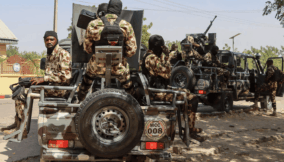
Investors have grave concerns about the insurgency in our country. I do pray that the families and friends of the missing girl students find some solace in the empathy expressed the world over following the cowardly act of Boko Haram. We must do all that is necessary to ‘bring back our girls’ safe and sound. We must also get to the root of this menace and ensure that each and every citizen has a sense of belonging in Nigeria.
Though our Minister of Finance, Dr. (Mrs.) Ngozi Okonjo-Iweala and Director of Defence Information, Major-General Chris Olukolade in recent international media interviews stoically defended government’s belief that the instability we experience today is transient, investors remain doubtful. Earlier in the year, I met a Professor from one of the leading universities in the UK that had taken a decision to set up a campus in West Africa – the alternatives were Ghana and Nigeria. Ghana got it. He told me that the very day the evaluation committee came to Nigeria to do its assessment of Nigeria’s suitability, there was a major security event that caused the decision to go in favour of our sister country Ghana. The school is today operational and as expected, majority of students on campus are from Nigeria.
It is needless to say that even though Nigeria is a high growth destination, political instability is costing us greatly. The CEO of a major European multinational looking to tap into Nigeria’s consumer goods opportunity says he would rather enter West Africa through Cote d’Ivoire and/or Ghana and from there monitor the situation in Nigeria further to making an entry decision five or ten years hence. Nigerian investors as well as international investors already present in Nigeria have a lower perception of Nigeria risk but we still need new investors and we need to improve our security cum political situation to attract them.
Equity and debt portfolio investors find our financial markets relatively competitive in terms of returns (though South Africa will perhaps take more pride in her US$800 billion JSE than we would our much smaller NSE). However, investors in productive capacity (be it services or goods) face a greater challenge achieving returns that are higher than cost of capital due mainly to reasons already alluded to earlier. For many investors, it’s a bet on the long term, on the sheer size of our rapidly growing 175 million people and on the projected improvement in per capita GDP.
In conclusion, Nigeria has a strong fundamental economic story that cannot be ignored. That we have the largest GDP in Africa and rank 26th in the world makes our story more compelling. Nigeria is open for even more business. Welcome.
Mayowa Amoo

Join BusinessDay whatsapp Channel, to stay up to date
Open In Whatsapp