As yet another turbulent year comes to a close and we count our losses, the optimist in me continues to believe that better times await us when January dawns.
What is it about the optimist that makes him immune to the virus of depression around him? I mean, look back at 2014 and tell me, haven’t you lost count of the events that made you feel that this year has been an endless series of disasters?
In case you missed, here is a glimpse of the recent dark past: Did Ebola take us all by surprise? Or, did the world choose to wilfully ignore it till it became too late, after it claimed over 5,000 victims? The exact number – even by WHO estimation – is hard to arrive at, though speculation places it much closer to 10,000. The economic price was heavy too, paid not only by the primary sufferers in the West African nations of Guinea, Liberia, Sierra Leone, Nigeria and Senegal but also by those nations, firms and individuals who had economic and business ties to these regions. The figures offered by the World Bank put the losses in West Africa for 2014 alone in the range of $2.2 billion (low Ebola impact) to over $7.2 billion (high Ebola impact) with further downstream impact for future years. It finally took a huge scare in the western world when the disease reached the US and European shores for the world to take serious steps, realizing that this was not just another ‘African ailment’ to be viewed from far. Here’s a scary thought: this is not over yet, according to the medical experts; what new and virulent form will it take next year?
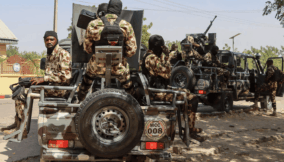
From the world of viruses to the world of monsters in human form: even given the view that one man’s terrorist is another man’s patriot, there can be no argument that the mass killing of school children by the Taliban or using children as suicide warriors by ISIS and mass kidnapping and enslavement of teenage girls by Boka Haram – to name just a few of the shocking acts of atrocities on the innocent and voiceless children – served to shock even the most cynical in the world. Yet, not much is done beyond passing toothless resolutions at global fora. The business fact remains that the free market for arms merchants of all hues continue to freely thrive.
They tell us that flying is still statistically the safest medium of transport. Well, that may be so, given the number of road kills every year. But no one doubts that air accidents have a way of being the most newsworthy of the options. 2014 has seen its share of air disasters. So while a Nepal Airlines crash in the jungles off Pokhara in February may not be sensational, we have witnessed some mysterious air events in 2014. None more so than the continuing enigma about Malaysia Airlines flight MH370. Within months, on July 17th, we had the horrific shooting down of another plane, Malaysia Airlines MH17, and soon whatever little pleasure that flying connoted seemed ironic. To cap it all, the year-end loss of Air Asia’s plane in the seas off Indonesia reminded us that for all the plans of going inter-stellar, journeys on earth still remain the biggest challenge.
I could continue with a litany of human and man-made follies that are evidence of how we continue to destroy ourselves in a sea of pettiness across the world, but I look forward with child-like eyes to the other excitement that surrounds us; and there are many.
Trust Bill Gates to remind us that not all is wrong with the world. The epochal man who has changed the way we live and work – yes, Microsoft has transformed the mechanics of the world more than Apple’s design-laden toys – has reminded us of a major indicator that the world has been progressing, nay, inching forward. Child mortality has been falling over the last four decades and for the first time in human history, more children are alive till their fifth birthday. The miracle of modern medi care – and serious preventive steps at neonatal and early maternal care levels – are providing pay-offs that have taken years to reap, and estimates show that over 13.6 million children are alive in the world since 2001 due to this effort.
On an aside, in due course Gates will win the Nobel, I am sure. Apart from his foundation powering medical research into diseases more commonly associated with the non-western world (polio, TB, rotavirus, etc.), he has also not stopped short of highlighting good work in public health by governments more notorious for their political inaction. Case in point: Gates suggests that Nigeria’s strategy to tackle polio came good in nipping Ebola early enough across the country.
Indeed, forget the political mess in all parts of the globe (Hong Kong, the divided US parliament, the ISIS-ridden Middle East, Russia-Crimea, etc.), the real good news is that at the end of the day there is enough resilience and creative thought in mankind to override doomsday predictions. Living by our wits seems to enable us to survive from one crisis to another, with every year a new one emerging. But does this not make us wonder why a set of brilliant minds cannot think holistically to resolve issues? My belief is that it is not our inability to find answers to complex problems that is the challenge but a general lack of willingness to do so.
Yet, when I view past the failures of today and see what is feasible, both from a scientific and spiritual lens, I end the year with positivity. Echoing in mind are Cooper’s words from Nolan’s ‘Interstellar’ – one of the highlights of this year for me – that “we’ve always defined ourselves by the ability to overcome the impossible…. These moments when we dare to aim higher, to break barriers, to reach for the stars, to make the unknown known”. And, I am confident that 2015 will be better all around!
K. Jayshankar

Join BusinessDay whatsapp Channel, to stay up to date
Open In Whatsapp