There is no better time to put an end to the assaults of the herdsmen in the farming communities all over Nigeria than at this point. While the relevance of these herdsmen is not in dispute with respect to their involvement in cattle rearing, modern civilisation has rendered their approach obsolete and proved that they no longer have the exclusive preserve of cattle production. In fact, cattle can be more productively produced without going through the detrimental movements that have now become a recurring decimal. The recurrent rankling, animosity and disagreements between crop farmers and nomadic herdsmen in various parts of the country, particularly in the middle belt, eastern and western parts, have claimed lives, destroyed livelihoods, disrupted peace and harmony, particularly in the rural setting. This is undesirable and needs to stop.
In its current form, nomadic cattle-rearing is not a business in the sense it should be. From a purely environmental perspective, the idea of nomadism offends the environment in a number of ways. In addition to the herdsmen from various parts of Nigeria moving across the country with their herds, hundreds of others move into Nigeria from other neighbouring Cameroon, Chad, Niger, Benin and even Burkina Faso. There are suspicions that some might even be making incursion from further afield.
This is not acceptable under a modern condition. A situation that tends to lend a semblance of legal leeway to nomadism, or tries to sustain it, is the old-fashioned grazing routes that – in practice – have no respect for political boundaries as grazing animals and their shepherd can cross from one state to another unhindered. To underscore the reality that such routes are not subjected to any periodic reviews, many of those in official gazette some three decades ago on old maps are now within or parts of growing towns and cities. Even at that, those nomads from within and outside Nigeria are currently unaware of routes in official gazette. They go places at will, to the detriment of hapless crop farmers.
The designation of grazing reserves also deserves a critical review as those so designated in the past were mere paper works, outlined or demarcated as specific land areas without keen thoughts or practical actions to develop such for sustainable grazing purposes. Accordingly, the animal rearers show no reason to resort to such places, especially as those became forests of trees rather than grasslands in many cases. Even those that remained grasslands did not grow the types of grass preferable to grazing animals. In the past, a lot of public funds and financial resources went down the drain under this contraption that served no real purpose.
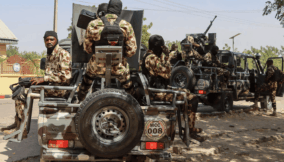
Animal rearers, who have unrestricted access to places, stretch such liberties to the limit, embarking on incessant incursions into crop farms. The sacking of many villages, killing of many innocent people in reprisal attacks, often carried out in the nights by the herdsmen, pose great social security risks. It was reported that the assailant herdsmen are moving from the use of bows and arrows to sophisticated ammunition, such as AK-47. Technically, they belong to no state. They can therefore perpetrate violence or any related crimes in one state and move elsewhere thereafter.
Of particular concern is the conduct of the herdsmen while taking their animals across major highways. This has led to many fatal, but avoidable, accidents with the loss of many precious lives. Apart from Jigawa State, under former Governor Sule Lamido, I hear of no other state that designated transit routes which are different from highways. In other states, major highways are essentially the transit routes for nomadic herdsmen and their cattle, sheep and goats. Nomadism is not compatible with the paradigm of treating agriculture as a business. The movement of animals over long distances subjects such animals to stress, infections, mortalities, physical (numerical) losses and poor performances, particularly during the dry periods when their food intake tends to be less than the energy expended. Animals born and raised under such circumstances tend to perform poorly, grow slowly and are highly susceptible to infections, sometimes leading to deaths. Lactating mothers often experience poor milk production and other associated physiological conditions such as acetonaemia (otherwise called KETOSIS), which could also lead to the loss of the mother cow. Performance losses due to ill-health are usually difficult to measure empirically, even in intensive farming. But they exist all the same and their impacts on production and financial returns are real and considerable. Diagnosis of disease conditions is a difficult task in cases of constant movement, particularly when there are no documented case histories. Animals are only known individually to the herdsmen and their observations about individual animals’ conditions are better taken with a pinch of salt. So, indices for determining performances are not in use, and whatever information about herds, their clinical conditions and economic performances are based more on conjecture.
Olukayode Oyeleye
Dr. Olukayode Oyeleye is the media adviser to the Minister of Agriculture

Join BusinessDay whatsapp Channel, to stay up to date
Open In Whatsapp