One year is too brief a time to assess President Muhammadu Buhari’s presidency, even as the past twelve months offered Nigerians a glimpse into the president’s leadership style and his resolve in tackling the nation’s problems. As Buhari marks his first year in office, the evaluations are mixed; the promised change is tempered by pessimism, yet anchored on tentative hope. As Nigeria’s challenges and unmet needs persist, Nigerians worry about government’s conflicting signals. Many feel that the President has frittered away the goodwill Nigerians had for him. There is also a foreboding sense that Nigeria is experiencing a synchronized national crisis, and that the country remains a zero-sum experiment, with public policies becoming a matter of loss and gain to geopolitical and ethnic sectors. Also, the continuing ascendancy of many aggrieved groups, which is adding to spiralling conflicts and restiveness, is prodding some to conclude that “under the change government, Nigerians are now more divided than ever before.”
Yet, security, power, economy and equity dominate all concerns, prompting some “questions that Buhari should address his mind to: Are Nigerians now better off than they were before the inception of the change government? Is the economy now better managed than previously? Has power supply improved more than before? Are Nigerians more secure now than before? Has the government fought corruption to a standstill?”Buhari’s emergence is propitious, as “There comes a time in the life of a nation when the appearance of a personality itself becomes a remarkable event, marking a turning point between one phase of history and another.”
The one year anniversary offers President Buhari an opportunity to render an account of his stewardship so far and point to the way forward. Though Nigerians remain acutely aware of the state of the nation, and more with resignation than optimism continue to hold out hope; after one year and with the benefit of hindsight, they are rethinking their unquestioning decision. Most feel they still suffer the ill-effects of poor governance. Ironically, the blame for present failings are all being personified and consigned to the president. Why this negative perception? Nigerians, confronted by the most perilous chasms of uncertainty related to change, are yet to fathom their dismissiveness of disbelief. This is not the change they wanted.
Buhari knew Nigeria’s challenges, had an action plan and made a commitment. His words: “Many Nigerians have completely lost faith in the country’s ability to govern itself. Nigerians have fundamentally lost faith in the leaders at the helm of the nation’s affairs. …I Muhamadu Buhari have come for the rescue. This is success by design.” He also made a pledge: “Our government will institute new policies to realise the new Nigeria…I pledge to do my utmost to make this happen but cannot do it alone… I need your help to become President of Nigeria so that government may come to serve you, so that it may bring relief to the broken and weary among us..”And, “I, Muhammadu Buhari have resolved that the task ahead of me is that of Securing our Nation and prospering our people – not looking backward to the failed policies and promises of the past.”Thus, assessing the first year of Buhari’s presidencyrequires looking at security, the economy, corruption and foreign policy.
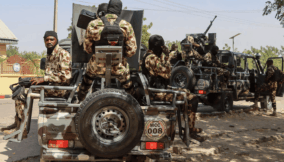
Security: Under Buhari, there has definitely been better coordinated and discernible rebuff and diminution of Boko Haram and recovery of territories the sect controlled. Involving Nigeria’s neighbours in the fight against Boko Haram under the Multinational Joint Task Force based in Ndjamena was a positive development. Yet the sense of gains made, was offset by the growing insecurity fraught by gun-wielding Fulani herdsmen. The rise in agitation by the Indigenous People of Biafra, the Avengers in the Niger Delta, etc also convey a sense of unease across the nation.
Economy: The economic progress is varied. While the Single Treasury Account (TSA) along with the previously established Bank Verification Number (BVN) has sanitized the Nigerian banking sector discernibly, the nation has inched closer to a recession, due to lack of clarity in fiscal policies, and refusal to allow the market forces determine the real value of the Naira. The mixed message conveyed over the removal of the fuel subsidy and lack of clarity in power and agricultural policies have impacted adversely on the economy. The generally declining economy is reflected by States’ inability to meet their fiduciary obligations, despite bailouts. Declining statutory revenue reflects government’s inability to move beyond oil and leverage on other means of internally generated revenue.
Corruption: The business environment in Nigeria is being sanitized, but more by fear than by commitment. The anti-corruption campaign is perceptibly gaining grounds. But despite high-level arraignments, the rate of convictions and loot recovery remains low. Because of the growing perception that tackling corruption is utilitarian and selective, the line between enforcement and ‘witch hunt’ has blurred, thus eliciting curious rationalizations. Yet, grappling with Nigeria’s complex politics requires toughness, if not ruthlessness. As Ben Nwabueze, once opined, “Some ruthlessness is called for in the management of public affairs, especially those of a complex society like Nigeria. For without it, no state can effectively be governed.”
Foreign Policy: There exist two positive strands in this regard. Buhari has succeeded in projecting the national image by his personal foreign engagements, despite his various faux pas, while aboard. His foreign policy seems to be gaining traction but solvency and dividends of the engagement are yet to manifest fully. Nonetheless, Buhari is deemed to have done well as the vicar of Nigeria’s foreign policy.
Two areas of challenges, strategic communication and policy coherence and coordination persist. Buhari’s Government has profound communication challenges. The President has not efficiently engaged Nigerians over the past year. Neither has he engaged on a policy debate or opened up the space for such debates. There is a broad sense also that President Buhari has failed to carry the entire nation along. His reneging on some campaign promises has created distrust and pushed his approval rating from the 90th percentile to 42% by May 2016.Also there’s lacuna in policy coherence and coordination, as evidenced by the handling of the 2016 budget; and his senior officials continue to offer divergent interpretations of government policies.
Buhari’s first year didn’t live up expectation, perhaps due to the high burden of expectation. It’s possible also that the challenges Buhari encountered outsized what he had envisaged. His accomplishments not being definitive led some to assess his performance as “dismal”; while some assessed him as “doing brilliantly well”. That mixed assessment notwithstanding, what matters is that Buhari remains sincere to his cause. However, he should know that since his first year fell short of expectation, he needs to use the remaining three years to set Nigeria aright.
Oseloka H. Obaze

Join BusinessDay whatsapp Channel, to stay up to date
Open In Whatsapp