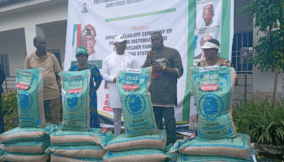
Five farming communities in Imo state namely: Aladinma, Ajaba, Eziosu, Ihite and Nneorie are reporting better yields on account of support given to them by Foundation for Partnership Initiatives in the Niger Delta (PIND), a non-governmental organisation funded by Chevron Corporation.
BusinessDay gathered during a visit to the communities two weeks ago that by implementing the best farming practices PIND taught the farmers in the communities, their yield per hectare have increased from an average of 8.3 tons per hectare to an average of 18.6 tons per hectare, indicating a 123 percent increase. As a result, the rural women are contributing significantly to the local economy.
PIND has expanded awareness through trainings and workshops, committed support and encouragement. Prior to the Foundation’s work in the state, the rural women said tillage was the only generally practiced method of cultivation, there was little or no application of fertilizer for greater yield, the cost of labour was comparatively high and they made little or no money from their harvest because the yield was low.
“But today, we are motivated to farm with greater zeal and interest because we are sure of the outcome of harvest,” says Comfort Ekem, president of Aladinma Women Association Umukabia Ogodo in Ngor Okpala local government area of the state at a town hall outreach on March 6.
The Town hall outreach held in Mezie Umukabia, in Ogodo community where the Aladinmma Multi-Purpose Cooperative Society made up of over 200 women cassava farmers supported by PIND and its partners operate. They were joined by groups Mezie Umukabia Ogodo and Eziorsu Palm Oil Farmers Association in Oguta.
Through this outreach awareness, PIND shine the spotlight on these women and attract key stakeholders to take actions that will help to boost productivity and profits for them and grow their farming and small businesses says Slyvestor Okoh, partnership and government engagement manager of the Foundation.
BusinessDay gathered that the practice of zero tillage has been changed with the use of mounds and ridges, there are now various improved variety of cassava stems, there is improved access to fertiliser, herbicides, pesticides and appropriate method of application.
But does this mean that the Foundation is taking over the role of government? Remi Chukwuyenre, special assistant to the governor on job creation and employment told BusinessDay, this is not so.
“The truth is that PIND is a development partner with Imo state to jointly work in improving the lives of the people,” says Chukwuyenre. “I got to know them in 2014 and brought them into the state and it has been a wonderful relationship. They have done a lot of work in the agricultural sector. The new technologies are improving the way things are done and also improving income for the people.”
PIND was established in 2010 with funding from Chevron Corporation as a regional strategy for addressing deep-rooted socio-economic problems in the Niger Delta rather than symptoms by growing networks of international and local partners to collaborate in developing and implementing new solutions and reducing dependence on oil in the region.
ISAAC ANYAOGU

Join BusinessDay whatsapp Channel, to stay up to date
Open In Whatsapp