The federal government has stepped up efforts to overhaul Nigeria’s livestock sector, with a renewed push to build a coordinated, data-driven framework for managing animal genetics, a move seen as critical to improving productivity, resilience, and long-term competitiveness.
Idi Mukhtar Maiha, minister of Livestock Development, said the reform drive will focus on fixing long-standing gaps in the management of Animal Genetic Resources, particularly the absence of harmonised systems for data collection, breed identification, and risk monitoring.
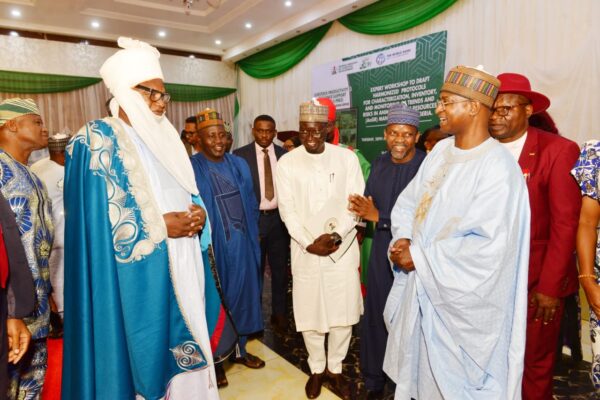
Speaking at a stakeholders’ consultative workshop in Abuja organised under the Livestock Productivity and Resilience Support Project, a World Bank-assisted programme, Maiha called for practical, science-based solutions that can be deployed across the country.
He stressed that Nigeria’s livestock economy cannot scale without reliable baseline data on indigenous breeds, including their distribution, genetic composition, and adaptive traits.
According to him, the absence of credible data has limited the country’s ability to design effective breeding programmes or align livestock production with specific agro-ecological zones.
The reform push is anchored on aligning Nigeria with global frameworks such as the Food and Agriculture Organisation’s Global Plan of Action for Animal Genetic Resources, as well as the Interlaken Declaration, both of which emphasise sustainable use and conservation of livestock biodiversity.
Industry experts at the meeting pointed to weak data systems as a major constraint on livestock sector performance.
Without accurate breed characterisation and inventory, policymakers lack the evidence needed to improve yields, manage disease risks, or prevent genetic erosion. This, stakeholders say, has implications for food security, rural incomes, and Nigeria’s ability to compete in regional and global livestock markets.
Maiha warned that the country risks losing valuable indigenous breeds without a structured monitoring system capable of detecting early signs of decline and triggering conservation measures.
Victor Egbon, director of Ruminants and Monogastric Development and National Coordinator on Animal Genetics, said the next phase of reform will prioritise simple, inclusive, and implementable protocols that can be adopted across all states.
He noted that the success of the initiative will depend on its scalability beyond federal institutions to subnational levels, where most livestock activities are concentrated.
Sanusi Abubakar, national coordinator of the Livestock Productivity and Resilience Support Project, described the workshop as a milestone in operationalising Nigeria’s National Strategy on Animal Genetic Resources launched in 2025.
He said the goal is to produce harmonised protocols that will guide nationwide data collection, strengthen breed identification systems, and establish continuous monitoring frameworks.
According to him, improved data systems will support better policy decisions, enhance conservation efforts, and drive productivity gains across the livestock value chain.
Hussein Gadain, country representative of the Food and Agriculture Organisation, FAO, reaffirmed technical support for Nigeria, noting that strong veterinary and genetic systems are central to disease control, food safety, and market stability.
He called for stronger governance frameworks, improved surveillance, and expanded laboratory capacity to support the reform agenda.
The Nigerian Governors’ Forum signalled support for expanding participation in the programme across remaining states, a move seen as critical to achieving nationwide coverage.
Traditional institutions also weighed in, with the Emir of Nasarawa, Alhaji Ibrahim Usman Jibril, calling for sustained collaboration to ensure effective implementation.
State-level project coordinators under the programme pledged to deliver practical and forward-looking frameworks that will guide conservation and sustainable use of animal genetic resources.

Join BusinessDay whatsapp Channel, to stay up to date
Open In Whatsapp