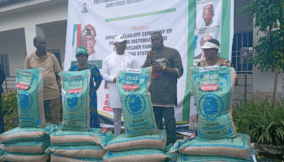
The Federal Government has commenced the final validation of a National Input Fertilizer Application Manual aimed at improving crop productivity, safeguarding soil health, and strengthening Nigeria’s food and nutrition security.
The manual was presented for stakeholder validation on Tuesday at a national workshop in Abuja, convened by the National Agricultural Development Fund, NADF in collaboration with key agricultural institutions and partners.
Mohammed Ibrahim, Executive Secretary, NADF said the workshop was designed to agree on final technical positions and ensure the document is practical for farmers, extension workers, and end users across Nigeria’s agro ecological zones.
He recalled that the process began with a pre workshop on the harmonised input application manual held in June 2025, after which a technical working group worked through several revisions to produce the draft for validation.
Ibrahim commended contributors to the harmonisation and review process, including Dr Innocent and his team, as well as the International Fertilizer Development Center, IFDC for its technical input.
He said fertilizer remains a major driver of agricultural productivity but only delivers value when applied correctly and responsibly.
According to him, inconsistent guidance and fragmented recommendations reduce efficiency and can damage soil health over the long term, making a harmonised national manual essential for sustainable farming practices.
Read also: FG, IITA pact on soil health to cut fertilizer costs, boost yields
Also speaking at the workshop, Abana Waziri Abba Firector, Farm Inputs Support Services before the FISS Department, said low soil fertility continues to limit agricultural productivity in Nigeria.
He noted that fertilizer is one of the most critical farm inputs for increasing crop yields, but conventional use has long been guided by blanket recommendations that do not reflect the diverse nutrient needs of soils across different ecological zones.
Abba warned that such generalised practices can lead to over fertilization in some areas, under fertilization in others, or an improper nutrient balance for specific crops.
He said validating the manual represents a deliberate shift toward precision agriculture, ensuring farmers apply the right nutrients at the right rate, at the right time, and in the right place.
He added that the initiative would also help address hidden hunger, a form of undernutrition linked to micronutrient deficiencies in food.
Both officials urged participants to provide practical recommendations that will support national adoption and implementation of the manual through extension systems and coordinated institutional support.
The workshop concluded with a call for stronger partnerships to move the manual from policy document to field practice for improved farmer livelihoods and sustainable food production.

Join BusinessDay whatsapp Channel, to stay up to date
Open In Whatsapp