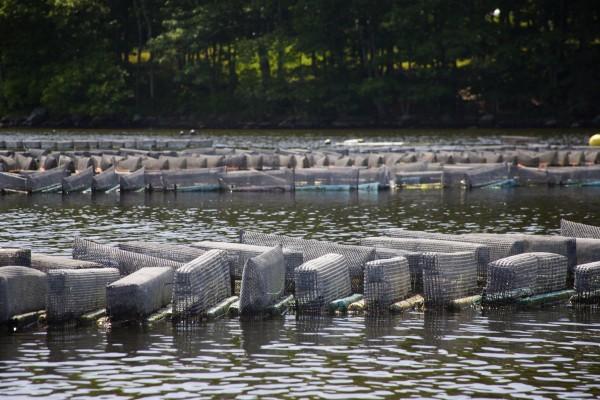
Nigeria’s target of achieving self-sufficiency in fish production is gaining traction as the country’s aquaculture production increased by 43 percent in five years, data from the recent National Bureau of Statistics (NBS) fish production report show.
The report shows that fish farmers (aquaculture) in the country produced a total of 316,727 metric tonnes in 2015 compared to 221,128 metric tonnes produced in 2011.
“Aquaculture is the only way Nigeria can bride its supply-demand gap. About 10 years ago the aquaculture sub-sector in the fishing industry produces about 80,000 MT, but now it is a big business for farmers,” said Akande Gbola executive director and chief executive officer, Nigerian Institute for Oceanography and Marine Research (NIMOR) in an interview with BusinessDay.
“There are three areas of fishing in Nigeria: the industrial, which is the trawlers owners; the artisanal, small- scale farmers that ply their trade with canoes; and the aquaculture, which is the farmers that farms tilapia, catfish and the likes,” Gbola said.
A total of 1.03 million metric tonnes of fish was produced in 2015 by the three subsectors, with artisanal having the highest with 694,867 metric tonnes, followed by aquaculture with 316,727 metric tonnes and industrial with 15,464 metric tonnes.
Nigeria’s total annual fish demand is estimated at 2.7 million metric tons (MT), while the country produces only 800,000 MT, leaving a gap of 1.9 million MT annually, according to data obtained from the country’s agricultural road map.
This yawning gap is filled with fish imports of N125bn (US$625m), which erodes Nigeria’s chances of diversification in the face of FX scarcity.
Nigeria’s per capita fish consumption is 11kg, which is significantly lower than the global average of 21kg and just less than the estimate of 13.5kg for Côte d’Ivoire.
Industry sources who spoke with BusinessDay blamed the failure of the country to tremendously increase its fish production in recent years on the high cost of quality fish feeds as a result of FX volatility which has constrained the importation of feeds and forced prices of fish to hit the roof tops, while also hurting the fish farming business.
“The situation is very bad for fish farmers because of the high cost of feeds in the market due to foreign exchange scarcity,” said Tayo Akingbolagun, national president of Catfish Farmers Association of Nigeria (CFAN) in a telephone response to questions.
“More than 95 percent of fish feeds in the country are imported,” Akingbolagun said.
He stated that aquaculture is one of the most viable sub-sectors in the agricultural sector and urged the government to address the issues in the fishing industry to avoid the shutting down of more businesses.
Nigeria’s aquaculture subsector is largely untapped and beset with a combination of problems; poor access to credit, lack of the requisite technical skills, unavailability of good quality and moderately priced fish feed, as well as lack of direct investments, industry sources said.
Akande Gbola, who was earlier cited, told BusinessDay that government still needs to create an environment that will attract investors into aquaculture, but admitted that there is an ongoing research from the government that could help reduce the cost of feeds.

Join BusinessDay whatsapp Channel, to stay up to date
Open In Whatsapp