Mike Enahoro is the managing director of Kuro Communications Limited. In this interview with BusinessDay’s HARRISON EDEH, he speaks on how the Anchor Borrowers’ Scheme has improved the economic status of Nigerian farmers.
Do you think the Central Bank of Nigeria (CBN)’s Anchor Borrowers’ Scheme will address the country’s high rate of rice importation?
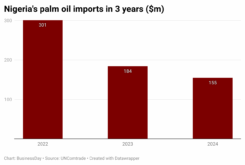
The most important thing to recognise is the impact of the initiative on the common Nigerian. In 2007 and 2008 alone, Nigeria was importing close to $800 million worth of rice on an annual basis, and the number grew to close $1 billion in 2014.
The most important thing to recognise is the impact of the initiative on the common Nigerian. In 2007 and 2008 alone, Nigeria was importing close to $800 million worth of rice on an annual basis, and the number grew to close $1 billion in 2014.
Now, apart from China, Nigeria is one of the world’s leading importers of rice and if we go back in history, you find out that about 14 variance of rice were discovered and known to have been produced in Nigeria. There was no political appetite to develop agriculture then and to boost the production of rice. The country lost its focus on the sector and this made us import dependent for some grains especially rice.
Anchor Borrowers is a knee jerk reaction to a surmounting problem in the agricultural sector. The success of the Kebbi project was born out of an untraditional cooperation between the CBN and the presidency. Kuro Communication has trained 41,000 out of the 96,000 farmers that were trained in Kebbi under the anchor borrows scheme. Our company is one of the three indigenous companies that are currently working on the scheme to build farmers’ capacity.
Under the scheme, farmers are provided with the loans, enabling environment to operate and provide off-takers for their produce. Farmers were taught good agricultural practice and linked with key players in the industry like the Institute of International Tropical Agriculture (IITA), and NIRSAL. For Kebbi, the focus under the scheme is on rice. The state has a comparative advantage in rice production.
How has the scheme helped in improving rice farmers’ yield per hectare?
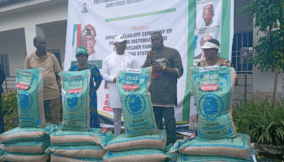
Under the scheme, farmers were provided with inputs like improved seeds and fertilisers and this has helped in improving their yield per hectare. We did training in Suru Local Government Area and 831 farmers out of 1196 under the scheme are already harvesting 5 to 6 tons of rice per hectare. Before now the yields were lower than 3 tons per hectare. With this improved yield, each farmer is making about N88,000 per ton.
What are the key other suggestions you would like to make in respect to ensuring sustainability of the scheme?
My honest position is that the government could lead the way and create the pathway as a regulator. The agric ministry has to take ownership of the anchor borrowers’ scheme for sustainability. The ministry must play into this and find their own space in this anchor borrower’s scheme. A policy has to be created and enacted which must be driven by the ministry for sustainability. The CBN has intervened and pumped in resources in this anchor borrowers’ scheme, but the agric ministry has to own it. The CBN at some point could exit from the programme.
The Anchor borrowers’ scheme must be done from a holistic perspective to drive more growth. The private sector should come in and invest in the programme; this would provide space for over 24 million youths captured in the value chain.
What impact does the current interest rate regime have on farmers’ ability to get loans from deposits money banks?
A single digit loan structure for the agricultural sector should be set aside at this point of economic crisis. The government must provide guarantee for money deposit banks to develop a template that would review interest rate from 24 percent to 9 percent. These issues must be well sorted out because we have seen that this is working- with the anchor borrowers’ scheme- where farmers get loans at single digit interest rate. The governors, the national council of states need to discuss this and come out with clear implementable sustainable and self-funding roadmap for farmers at single digit interest rate.
HARRISON EDEH

Join BusinessDay whatsapp Channel, to stay up to date
Open In Whatsapp