… UK contributes 1.5m tons of waste
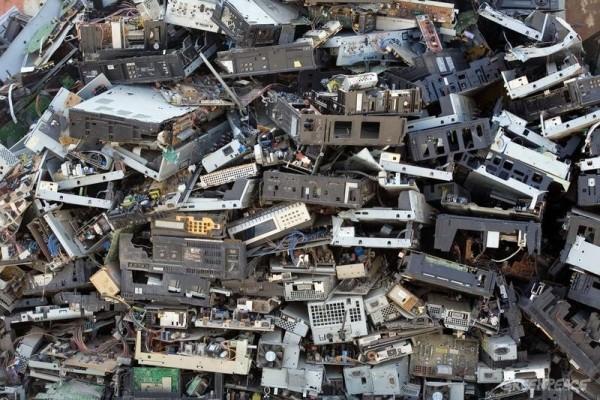
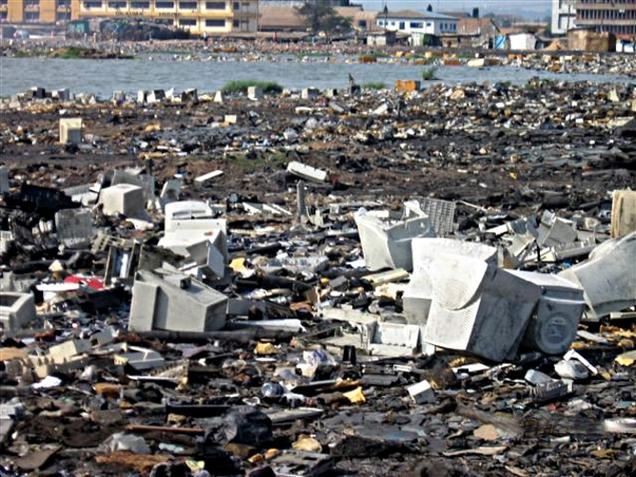
Two of West Af- rica’s economic powerhouses, Ni- geria and Ghana, are fast becoming bursting electronic grave- yards as tons of discarded appliances from all over the world – including the United Kingdom (UK) are being dumped every year.
Industry observers claim that thousands of broken TV, personal computers (PC), mobile phones, microwaves as well as refrigerators are being illegally exported to West Africa and dumped in gigantic land- fills like Agbogbloshie and Olusosun in Ghana and Ni- geria, respectively, because it costs less than recycling them in their countries of origin.
But interestingly, 41 mil- lion tons of electronic waste’ worth over £34 billion were discarded globally in 2014, according to a report by United Nations University that claim only 6 million tons of that was recycled properly.
The UK contributed 1.5 million tons of waste to the staggering 11.6 Europe generated last year – putting it behind only Germany as the continent’s greatest contributor.
That dwarfs the 1.9 mil- lion tons produced by the whole of Africa, and yet the continent’s Western nations have become a dumping ground for the world’s de- funct products.
Health practitioners however are of the view that some of the appliances even leak toxic elements such as lead and mercury, which harms the environ- ment.
Even more worry- ing is that young men who trawl through the defunct electronics hoping to find something worth selling, are exposed to these harm- ful elements, according to them.
“Developed countries export millions of tons of electronic waste annually into developing countries such as Ghana,” a group based in the country claims on its website.
Transporting broken or expired electron- ics to Africa is illegal but brokers exploit a loophole by fraudulently labelling the items as reusable, according to Ruediger Kuehr, head of United Nations University (UNU) who has a strong unequivocal position that Africa is becoming “a grave- yard for electronic waste.”
When massive contain- ers arrive in Ghana and Nigeria, they are trucked to remote locations where the locals can buy the prod- ucts directly without testing them to later sell in markets, Kuehr told MailOnline.
He also believes legal shipments can help close the digital divide between Africa and the West, but said: “If it turns out that this equipment arriving in Africa is no longer of use, there is no longer a market existing or that they are get- ting real waste… then we are having a real issue.”
In Nigeria, Lagos has witnesses a huge influx of e-waste in recent times.
“Lagos has a large seaport where the items easily slip through. Also, there is a huge appetite for cheap second-hand imported electronics items in the city,” Peter Ejiofor, a deal- er in second-hand PCs told IPS.
Olanrewaju Fagbohun, director of research at Ni- gerian Institute of Advanced Legal Studies (NIALS), said the trend was exacerbated by the lack of national regu- lation regarding import rules for used electronic goods.
“There is also weak en- forcement of existing re- lated laws; and also a lack of awareness of the risks/ potential harmful effects associated with e-waste, coupled with lack of tech- nical capacity for environ- mentally sound management,” Fagbohun said.
BEN UZOR, with wire reports

Join BusinessDay whatsapp Channel, to stay up to date
Open In Whatsapp