

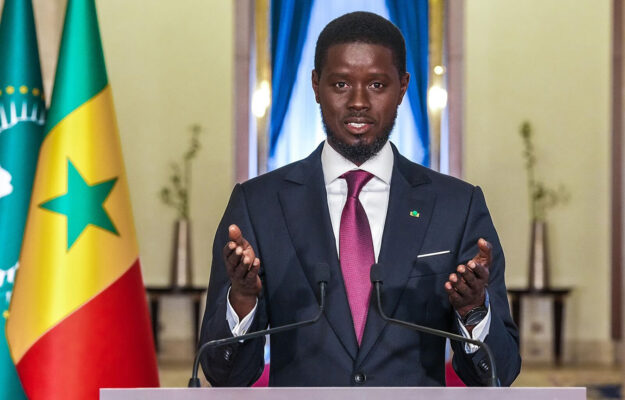
Senegal’s political tensions have moved into a new and potentially disruptive phase after President Bassirou Diomaye Faye unveiled a new cabinet that excluded several prominent allies of Ousmane Sonko, deepening a rift at the heart of the country’s ruling movement at a time of mounting economic pressure.
The cabinet announcement came days after Faye dismissed Sonko as prime minister and dissolved the previous government, marking the most significant rupture yet between the two leaders who swept to power together under the banner of the Pastef movement and promised sweeping political and economic reforms.
Ahead of the reshuffle, Sonko publicly declared that Pastef would not participate in the incoming administration, arguing that unresolved differences with the president had made continued cooperation impossible.
“Discussions with the president have revealed significant differences regarding political strategy and governance,” Sonko said in a public statement, adding that the party leadership had decided to withdraw from the new government.
Yet the cabinet unveiled by newly appointed Prime Minister Ahmadou Al Aminou Lo included several figures linked to Pastef, creating uncertainty about the extent of the party’s continued influence within the administration and highlighting the complex political dynamics now unfolding in Dakar.
Read also: Insecurity: CAN declares three-day national mourning, seeks emergency security measures
Among the most notable appointments, Finance Minister Cheikh Diba retained his position while also taking charge of the economy portfolio. Government officials said the expanded role would improve policy coordination as Senegal confronts growing fiscal challenges and seeks to restore investor confidence.
The political fallout comes at a delicate moment for one of West Africa’s most important economies.
According to Africa Economic Inc, Senegal is grappling with the consequences of a debt crisis that emerged after authorities disclosed substantial previously unreported liabilities inherited from the former administration.
Read also: Shettima lauds space X contributions to Nigeria’s emergency, disaster response
The revelations prompted the International Monetary Fund to suspend its $1.8 billion support programme, raising concerns among investors about the country’s fiscal outlook and debt sustainability.
Senegal’s public debt is estimated to have reached about 132 percent of gross domestic product by the end of 2024, making negotiations with the IMF increasingly important for restoring financial stability and securing access to external financing.
Government officials have indicated that talks with the IMF are expected to resume this month as authorities seek a new financing arrangement and a credible path toward addressing the country’s mounting fiscal pressures.
Despite his removal from the premiership, Sonko has demonstrated that his political influence remains intact.
Last week, lawmakers reinstated him as a member of parliament before electing him Speaker of the National Assembly with overwhelming support. The position places him at the centre of Senegal’s legislative process and gives him considerable influence over the government’s reform agenda.
Political analysts say the development creates an unusual power structure in which the president and the head of parliament, once close allies, now appear to be pursuing different political paths.
“The separation of power between the executive and legislative branches could become a major test for Senegal’s governance model,” one Dakar based political observer said. “Much will depend on whether the two leaders can find common ground on economic reforms and national priorities.”
For investors and international partners, the growing divide between Faye and Sonko raises questions about policy continuity at a time when Senegal is seeking to rebuild confidence, stabilise public finances and revive economic momentum.
As negotiations with international lenders resume and economic challenges intensify, the relationship between the country’s two most influential political figures may prove decisive in determining whether Senegal can navigate one of the most consequential periods in its recent history.

Join BusinessDay whatsapp Channel, to stay up to date
Open In Whatsapp


