Africa’s brief hold-rate era is drawing to a close as a growing number of central banks once again prioritise fighting inflation over supporting economic growth, signalling a new phase in the continent’s monetary policy cycle.
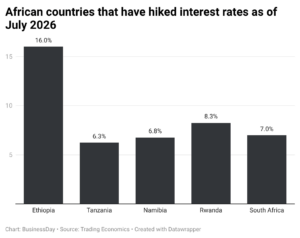
After almost four months in which most African central banks left borrowing costs unchanged as inflation eased from multi-year highs, policymakers are becoming increasingly cautious. Ethiopia’s decision last week to raise its Monetary Policy Rate (benchmark interest rate)for the first time in two years adds to earlier tightening moves by South Africa, Namibia, Rwanda, and Tanzania, reinforcing signs that the continent’s monetary authorities are once again leaning towards tighter policy amid renewed inflationary pressures.
The shift reflects growing concerns that recent gains in taming inflation could prove short-lived. Rising oil prices, weakening currencies and renewed geopolitical tensions are forcing central banks to reassess the balance between supporting economic growth and preserving price stability.
Renewed hostilities involving the United States, Israel and Iran have injected fresh uncertainty into global energy markets, pushing Brent crude close to $90 a barrel and raising the risk of imported inflation across many African economies. For countries that depend heavily on imported fuel, higher oil prices quickly feed into transport, electricity and food costs, squeezing households, increasing business costs and putting renewed pressure on consumer prices.
The latest development marks a reversal from the trend seen in 2025 and earlier this year. After one of the most aggressive monetary tightening cycles in decades between 2022 and 2024 to combat inflation fuelled by currency depreciation, global supply chain disruptions and fiscal pressures, many African countries paused rate hikes as price pressures eased. Some, including Ghana, Egypt, Angola, Zambia and South Africa, even began cautiously lowering borrowing costs to support economic recovery.
That window for easing is now narrowing.
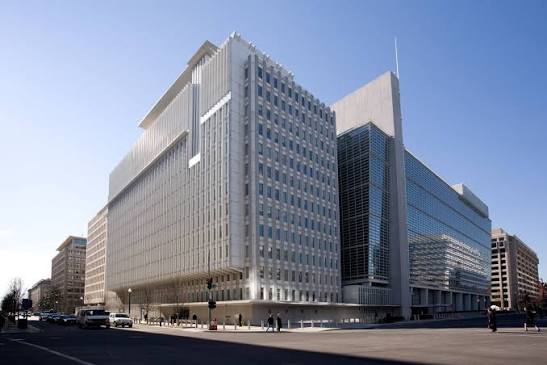
According to the World Bank’s latest Africa Economic Update, higher food and fuel prices could reignite inflation across developing economies, forcing central banks to keep interest rates higher for longer.
“Higher inflation is likely to erode households’ purchasing power, while increases in domestic interest rates may discourage household consumption and dampen domestic investment, ultimately weighing on economic activity,” the Bank said.
The multilateral lender also warned that higher global interest rates would increase debt-servicing costs for governments, limiting fiscal space and reducing their ability to cushion households from rising prices.
BusinessDay’s review of monetary policy decisions across 17 African central banks illustrates the changing landscape. As of July, five central banks have raised interest rates, nine have kept policy unchanged and three have continued easing, highlighting an increasingly fragmented monetary policy environment as countries respond to differing inflation dynamics and domestic economic conditions.
The data shows the continent’s brief hold-rate era is giving way to a more cautious, inflation-focused policy stance. While a handful of countries still have room to lower borrowing costs, an increasing number are signalling that the battle against inflation is far from over.
Central banks turning hawkish
Ethiopia raised its benchmark Monetary Policy Rate to 16 percent from 15 percent, marking the first increase since the rate was introduced in 2024 and the East African nation’s first monetary tightening in nearly a decade. The move for Africa’s second most populous nation came as inflation accelerated to a year high of 13.9 percent in June, after falling into single digits in December for the first time in almost a decade.
The National Bank of Ethiopia also removed its 24 percent cap on annual credit growth for commercial banks, signalling confidence that tighter monetary policy can contain inflation while allowing banks greater flexibility to lend.
Tanzania increased its key interest rate by 50 basis points to 6.25 percent, its first hike since April 2024, to keep inflation within its three to five percent target range. Although inflation remained relatively contained at four percent in June, policymakers cited risks from external shocks and currency weakness. The Tanzanian shilling has depreciated 7.4 percent against the US dollar as of July 19, making imported goods more expensive and increasing inflationary pressures.
Namibia raised its repo rate by 25 basis points to 6.75 percent after holding rates steady for three consecutive meetings. The central bank said the move was necessary to contain inflationary risks from higher energy prices and protect the peg between the Namibian dollar and the South African rand. Inflation in the Southern African nation rose to 4.4 percent in June, the highest level in 15 months, prompting the bank to revise upward its inflation forecasts for 2026 and 2027.
Rwanda has been among Africa’s most aggressive central banks this year. After a 50-basis-point increase in February, it followed up with a 100-basis-point hike in May, taking its benchmark rate to 8.25 percent, the highest since 2009. Policymakers said tighter policy was needed after inflation surged to 12.7 percent in June, its highest level in nearly three years.
South Africa delivered its first interest-rate increase since 2023 in May, raising the repo rate by 25 basis points to 7 percent as policymakers warned that higher oil prices and geopolitical tensions could trigger second-round inflation effects.
Inflation accelerated to 4.5 percent in May, moving further away from the central bank’s preferred 3 percent target. In a recent report, Bank of America said it expects inflation in the continent’s largest economy to rise to 4.7 percent before moderating and forecasts another 25-basis-point increase at the South African Reserve Bank’s next meeting taking place on Thursday before policymakers pause.
Central banks opt for patience
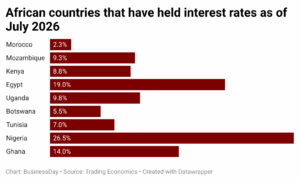
While a growing number of African central banks have resumed tightening policy, most are still choosing to keep interest rates unchanged, arguing that existing borrowing costs remain restrictive enough to contain inflation while supporting fragile economic recoveries.
Morocco has held its benchmark interest rate at 2.25 percent since September, extending its longest period of policy stability in years. Although inflation eased to 1.2 percent in May, policymakers continue to monitor rising energy prices and imported inflation risks. The central bank expects inflation to average 1.5 percent this year, supported by stronger agricultural output and resilient economic growth.
Mozambique kept its benchmark MIMO rate unchanged at 9.25 percent for a second consecutive meeting, citing uncertainty over global fuel prices and the potential impact of Middle East tensions on inflation. While leaving rates unchanged, the central bank tightened liquidity by raising the reserve requirement ratio on local currency deposits, underscoring its determination to contain inflation without further increasing borrowing costs.
Kenya also maintained its benchmark rate at 8.75 percent, saying the current stance remains appropriate to anchor inflation expectations and support exchange-rate stability. Inflation in East Africa’s biggest economy eased to 6.4 percent in June after accelerating for three consecutive months, with policymakers expecting price pressures to remain manageable, supported by favourable weather, government fuel measures and a stable shilling.
Egypt extended its pause by leaving its benchmark interest rate at 19 percent, marking a third consecutive hold after an almost year-long easing cycle. Headline inflation slowed to 14.3 percent in June, while economic growth moderated amid geopolitical uncertainty and weaker global demand. The central bank expects inflation to continue easing over the medium term but believes it is too early to begin loosening policy further.
Uganda has kept its benchmark lending rate at 9.75 percent since October 2024, maintaining that its current policy stance remains appropriate even as inflation edged up to 3.7 percent in June. Policymakers expect inflation to rise moderately in the second half of the year before stabilising around the central bank’s target, while economic growth remains supported by stronger exports and investment.
Botswana, which surprised markets with a 200-basis-point rate hike in April, chose to leave borrowing costs unchanged at 5.5 percent in June. The central bank said it wanted time to assess the impact of earlier tightening, even as inflation accelerated to 10.7 percent in May, driven largely by higher energy prices.
Tunisia also maintained its benchmark interest rate at 7 percent, citing easing inflation and continued uncertainty over the global outlook. Annual inflation slowed to 5.3 percent in June, its lowest level in three months, giving policymakers room to remain patient.
Africa’s two largest economies, Nigeria and Ghana, are also expected to maintain their cautious stance at monetary policy meetings this week.
Nigeria’s central bank held its benchmark rate at 26.5 percent in May after raising it by 50 basis points in February. Headline inflation eased to 15.91 percent in June, its first decline since February, but policymakers have continued to emphasise the need to safeguard price stability.
Analysts at CSL Research expect the Central Bank of Nigeria to leave rates unchanged, noting that while inflation risks remain skewed to the upside because of food supply challenges and renewed geopolitical tensions, the underlying disinflation trend remains intact.
“Consequently, we expect the CBN to maintain its current restrictive monetary policy stance in the near term before cautiously considering policy easing later in the year, conditional on continued inflation moderation and exchange rate stability,” CSL Research said in a recent note.
Similarly, Ghana is expected to keep its benchmark rate at 14 percent after pausing in May following five consecutive rate cuts. Governor Johnson Asiama has warned that renewed Middle East tensions have heightened inflation risks and increased policy uncertainty despite improving macroeconomic conditions.
The Ghana Bankers Association also expects the Bank of Ghana to leave rates unchanged. Its chief executive, John Awuah, said improving economic indicators had been overshadowed by fresh inflationary pressures, reinforcing the case for caution.
The rate cutters
While most African central banks are either raising rates or keeping policy tight, few have continued to ease monetary policy, betting that inflation has fallen enough to support economic growth without jeopardising price stability.
Angola has emerged as one of the continent’s most aggressive rate cutters this year. Earlier this month, the National Bank of Angola lowered its benchmark rate by 125 basis points to 15.75 percent, following a 50-basis-point cut in May, bringing borrowing costs to their lowest level in five years.
The decision was underpinned by a sustained decline in inflation, which slowed to 10.11 percent in June, its lowest level since 2015. Governor Manuel Tiago Dias said the central bank expects inflation to continue easing despite uncertainty linked to renewed tensions in the Middle East.
Zambia also lowered its MPR by 25 basis points to 13.25 percent in May after inflation fell to 6.5 percent in June, its lowest level since 2018 and comfortably within the central bank’s target range of six to eight percent. Policymakers cited expectations of a strong maize harvest and exchange-rate stability but warned that geopolitical tensions and higher oil prices remain key risks to the inflation outlook.
Zimbabwe led Africa’s easing cycle among the three rate-cutting central banks, lowering its benchmark interest rate by 500 basis points to 30 percent in June, its first adjustment since adopting the Zimbabwe Gold (ZiG) currency in 2024. The Reserve Bank said moderating inflation and improved exchange-rate stability provided scope to support economic activity without undermining price stability. Even after the cut, Zimbabwe continues to have the highest policy rate in the continent.
A continent moving at different speeds
Africa’s diverging monetary policy paths highlight the uneven nature of the continent’s economic recovery. While countries battling persistent inflation are prioritising price stability through tighter policy, those where inflation has eased are cautiously lowering borrowing costs to support investment and growth.
For businesses, particularly small and medium-sized enterprises, higher interest rates mean more expensive loans, slower expansion and tighter access to credit. Consumers also face higher borrowing costs, while governments could see debt-servicing costs rise if interest rates remain elevated for longer.
At the same time, maintaining a restrictive policy stance may help support currencies, anchor inflation expectations and preserve investor confidence in an increasingly uncertain global environment.
The next test comes this week as Nigeria, Ghana and South Africa hold monetary policy meetings. Their decisions will provide the clearest indication yet of whether Africa’s largest economies are prepared to tighten further or continue to wait for clearer signs that inflation risks are easing.
One thing, however, is becoming increasingly clear: the continent’s brief hold-rate era is fading. After pausing to assess the impact of earlier tightening, many African central banks are once again putting the fight against inflation ahead of growth. As volatile oil prices, currency pressures and geopolitical tensions continue to shape the global outlook, policymakers appear determined not to repeat the mistakes of easing too soon.

Join BusinessDay whatsapp Channel, to stay up to date
Open In Whatsapp