
The 13th edition of the Africa CEO Forum, which opened in Kigali, Rwanda on Thursday and concluded on Friday, highlighted a continent grappling with rising borrowing costs, slowing growth and shifting geopolitical alliances. From governments seeking cheaper alternatives to dollar-denominated debt to fresh investment pledges, job market stress, and mining expansion plans, African policymakers and corporations are recalibrating their strategies to navigate a more volatile global economy.
African nations hunt cheaper loans as dollar funding costs surge
African governments are increasingly moving away from traditional dollar borrowing as elevated global interest rates make access to international debt markets more expensive. According to Citigroup Inc., countries across the continent are exploring alternative funding routes, including yuan financing in Egypt, Samurai bonds in Kenya and fundraising arrangements tied to the United Arab Emirates in Nigeria.
Why it matters: The shift reflects growing pressure on African sovereigns to reduce debt servicing costs and diversify funding sources as access to global capital markets tightens.
FirstRand moves to sell UK unit Aldermore amid compensation crisis
FirstRand has appointed advisers for the planned sale of its UK-based Aldermore Group as the lender reassesses its European expansion strategy. The move comes amid mounting fallout from Britain’s motor finance compensation crisis, which has increased risks and uncertainty for lenders operating in the market.
Why it matters: The planned exit highlights how African banks are becoming more cautious about overseas expansion as regulatory and legal risks rise in developed markets.
South Africa’s jobless population climbs to 8.1 million
South Africa’s unemployment crisis worsened in the first quarter of 2026, with more than 300,000 jobs lost amid weak demand and economic fragility. Data from Statistics South Africa showed the unemployment rate rose to 32.7 percent from 31.4 percent in the previous quarter, exceeding analyst expectations.
Why it matters: Rising unemployment adds pressure on Africa’s most industrialised economy at a time of mounting social tensions, weak growth and increasing political risks.
Zimbabwe wealth fund seeks $250m to expand gold mining
Zimbabwe’s sovereign wealth fund, Mutapa Investment Fund, is seeking to raise $250 million to expand gold mining operations as the country pushes to boost mineral exports and foreign currency earnings. The fund said it is in talks with local lenders to finance projects under its mining subsidiary, Mutapa Gold Resources.
Why it matters: The move underscores Zimbabwe’s growing reliance on gold exports to stabilise foreign exchange inflows and support a fragile economy.
Macron pivots to private-sector partnerships in Africa
French and African investors pledged €23 billion ($27 billion) at the France-Africa Summit in Nairobi, signalling a stronger push toward private-sector-led partnerships. French President Emmanuel Macron said the commitments included €14 billion from French firms and €9 billion from African investors and entrepreneurs.
Why it matters: The shift reflects France’s effort to rebuild influence in Africa through trade and investment rather than traditional political ties, amid growing competition from China, the Gulf states and Turkey.
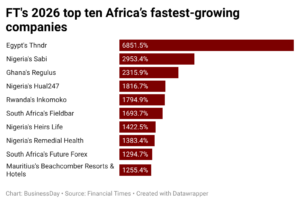
Chart of the Week

Join BusinessDay whatsapp Channel, to stay up to date
Open In Whatsapp