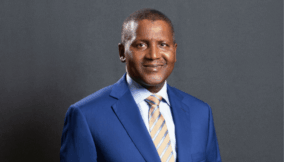
The appointment of Wale Adeniyi as the Comptroller-General of Customs (CCG) by President Bola Tinubu in June 2023 has recorded many milestones for the nation’s port industry in the last two years.
Barely two years into his administration, Adeniyi has not only surpassed revenue targets of the Nigeria Customs Service (NCS) but has successfully put Nigeria on the global map in Customs administration.
This follows his recent election as the chairperson of the World Customs Organisation (WCO) – the supreme decision-making body of the global Customs administration.
The World Customs Organisation Council is the governing body of the organisation, comprising the heads of 186 Customs administrations across the globe.
Elected on 28 June 2025 at the just concluded 145th/146th sessions of the WCO Council meeting held at the WCO headquarters in Brussels, Adeniyi’s tenure as chairperson of the body took effect from 1 July 2025.
He succeeded Edward Kieswetter, commissioner of the South African Revenue Service, and becomes the first Nigerian to hold this prestigious position.
In his acceptance speech, Adeniyi lauded the Council members for the confidence placed in him, describing the moment as both humbling and historic.
“This honour reflects the collective progress of the Nigeria Customs Service and the transformative agenda we have pursued over the past two years,” he said.
He pledged to uphold the core values of the WCO, while promoting innovation, equity, and deeper collaboration among member states.
He further committed to pushing forward the WCO’s ongoing modernisation initiatives and its 2025-2028 Strategic Plan.
“We are entering a critical phase in the evolution of global trade, where Customs must balance facilitation with enforcement, transparency with innovation, and sovereignty with cooperation,” Adeniyi explained.
Commending Edward Kieswetter, whose leadership, he said, provided stability and laid a solid foundation for current and future reforms, he promised to work closely with member administrations and stakeholders to position the WCO as a dynamic and forward-looking institution fit for today’s challenges.
Role of a WCO Chairperson
As chairperson, Adeniyi will lead the WCO Policy Commission, drive strategic discussions on trade facilitation, revenue optimisation, security, cross-border cooperation and digital transformation.
He will also work closely with lan Saunders, secretary-general of WCO and the entire WCO Secretariat to ensure effective implementation of the organisation’s strategic goals.
It is also the responsibility of the chairperson to bring the views of the 186 members together to guide the work of the global Customs community.
The chairperson plays a key diplomatic role, represents the WCO at global forums and strengthens relationships with external partners such as the Private Sector Consultative Group (PSCG), donor agencies, and multilateral trade institutions.
Benefits for Nigeria and Africa
Adeniyi’s election as chairperson of WCO signalled the global recognition of the ongoing modernisation of the Nigeria Customs Service, which was globally attested to at this year’s WCO meeting by the leadership of the World Trade Organisation (WTO).
According to Ngozi Okonjo-Iweala, director-general of the WTO, there has been a sustained effort in Customs modernisation and trade facilitation in Nigerian seaports since Adeniyi came into power.
“The leadership of CGC Adeniyi has positioned Nigeria as a model for Customs modernisation across the continent. These efforts are critical to strengthening global trade and ensuring that Customs administrations contribute meaningfully to economic development,” she said while presenting a keynote at the opening of the WCO Council session in Brussels.
His leadership will enable Nigeria to spread the message of Customs reform across the Global South and to rally Customs administrations in Africa to advance the implementation of the African Continental Free Trade Area (AfCFTA).
It provides an avenue for Nigeria and the global Customs administration to fully commit to implementing reforms that promote transparent, secure, and efficient trade.
Furthermore, Nigeria can now play a pivotal role in shaping the future of Customs innovations and driving policies that promote global supply chain resilience.
In a position paper signed by Eugene Nweke, head of research at the Sea Empowerment and Research Centre (SEREC), said the centre believed that Adeniyi’s position presents a unique platform to champion African and Global South interests, and ensure their voices are adequately represented in global Customs decisions.
Nweke described it as an avenue to strengthen international partnerships, foster knowledge exchange, best practices, and foreign investments that would benefit Nigeria Customs and the trade ecosystem.
He also believed that Nigeria could use this opportunity to further simplify and streamline Customs processes to reduce bureaucratic bottlenecks and enhance cargo movement.
Stakeholders’ views
Adeniyi’s election has received several commendations in the past few weeks, with President Bola Tinubu leading the way.
President Tinubu described the CGC’s election as a global recognition and honour that is evident in the hoisting of Nigeria’s flag at the WCO headquarters.
On his part, Muda Yusuf, chief executive officer (CEO) of the Centre for the Promotion of Private Enterprise (CPPE), described Adeniyi’s appointment as a boost to Nigeria’s international reputation and image of the NCS, which would further enhance the service’s operations.
Isah Jibrin Echocho, senator representing Kogi East who doubles as the chairman of the Senate Committee on Customs, said the appointment was due to the reforms executed by Customs under Adeniyi.
He listed them to include improved revenue collection, aggressive anti-smuggling operations, and accelerated digital transformation within the Nigerian Customs.
“This is not just a ceremonial role; it is a strategic validation of Nigeria’s leadership capacity in global trade. Under Adeniyi, Customs has exceeded revenue targets, gained international recognition, and modernised its operations in line with global best practices,” Echocho said.
He added that NCS had surpassed federal revenue benchmarks by as much as 20 percent annually over the past five years, making it one of the country’s highest-performing government institutions.
The lawmaker called on the Nigeria Customs to use the opportunity to shape policy, deepen reforms, and make Nigeria a trade innovation hub.
Established in 1952, the last time a Nigerian served in WCO’s leadership position was in 1985, when Abubakar Musa briefly served as a director for just six months.
Therefore, Adeniyi’s new position provides Nigeria Customs with the platform to consolidate on reforms and shape policies that would benefit African trade and Nigerian ports.

Join BusinessDay whatsapp Channel, to stay up to date
Open In Whatsapp