…As Shettima pushes for human capital devpt
The International Monetary Fund (IMF) has thrown its weight behind Nigeria’s efforts to borrow more funds to meet its pressing short-term financial needs, urging the country to simultaneously ramp up revenue and ensure prudent management of its scarce resources.
Abebe Aemro Selassie, director of the IMF’s African Department, gave the recommendation during a press briefing on ‘the Regional Economic Outlook for Sub-Saharan Africa,’ held at the IMF/World Bank Spring Meetings in Washington D.C weekend.
“There will be a financing need,” Selassie said, noting that, “what’s needed is really a judicious and agile way of dealing with the financing challenges the country faces.”
Read also: IMF urges transparency in Nigeria oil sector
While acknowledging that long-term fiscal sustainability will require stronger domestic revenue generation, Selassie emphasised that in the interim, borrowing, if approached cautiously, can be an essential part of the solution.
“In the long run, the financing gap can only be filled by permanent sources such as revenue mobilisation,” he said. “But in the interim, carefully looking at all of the options the country has to borrow in a contained way will be part of that solution. And I think the government has been going about this prudently and cautiously so far, we are encouraged by that.”
Selassie praised the Nigerian government for confronting long-standing macroeconomic distortions, particularly the removal of fuel subsidies and the efforts to correct foreign exchange (FX) misalignments. He described these as critical steps toward restoring macroeconomic balance.
“It’s been really good to see the government taking these issues head-on, removing fuel subsidies, which were consuming a large share of limited tax revenues without effectively helping the most vulnerable, and addressing the wide misalignment in the exchange rate,” he said.
He also noted that Nigeria is beginning to implement the third leg of the IMF-supported reform agenda, which borders on expansion of social protection to cushion the impact of the reforms on the most vulnerable.
“Expanding social protection, targeting subsidies better and ensuring that reforms benefit those who need them the most have all been very good to see,” Selassie said.
However, he stressed that more still needs to be done, particularly in enhancing transparency in the oil sector, to ensure that revenues from subsidy removal effectively flow into the national budget.
“There’s still a bit more work to do, especially in strengthening transparency in the oil sector so that the removal of subsidies translates into actual fiscal gains,” he noted. “We also had a recent mission to Nigeria where extensive discussions were held on these issues, as well as on broader macroeconomic reforms.”
He highlighted that boosting private sector investment and channelling more resources toward education, infrastructure, and other critical sectors will be vital to Nigeria’s economic transformation.
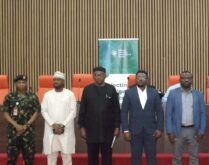
VP canvasses human capital
Meanwhile, Vice President Kashim Shettima seized the moment to call for stronger international collaboration to advance Nigeria’s Human Capital Development 2.0 (HCD 2.0) strategy.
Stanley Nkwocha, senior special assistant to the president on media and communications (Office of The Vice President), in a statement, said that Shettima also reaffirmed the commitment of the administration of President Bola Tinubu to position human potential at the heart of national development.
The VP stated this while speaking virtually at a high-level roundtable on the sidelines of the World Bank/IMF Spring Meetings, noting that the success of HCD 2.0 would hinge on data-driven, evidence-based interventions and sustained political will.
The HCD 2.0 programme is designed to elevate Nigeria’s human capital Index and equip the nation to face both national and global challenges, including climate change and digital transformation.
The VP pointed out that the meeting was necessitated by the urgency to invest in the Nigerian people and by the recognition that true national wealth is found not in natural resources, but in human potential.
Read also: IMF urges countries to lower trade barriers, safeguard economic stability
“This meeting, for us, is not just another item on our global agenda. It is a continuation of a journey whose beginnings I had the privilege of witnessing about seven years ago. True national wealth is found not in natural resources, but in human potential.
“We will offer our HCD 2.0 Strategy the political backing it deserves to be the priority of our nation, and His Excellency, President Bola Ahmed Tinubu, has never wavered on this,” he said.
Shettima reiterated the federal government’s determination to ensure the continuity and deepening of the HCD agenda.
“Government is a continuum. Nowhere is this truer than in programmes that demand patience, vision, and long-term commitment—programmes such as our Human Capital Development programme,” he noted.
He revealed that under HCD 2.0, six priority indicators from health, education, and labour force sectors have been selected as
‘quick wins’ to guide policy interventions and track measurable progress.
“We have carefully curated priority indicators and an HCD dashboard to track them. This allows us to make informed policy decisions and measure our progress against tangible benchmarks,” Shettima further said.

Join BusinessDay whatsapp Channel, to stay up to date
Open In Whatsapp