On Wednesday, 3rd June 2015, Godwin Emefiele marked his first year as the CBN governor. In the course of this period, he has had the tough but historic twin challenges of having to re-focus the CBN to its original mission as an apolitical, professional institution while managing a financial system beset by crisis of a magnitude unprecedented within the last few decades. On both scores, Emefiele has shown disciplined consistency in managing this perfect storm of challenges in a calm yet innovative manner which has earned the country’s monetary management the commendation of respected global institutions. At the same time, he has taken effective actions and made bold interventions albeit without the drama which defined the tenures of his colourful predecessors.
Under his calm and steady watch, the operations of the CBN within this period have been re-aligned more towards the fulfilment of its core function of being a strong, professional, independent, firm and proactive monitor/regulator of the Nigerian financial system. Unlike his predecessors who courted public and media attention, a good blend of his quiet personality and unpretentious style of leadership has largely steered the CBN clear of the distractive waters of politics. Beyond key official business and functions, Godwin Emefiele is largely absent from the media. He has been able to establish a cordial but independent, professional working relationship with the Villa.
Emefiele assumed the reins at CBN on the eve of a looming financial storm. He inherited a financial system which was not only facing immense political turmoil but also confronting the severe threat of a 50 percent steep decline in oil prices that decimated government revenues. This serious situation was exacerbated by falling foreign reserves and barely $3.5 billion in the Excess Crude Account. Worse, foreign investors were divesting from the capital markets divestments over fears of post 2015 election violence and a military campaign against rampaging Boko Haram insurgents in the North East. It was a crisis of gargantuan proportions that required immediate solutions. Emefiele did not have the luxury of a learning curve or even the normal period of settling down. Unlike several of his predecessors, he did not enjoy the luxury of learning the ropes but like a new captain who had to take charge of a ship in stormy seas from the very first voyage.
Confronted with such a bleak portrait of the Nigerian financial situation, Godwin Emefiele set to work in a bold and pragmatic manner that showed him as being clear on vision, clear on the challenges that needed to be managed. He was quick to outline clear, precise actions that needed to be taken to fix the problems in the short, medium and long terms. Here are some examples:
1.) Towards the end of last year, he barred commercial banks from holding any part of their funds in United States dollars at the close of each business day so as to reduce pressure on the naira, even though this was reviewed to 0.5 percent limit, it helped a great deal.
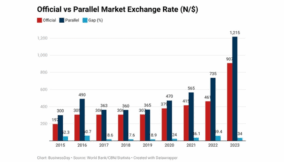
2.) This was followed by the devaluation of the naira when it became apparent that the CBN could not continue to defend the naira with depleting reserves. Under Emefiele, the CBN has devalued the naira twice in the last one year, all in an effort to achieve a stable exchange rate.
3.) The CBN governor also scrapped the bi-weekly auctions in which the central bank sold foreign currency at a predetermined rate, putting paid to the sharp practices of unscrupulous elements within the financial system that led to the creation of unnecessary and fictitious demands for foreign exchange. He was not deterred by the uproar and brushed off the campaigns mounted by vested corrupt interest that had manipulated the weaknesses in the system to profit. He is quoted to have emphatically stated that “(The window) is not closed. It is crushed and destroyed for life.” “Nothing is going to be opened again. We are not going to go back to a subsidized regime.” This move was applauded by the International Monetary Fund (IMF) who noted that greater exchange rate flexibility could help cushion external shocks. But the central bank has continued to intervene in the interbank foreign exchange market to meet verified and genuine demands.
Such strong, precise and proactive measures that Godwin Emefiele has so far boldly taken to manage the volatility in the foreign exchange market as a result of the steep fall in global oil prices, a very difficult electioneering period and very limited foreign reserves have shown that he possesses the quiet capacity to manage difficult situations. They have also increased the confidence of the world in our financial management system. Expectedly, not only has this earned him respect within the Nigerian financial community, within the first six months of assuming office, a Portuguese newspaper named him the Best Central Bank Governor in the world for his adroit management of the impact of the oil price plunge on the naira and inflation.
Paul K. Adegboyega

Join BusinessDay whatsapp Channel, to stay up to date
Open In Whatsapp