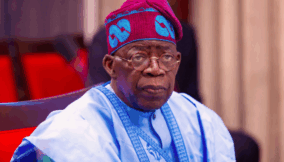
Reactions have continued to trail President Goodluck Jonathan’s claim last weekend that persecution awaited him and his ministers after May 29. Analysts say the President’s choice of the word “persecution” was wrong and misplaced.
According to the pundits, persecution as used in religious circles denotes an unwarranted ill-treatment meted out to someone as a result of one’s faith. The word, they believe, is never applied to those who receive punishment for obvious wrongdoing and sheer impunity.
Last Sunday, during a thanksgiving service organised in his honour at the Anglican Church, Life Camp, Abuja, President Jonathan said he expected his ministers and aides to be “persecuted” after his tenure.
“So for ministers and aides who served with me, I sympathise with them, they will be persecuted. And they must be ready for that persecution,” he said.
He also said he expected that he and his ministers would have a hard time after he leaves office.
“To my ministers, I wish you what I wish myself,” he said. “They will have hard times; we will all have hard times. Our ways will be rough,” he added.
Contrary to President Jonathan’s belief that his good decisions for the country may have pitted him against many citizens, and probably cost him re-election, critics are of the opinion that his inability to be on the side of the masses of the country, choosing rather to fraternize with a few Nigerians in the elite group was responsible for his disastrous defeat at the polls on March 28.
And contrary to his sermon on imminent persecution, pundits say that when a public office holder refuses to serve the people who elected him into office and decides to serve self and cronies, if he is being called to question tomorrow, he is not being persecuted.
By the same token, when those who serve with such a public office holder as aides and ministers decide to live like kings and princesses (without check) to the detriment of the masses and the state, if they are punished later for running the country aground and taking Nigerians for a ride, it does not amount to persecution.
It is on record that Jonathan’s administration witnessed several corruption scandals, and the government took many steps that were faulty and at variance with its avowed fight against graft.
There are verifiable records that the outgoing government, for reasons that have remained unclear, withdrew court cases against those being prosecuted by the state for stealing the country blind.
Nigerians have also had cause to scream foul when confirmed corrupt persons, with burden of corruption hanging on their necks, were pardoned and were also given national awards.
It is also the view of many that if Nigeria must move forward, it must have to be reinvented, and this cannot be possible unless the sins of the fathers are re-visited.
Observers speak in tandem that in the five-year reign of Jonathan, not more than two or three ministers really excited Nigerians with their performance in office. Nigerians have watched with amazement how ministers post figures and statistics that did not bear testimony with the economic reality on ground. Even when former President Olusegun Obasanjo pointed out in Dutse, Jigawa State, that mere statistics without commensurate economic growth and evidence of improved quality of life in citizens amounted to nothingness, he was called names and branded an enemy of the state.
For five years, most of the ministers fed the people with lies and false hope. While the people pined away in abject poverty in a country that “flows with milk and honey” (talking about crude oil that has since turned the fortunes of other countries in the same bracket into a heaven on earth), government officials “swim” in wealth. If anybody should call such ministers to account after May 29; that cannot possibly amount to persecution.
Commenting on Jonathan’s expression of fears, Tunde Abraham, a psychologist, said he was pained that the president used a church pulpit to make such utterances, expressing disappointment over the politicization of the church by Nigerian politicians.
According to Abraham, “I think one of the greatest tragedies of the 21st Century Nigeria is how awful the pulpit has been commercialized and politicised, so much that politicians climb the pulpit to say all manner of things in a place that ordinarily should be hallowed. In the last few years, and particularly this election year, the church has been so politicised that political practitioners are given unhindered access to say whatever they like in the church. Before the general elections, we all saw what happened. It was so bad it appeared some people were even competing who will host certain politicians in their worship centres and there were also allegations that some clerics collected bribe money from government. But I hope the President was not trying to say ‘prosecution’, when he said persecution? Honesty, I had expected him to know the difference. Truth is that the incoming administration needs to ask some questions. And if it does so, heads will roll going by the level of rot we see in the system.”
Muhammadu Buhari, president-elect, has continued to say his administration will not pay a blind eye to the sins of yesteryear. He gave the indications that some officials of the Jonathan administration would be investigated for corrupt activities when he vowed to probe the “missing” $20 billion in the Nigerian National Petroleum Corporation (NNPC). The money, which was first made public by the immediate past Central Bank governor, Lamido Sanusi, remained an albatross on the neck of the Jonathan government which repeatedly claimed its officials did nothing wrong.
But an audit commissioned by the government, the result of which saw the light of day following intense pressure from Nigerians and after Buhari’s statement showed that officials of the NNPC and other relevant authorities allegedly frustrated the work of the international auditors, PricewaterhouseCoo (PWC). One of those expected to face a major probe is the petroleum minister, Diezani Alison-Madueke, whose tenure witnessed several scandals in the oil sector, apart from the $20 billion.
Reacting to the President’s lamentation, Lai Mohammed, national publicity secretary of the All Progressives Congress (APC), said those who have played poker with the nation’s destiny must be willing and eager to clear their conscience before God and man.
According to him, ”That the President-elect is a man of integrity is not an issue for debate, and he has made it clear that he will not be bogged down by endless probes.
”However, the hands of the incoming government will not be tied by those who have chosen to play the victim and exhibit a persecution mentality. Whoever has any reason to be afraid must lay bare such reason before Nigerians,” the party said.
The party’s spokesperson further said under the climate of change that Nigerians have ushered in with their votes, only the guilty needs to be afraid, and those with a guilty conscience, on account of their actions in the public sphere, must clear such so they can be at peace with themselves.
”The last time we checked, this does not fit the definition of persecution,” he said.
Zebulon Agomuo

Join BusinessDay whatsapp Channel, to stay up to date
Open In Whatsapp