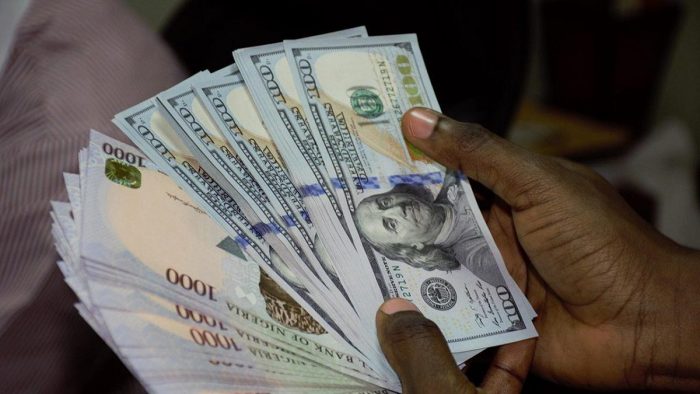
On the first trading day of October 2024, the naira plummeted to a record low of N1,669.15 at the official foreign exchange (FX) market.
The market summary provided by the FMDQ Securities Exchange Limited shows the naira suffered a depreciation of 8 percent, reflecting a loss of N127.21 against the dollar.
Read also: Citi predicts reforms could shield Naira from oil price decline
On Wednesday, the dollar was quoted at N1,669.15, marking an all-time low, compared to N1,541.94 quoted on Monday at the Nigerian Autonomous Foreign Exchange Market (NAFEM).
This decline in the naira’s value was attributed to a reduced supply of dollars from willing buyers and sellers. Dollar supply fell by 14.34 percent to $176.45 million on Wednesday, down from $181.86 million recorded on Monday at NAFEM.
The intraday high reached N1,699 per dollar on Wednesday, compared to N1,691 on Monday, while the intraday low closed at N1,550/$1, lower than the N1,540 seen on Monday.
Meanwhile, in the parallel market, commonly referred to as the black market, the naira appreciated by N10. The dollar was traded at N1,680, up from N1,690 traded on Monday, which was the last trading day of September 2024.
The Central Bank of Nigeria (CBN) provided dollars to Bureau De Change (BDC) operators last month. Throughout the month of September, the CBN sold $20,000 twice to BDC operators to help meet the rising demand for foreign currency. On September 6, 2024, the CBN sold dollars to the BDCs at a rate of N1,580 per dollar, and on September 25, 2024, at a rate of N1,590. This intervention was aimed at reducing the pressure in the FX market and ensuring adequate dollar liquidity for smaller traders.
Read also: Zimbabwe’s new currency, Naira seen slope downward after central banks’ intervention
According to data from the CBN, the country’s external reserves have seen a sharp increase in 2024. As of September 27, 2024, reserves had surged by 15.26 percent year-to-date, amounting to a $5.04 billion rise. This pushed Nigeria’s total foreign currency reserves to $38.06 billion, up from $33.02 billion recorded at the beginning of the year. The growth in reserves is a positive indicator for the CBN’s ability to defend the naira in the FX market, providing much-needed liquidity to sustain the currency’s stability.

Join BusinessDay whatsapp Channel, to stay up to date
Open In Whatsapp