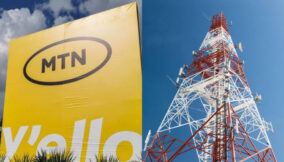
Licensed infrastructure companies (InfraCos) in the country plan to perk up broadband services in Nigeria’s commercial capital, Lagos and connect over 60 cities in the country’s North-Central region.
IHS Africa currently with most attractive tower portfolios in emerging markets today, is to focus on the North-Central states of the country including Benue, Kogi, Kwara, Nassarawa, Niger, Plateau and the Federal Capital Territory (FCT), Abuja while MainOne Cable concentrates on Lagos.
According to reports, IHS will be initially focusing on the cosmopolitan areas within the North-Central region as there are currently no broadband services in most parts. MainOne, which landed a submarine cable in the country about four years ago and also recently unveiled a Tier III data centre in Lagos, will provide InfraCo services to over 21 million people in Lagos state.
Industry experts are of the notion that Lagos continues to offer huge investment opportunities as expansive and affordable broadband access would impact significantly on over 12 percent of the population and nearly 60 percent value of corporate Nigeria.
The federal government is targeting a 30 percent penetration by 2018 as part of its National broadband plan. By 2020, the target date for Nigeria’s long term economic development strategy, the Federal ministry of communication technology (FMCT) hopes that these figures will have jumped to 76 percent?
“Broadband remains out of reach of average Nigerians because fibre needed to move bandwidth around is limited and mainly found in some cities and capitals”, said Lanre Ajayi, President, Association of Telecommunications Companies of Nigeria (ATCOM).
The federal government, through the National Broadband Council, has recently approved four fibre optic cable landing points in four coastal states to ensure widespread penetration of high capacity internet bandwidths in the country.
The project which will be financed by the Universal Service Provision Fund (USPF) will be sited in Rivers, Bayelsa, Cross River and Ondo in line with the federal government’s effort to encourage telcos in the country to establish more cable landing points.
Speaking on this development, Chairman of the council and Minister of Communications Technology, Omobola Johnson, said the cable landing points will promote the rapid establishment of recovery and restoration agreements among the cable companies and delivery of additional landing points for national security and resilience purposes.
“Additional landing points in the country would make it faster and cheaper to lay terrestrial cable from these points to other parts of the country and reduce vulnerability and risks associated with a single point of failure in the system,” she said.
With the growing demand for data and internet connectivity, we have seen a steady and healthy growth in both mobile and broadband businesses, surpassing all expectations. Nigeria has moved from 6 percent when the National Broadband Plan was launched, to about 10 percent broadband penetration today.
Broadband has become a consumer-driven industry – In 2014, the number of fixed broadband subscribers grew 8 percent to 733 million.
The number of fixed broadband subscribers is expected to approach the 1 billion mark in 2019, according to the latest report by Infonetics Research, now part of IHS. Growth will be led by China, Russia, Brazil, Mexico, Argentina, Indonesia, Thailand and Vietnam.
Though DSL remains far and away the largest technology choice for fixed broadband, subscriber, growth is being driven by FTTH and DOCSIS 3.0. Asia Pacific holds 50 percent of the world’s fixed broadband subscribers and continues to experience significant subscriber growth thanks to China, Southeast Asia and emerging markets where broadband penetration continues to increase. The global number of FTTH subscribers jumped 22 percent to over 100 million last year.
DAN OJABO

Join BusinessDay whatsapp Channel, to stay up to date
Open In Whatsapp