The Federal Hous¬ing Authority (FHA), Nigeria’s housing development and delivery agency, has set up intervention structures aimed at increasing and fast-tracking housing project delivery in the country.
Terver Gemade, former managing director of the authority, had at a forum in Lagos, disclosed that the management of the author¬ity had the mandate to repo¬sition it for sustainable mass housing delivery, adding that they had drawn an ac¬tion plan to deliver 112,000 housing units.
Terver, who was rep¬resented at the forum by Bello Issa, executive director, estate services, explained that “the delivery plan was anchored on different models including direct development, public private partnership, public-public partnership, co-operative housing, site and serviced, new town development, rental housing and regen¬eration”.
According to him, work was on-going on 2,299 hous¬ing units in various estates being developed through public, private partnership (PPP) in Abuja, Owerri and Lagos.
Read also: FG, stakeholders differ on Nigeria’s housing deficit figures
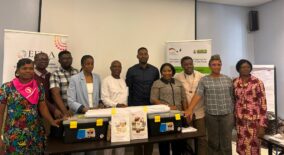
Mohammed Al-Amin, the new managing director of the authority, recently set up 10 task teams to han¬dle various aspects of its transformation, pointing out that the teams included dispute resolution, corpo¬rate head office, contracts and partnerships, assets and liabilities as well as income generation.
Others were securing and perfecting titles to the authority’s landholdings, special intervention, new projects as well as corpo¬rate governance and career issues.
Inaugurating the teams in Abuja recently, Al-Amin said its interim manage¬ment team decided on the initiative as a way to gener¬ate quick action to prove to all that FHA was a viable national institution.
Akon Eyakenyi, the min¬ister of lands, housing and urban development, had at a media interactive session in Abuja, disclosed that plans were underway to commer¬cialise the authority to make it more viable and be able to respond to the housing needs of the country.
Al-Amin, a professor, said that though the existing organogram for the author¬ity would be retained, the task teams would be used as intervention structures to achieve set goals, assur¬ing that the management under him was poised to implement wide ranging reforms that would give the authority a new lease of life.
He aligned with the view of his management team that members of staff, as critical stakeholders, could drive the reform agenda, adding that all assignments envisaged in the reform doc-ument had been broken into assignments for the various task teams to implement.

Join BusinessDay whatsapp Channel, to stay up to date
Open In Whatsapp