Drilling cost management has been described as a major problem in the Nigerian oil and gas industry.
This is because wells drilled in Nigeria represent some of the most expensive in the world, resulting in reduced profitability and in many cases environmental problems that arise from radioactive materials abandoned in abortive wells.
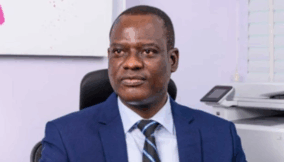
Adewale Dosunmu, a professor of petroleum engineering in the Faculty of Process and Energy Systems Engineering, University of Port Harcourt, made this disclosure while delivering the 115th inaugural lecture of the university, titled: “Gamblers’ Ruin — The Driller’s Albatross.”
The lecture held at the Ebitimi Banigo Auditorium, in which the lecturer said the Shell Aret Adams Research Chair in Petroleum Engineering in the university under his portfolio had successfully developed a Wellbore Stability Management Software that had already been deployed by the Shell Petroleum Development Company (SPDC) to tackle the challenge.
“This tool known as OPTIWELL Model 1.0, has been used successfully to model failure behaviour of subsurface formations as a result of drilling operations,” Dosunmu said, saying “the new technology prevents borehole collapse by predicting adequate drilling mud weight to maintain borehole stability.
“The result of this effort is that it has positioned the University of Port Harcourt as a centre of excellence in Well Engineering and Wellbore Stability Management not only in the Gulf of Guinea, but also in the whole of Africa.
“OPTIWELL has resulted in improved profitability through reduction in well construction cost in Nigeria, human capacity building, increased local content participation, domestication of high level technology and better environmental conservation through reduction in abandoned radioactive materials.”
He pointed out that “the success of OPTIWELL has enhanced the level of trust that the international oil companies place on indigenous research efforts.”
The inaugural lecturer whose research work has largely focused on Geomechanics and Wellbore Stability Management, disclosed that he had “developed tools currently in use by major operators worldwide and over the last few years, had produced and continue to produce doctorate degree holders in the area of Petroleum Geomechanics. My current work is in the area of expanding the frontiers of knowledge in other critical areas such as drilling through weak bedding planes and drilling depleted and low pressure reservoir.”
In view of the critical role of Well Engineers in the business of oil and gas exploration and production, Dosunmu stressed the need to invest in the training of experts in the specialization to meet the needs of the industry. “We need as a country and as an institution to invest in the training of our future generation of Well Engineers. Scholarships and inducements, as well as different allowances can be introduced to encourage more students to earn a degree in Well Engineering. There is need to invest in equipment to train this category of personnel; good laboratories, demonstration rigs and other equipment to facilitate first class training are essential,” he submitted.
Defining Petroleum Engineering as an evolving discipline that involves surface and subsurface aspects of oil and gas development, the Inaugural Lecturer said: “Experience has shown that Well Engineers continue to be in high demand since over 60 per cent of development costs are expended on drilling and completion of wells,” adding that without the oil and gas wells, reservoir and production engineering and indeed downstream operations will be impossible.
Dosunmu noted that “Well Engineers are endangered species not only in Nigeria, but globally. They continue to be in high demand, but the supply is unfortunately unable to match demand and the few good ones are poached by different companies.”
He stressed the need to properly equip Nigerian universities to train young people who are desirous of quality education, warning that “sending our students to different parts of the world to obtain sub-standard education cannot be the answer.”
Dosunmu then advised the Niger Delta Development Commission (NDDC), the Rivers State Sustainable Development Agency (RSSDA) and the Petroleum Technology Development Fund (PTDF) to develop capacity internally for the training of students they currently send abroad each year at huge cost.
According to him, in-country research should be made mandatory as nobody else can solve Nigeria’s problems better than Nigerians.
Congratulating Dosunmu for the lecture, the Vice-Chancellor of UniPort, Joseph Ajienka, a professor, recalled that “in 2005, a Professor of Petroleum Engineering ended the inaugural lecture series for the year; and in 2014, another Professor of Petroleum Engineering has ended the inaugural lecture series for this year.”
He recalled that Dosunmu was among the first set of Nigerian-trained Petroleum Engineers to earn a Bachelor of Science degree. He was also among the pioneer set of Master’s and Doctorate degree holders in the subject.”
The Vice-Chancellor, who observed that the inaugural lecturer began his career as a Water Well Engineer, expressed delight that he ended up as an Oil Well Engineer and a Wellbore Stress Manager.
“A good scholar must be known in his profession and by the industry. I am happy that Professor Dosunmu is not only known in the academia, but also in the petroleum industry all over the world,” he said, describing the Inaugural Lecturer as a man, who is huge not only in stature, but also in his intellect.
BEN EGUZOZIE, PORT HARCOURT

Join BusinessDay whatsapp Channel, to stay up to date
Open In Whatsapp