The Nigerian National Petroleum Corporation (NNPC) was never meant to be the country’s sole importer of refined products, stakeholders note. Africa’s biggest oil producer shouldn’t even be importing refined petrol. The panic around dirty petrol, analysis shows, is symptomatic of the country’s unwillingness to reform, they state.
The NNPC gradually became the sole importer of petrol because the retail price capped at N162 per litre will not guarantee commercial returns to marketers who will pay a higher landing cost.
This aberration may have morphed into law as the Petroleum Industry Act (PIA) named the NNPC, the supplier of last resort. Legal experts say this makes it a licensed supplier appointed by an authority under the last resort direction. This description implies national interests will always override its commercial interest.
“It is really not in our interest to be the sole importer of PMS in the country. We have taken definite steps to exit the situation,” said Mele Kyari, CEO of the NNPC, during a meeting with downstream stakeholders at NNPC Towers in Abuja in 2020.
Rising oil prices with the attendant burgeoning landing cost may have proven him right. Some of the factors that go into determining the fuel price include the product cost, freight cost, lightering (ship-to-ship transfer) expenses, insurance, port charges, jetty throughput charges, storage charges, financing, wholesale distribution margins, and administrative charges.
The addition of the first nine items sums up the product’s landing cost, or the cost of product sold at the depot. When all charges are included, at the current oil prices, the landing cost of petrol is estimated at over N282.
The NNPC currently operates a DSDP programme, where it swaps its crude oil for European fuel refined mainly in Belgium and the Netherlands. Nigeria receives petroleum products from Ex-Rotterdam for delivery to Lagos Offshore, this is known in the industry as Coastal price. This Coastal price, which is the amount of money equivalent to the actual cost of importing finished petroleum products, is usually anchored at full cost recovery.
The cost of transporting the product is a function of the prevailing benchmark price (Rotterdam) and prevailing exchange rates, cost of procuring vessels at prevailing exchange rates, insurance cost and blended cost (the cost to transform gasoline to Nigeria’s specifications), which costs on average about $5/ton. Then there is a trader’s margin, which is on average about $10/ton.
All these costs are factored into determining the landing cost of petrol for the pricing template since 2020. Variations in exchange rate may affect the exact price.
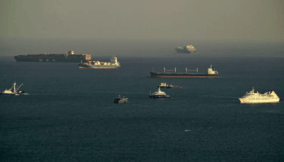
Some of the costs though are borne out of Nigeria’s inability to equip its ports. Lightering is the cost associated with the transfer of petrol from one large vessel to a smaller one. This is typically done in the open sea with the vessels positioned alongside each other.
“In the case of the NPSC owned Apapa jetty in the Lagos area, infrastructure deficit is the major reason why lightering of vessels is done. With a draft of only 7.5m, the implication is that the maximum of a 30KT vessel, depending on the vessel specification, can be berthed at the jetty,” states Ogechi Nkwoji, a research analyst with Major Marketers Association of Nigeria (MOMAN) in the organisation’s newsletter.
“So, for every large vessel, for example, a 47KT vessel that plans to berth at the Apapa jetty, the product must be lightered into a daughter vessel with the marketers incurring costs of approximately $245,000 per lightering operation,” she states.
Some of these costs may have since increased but apart from these costs, petrol landing price is further determined by charges such as Nigerian Ports Authority (NPA) charges and the Nigerian Maritime Administration and Safety Agency (NIMASA) charges.
These charges are meant for cargo dues (harbour handling charge) charged by the NPA for use of Port facilities. This includes VAT and Agency expenses. NIMASA charges include provision for marine pollution prevention and control, and cabotage enforcement.
These landing costs, which are dollarised, are high and could easily cripple a business if there were no mechanism for cost recovery. Investments in the different aspects of the business involve huge capital outlay. For example, as at 2019, the average cost of building a standard jetty (land included) was approximately N36.5 billion with an annual operating expense approximately N5.3 billion, according to the MOMAN newsletter.
Capping petrol prices at the pump provides the biggest source of disincentive for any investor to go into importation and retailing of petrol, which is highly capital intensive and guarantees small margins on volumes.
NNPC under the new PIA is meant to function as a commercial entity. However, the burden of being a sole importer will continue to weigh on its books.
The net effect is that it will operate inefficiently, turning over scrappy revenue and manicured profits when its peers are hurling home profits from an oil price boom.
Aramco’s net income jumped to $30.4 billion for the third quarter of 2021, from $11.8 billion a year earlier, the same year NNPC claimed it earned N287 billion as profit.
Since the landing cost of petrol is much higher than the pump price, Nigerians bear the cost of this difference, which is known as subsidy, but benefits mostly the well-off in a handful of cities. The true cost of cheap petrol is bad roads, broken schools and ramshackle hospitals.
BusinessDay has reported extensively on how wasteful subsidies hurt the economy. Oil prices have climbed over $90 per barrel for the first time since 2014, but a N3-trillion planned spend on subsidies this year will cancel out any potential gain.
The N3 trillion subsidy price tag can fully equip 100,000 primary health centres across the country at the cost N30 million each. It could build Nigerians 200,000 mortgage homes valued at N15 million each. It could empower 3 million entrepreneurs with a N1 million loan. If education was a priority, at an estimated cost of N17 million, it could build over 176,000, three-classroom blocks across the nation.
The labour unions’ gambit of holding the decrepit refineries over the head of government has become a barrier to reasoned dialogue on the way forward.
To appease labour leaders, the Buhari-led government is spending billions of naira to resuscitate the refineries but there is no guarantee it could run them any better than it had always done. The trouble managing the Kaduna-Abuja rail efficiently makes the best case for a private sector-led business approach.


Join BusinessDay whatsapp Channel, to stay up to date
Open In Whatsapp