The absence of aircraft maintenance facilities in Nigeria may have cost the country over $170bn in the last 10 years just as it has been revealed that comprehensive (C) Check on B737 classic and maintenance in Europe, the United States or in Cairo, Egypt; Addis Ababa, Ethiopia, costs $1m.
For Next Gen aircraft such as the B737-700/800, the airlines pay $2m for maintenance.
Sheri Kyari, managing director of Finum Aviation, who was one of the engineers who decried this in Lagos at the 2nd Memorial Lecture in honour of Zakari Haruna, the pioneer director-general of the NCAA, said, ‘The next facility that is of dire need today is a maintenance centre capable of handling all the commercial airliners in the country that require heavy maintenance.”
The absence of this asset, he said, is encouraging capital flight, lamenting that the song had been on for too long to the stage that the music is losing its flavour.
Some aircraft maintenance engineers claimed that lack of Maintenance Repair Overhaul (MRO) facilities had cost the operators and the government over $170bn since the essence of a hangar project was highlighted over two decades ago.
The fact that such maintenance is done in foreign exchange makes things more difficult for the airlines. What had been the situation is the enrichment of such countries as Ethiopia, Morocco and South Africa, where airlines in the country take their aircraft for comprehensive checks.
This list is exclusive of MRO centres in Europe and America.
Nigerian airlines are said to be bleeding. Maintenance of their planes here in the country would cost them less than half of the humongous amount of ferrying aircraft abroad for repairs in Europe, United States, Asia, Ethiopia, Kenya, Egypt and South Africa regarded as countries in Africa with world class aircraft maintenance facilities.
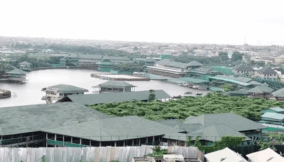
The Akwa Ibom State government is on the verge of completing aircraft maintenance facility at the Uyo Airport, but the Federal Government is yet to adopt or certify it for maintenance facility for airlines yet.
Kyari disclosed that private investors would have undertaken to build aircraft maintenance hangars in the country, but for the fear of policy inconsistency, which is the order of the day, a situation that would make such investor to be cautious.
He urged government to provide guarantee and assurances to investors either by getting involved or providing a conducive environment for them.
Meanwhile, the Nigeria Civil Aviation Authority of Nigeria (NCAA) has been urged to reduce the 50 demonstration flight hours by would-be airlines as one of the requirements for getting the all important Airline Operator Certificate (AOC).
Kyari said it was important to look at the complex processes of acquiring AOC, adding that the process has and is perhaps still seen as a task by those in the industry and by greenhorn investors from outside the sector.
“Today, we will all try to contribute to finding a middle-of-the-road approach and open our industry for expansion in order to absorb the teeming young population dotting our airports in search of jobs.”
Kyari, an aircraft engineer, stated that the cost of fuel worked out by his firm shows that an average of N36m is expended by airline sponsors for the 50 demonstration flight hours in the course of AOC acquisition.
He noted that such sum could be reduced drastically to only five hours without passengers while 95 hours can be done while carrying passengers, adding that this will reduce cost and the airline can be made to use a large amount for the training of crew and engineers.
Cumulatively, both Azman and Discovery Airlines may have expended over N72m on 50-hour demonstration flights each, which many said is not the global standard.
Sade Williams

Join BusinessDay whatsapp Channel, to stay up to date
Open In Whatsapp