Russia’s renewed interest in Africa has taken the centre of recent discussions as political analysts and about everyone else evaluates Moscow’s true intent in seeking a comeback on the continent.
The eastern European country has historically had its eye on Africa from as far back as the 1920s. A paper by Collège Des Forces Canadienne, the Canadian College force establishes that in 1923, Vladimir Lenin, former premier of the Soviet Union in an article in the Union’s official newspaper, Pravda, advocated for a strategy of interventionism in the “third world” via expanding the Union’s relationships with the colonies in Africa.
The Soviet Union saw African as an opportunity to form an alliance against the West which it deemed exploitative, capitalistic and inhibiting the prospect for growth of the African continent. Thus, the relationship was said to have on the one hand the Union’s interest and the other liberation of Africa from the “evils of the west.”
But following the collapse of the USSR in 1991, the links between the Communist bloc and Africa weakened. The Russian federation became a shadow of its former self with its economy crunching by 50 percent while poverty rose. The rest of the 1900s, focus on Africa was lost as survival became paramount for the once great empire which rivalled the West.
As Russia recovered from its downturn, there was a desperate attempt to rebuild its relationship with Africa, regain lost grounds in the tussle for “superpower” with the West. Moscow would borrow a leaf from the USSR’s play book in its quest to rise to the peak of global politics, a former yet ever-present ambition.
For Russia the move has become all the more urgent as other nations including China and India, the Asian tigers have pitched their expanding tent in Africa for economic and other reasons.
Strategy for re-entry into Africa has taken a form of economic relationship with Russia exploring opportunities for trade and commerce in the continent. The eastern Europe nation seeks investment in the oil, gas and nuclear power sector – critical sectors for Africa and of strategic importance to Russia’s grand moves in the chess game of politics.
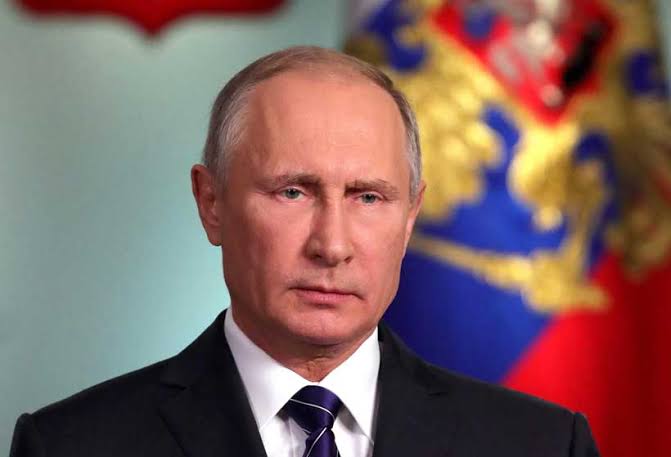
In 2006, Anadolu agency reports, Vladimir Putin visited South Africa in the first-ever visit by a Russian leader to sub-Sahara, intensifying Moscow’s desire to foster investment and involvement in the region by political initiatives, businessmen delegations, and securing access to natural resources.
Russia also engaged Ethiopia in the development of a nuclear energy facility and resume daily flights from Addis Ababa to Moscow as part of speeding up the growing ties between the two countries. For Zimbabwe, Russia is developing one of the world’s largest reserves of platinum group metals.
The foreign policy concept of the Russian federation of 2008 underscored Russia’s strategy to form an alliance with Africa. The policy direction stated that economic cooperation in the African energy sector was of strategic importance to Russia’s interests.
While on the surface all of the moves made by Russian have been innocuous, there have evidence of resource exploitation and unwholesomeness in the tryst.
The Guardian in June 2019 reports that Russia is seeking to bolster its presence in at least 13 countries across Africa by building relations with existing rulers, striking military deals and grooming a new generation of “leaders” and undercover “agents”.
The claims were based on leaked documents that showed Yevgeny Prigozhin as chief executor of Moscow’s ambition to wrestle the continent from the United States and drive former colonial powers, UK and France out of the region.
The big question is if Russia’s real interest in Africa is best for the continent, given its desperation to have Africa for itself?
- UK sanctions Nigeria-linked firm among 70 'shady networks' backing Russia on Ukraine war
- Syn Nigeria backs RetailWings Africa in bid to solve a problem it knows first-hand
- WORLD IN BRIEF: SpaceX Targets $1.75tn IPO, US Hits Iran-Bound Tanker,Two Dead in Kenya Anti-Ebola Facility Protests and Other Stories
In a bid for Libya’s oil, Russia sought to interfere in the country’s election backing rebel and warlord in what undermined the African nation’s democracy.
A report by The National in July points out Prigozhin to be likely the mastermind behind the Russian mercenary group Wagner which had been reportedly deployed to Libya to prop up Field Marshal Haftar’s Libyan national army.
According to the reports, “Russia is seen as one of the most prominent international backers of Haftar, who regularly visits Moscow and was a guest of honour on Russia’s flagship aircraft carrier, the Admiral Kuznetov, in 2017.” The Kremlin is also said to have printed millions of dollars’ worth of dinars for his government.
The Telegraph has learned, puts in better perspective the scale of Russia’s involvement when it cited a Whitehall source to said Wagner Group has been supporting Khalifa Haftar with 300 personnel in Benghazi and has supplied his Libyan national army with artillery, tanks, drones and ammunition.
The sleazy move to Central African Republic (CAR) lends credence to mistrust that have trailed Russia’s fellowship to Africa.
In a 2018 article by Jack Losh and Owen Mathews they quote a senior United Nations security official in Bangui: “The Russians want to implant themselves in the Central African Republic so they have an axis of influence through Sudan in the north and southwards into Angola.”
The top-official which sought anonymity said, “The French are hated as the old colonial power. American troops have left. It’s a free country for the taking.”
Twisting the arms of the United Nations and through wiles, Russia edged out American and French peacekeeping forces and put itself in line to distribute arms to crisis-torn CAR; many of this arm were later discovered to have been made available to anti-government elements with both sides as pawn in Moscow’s game.
Kyran Goodison, in April 2019 published on Philologia: “Through increasing personnel and establishing infrastructure within CAR, Russia creates an ideal environment to access CAR’s vast stores of natural resources. With increased access to natural resources, Russia establishes itself as a counter to China.” Together, these factors enable Russia to exploit the conflict in CAR to “establish a presence for itself in Africa’s geostrategic heartland” for Russia’s own gain and power,” (Korybko, 2017).
The name is economic corporation but it is actually a long game that provides resources, conflict and strategic advantage for Russia’s ambition to upset the west-and China. The losers? Africa. Russia is said to be planning on securing a naval supply centre on the red sea but the facility would only ease Russia’s ease of channelling CAR’s rich mineral resources away.
In essence, the right hand of Russia in Africa is for taking, looting and plundering in a manner that puts the continent at unprecedented risk.
TEMISAN ADIO
Adio is a social commentator and writes from Lagos

Join BusinessDay whatsapp Channel, to stay up to date
Open In Whatsapp