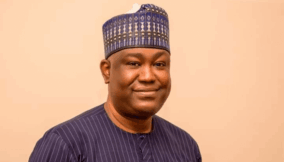
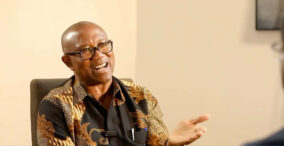
Onofiok Luke is the Speaker of the Akwa Ibom State House of Assembly and a top notch of the People’s Democratic Party (PDP). On the sidelines of the multi-stakeholders strategic retreat in Uyo, organised by the African Centre for Leadership, Strategy and Development, he spoke with ANIEFIOK UDONQUAK, on the security situation in the country and other issues. Excerpts:
There are disturbing reports of killings in many parts of the country and most recently in Plateau State; how should this carnage be checked?
It is sad, not only in Plateau State, we’ve had a situation in Zamfara, we had a situation in Benue State – very dire situation, and now Plateau State. We might behave like ostrich and then bury our heads in the sand. I want to say that the time has come and we must rise collectively, we have always been advocating for a bipartisan approach in solving the crisis in Nigeria, now the President needs to understand that he needs to call the entire country and rise above party partisanship, to call the leaders of this country to a round table let us discuss the way forward for this country. This is the right time for us to discuss restructuring. Mr. President must take the leadership and responsibility as the President of the Federal Republic of Nigeria and leave party partisanship, for us to solve the crisis that we are having on our hands. It is his time as the President to act, he will by the grace of God; depending on how many years God will give to him by reason of election to be president, whether four or eight years, he will finish his own and another will come, but what legacy or history would be recorded for him when he served as the president of Nigeria. People are beginning to say it happened when so and so person was in office. We are not looking at what happened in the past, we are looking at the present, we are looking for the fulfilment of all the promises that Mr. President gave to Nigerians during his campaigns; that he’s going to make this country safe and sound for us. We are looking for fulfilment of all the promises that those who were looking for power in 2015 made and they have been given power, it is no more time for excuses, it is time for them to act, and I want to call on every one to look beyond our party lines. If Mr. President deems it fit to call all of us to a round table, we should join hands with Mr. President, it is about Nigeria now, not about party, not about individuals, it is about the lives of Nigerians and it is very important. I must sincerely commensurate with families of those victims from Benue to Zamfara and to Plateau states.
We almost had a similar situation here in two local government areas of Akwa Ibom State, Ukanafun and Etimekpo, where there also issues of insecurity too.
Yes! We also have a situation here in Ukanafun and Etim Ekpo Local Government Areas. We as a House of Assembly have risen to the situation and we have called for a security summit, very soon the House of Assembly is going to give a date for that security summit, a multi-stakeholder’s summit and we are calling on everybody. I have told the young people in Ukanafun that I am their representative in government and I am appealing to them to drop their arms, for those who have genuine course, the office of the speaker, and the House of Assembly is open for them to come and register their genuine cause that they are fighting for; but no cause is worth the life of any individual, no course is worth the destruction of property. We will listen to them attentively as their representatives and will be able to put their positions before the security agencies. Those who would not heed this call and would continue to perpetrate those acts, we are standing side by side with the security agencies to make sure that full wrath of the law is released on them.
People are calling for a state of emergency in those communities; what is your take on that?
When you talk about state of emergency, there are constitutional procedures and there are people that have powers to declare state of emergency in matters of security. The state government has power to declare state of emergency in areas like education, agriculture to be able to put things right, but in matters of security, the state government does not have such rights, highest is to impose a curfew in conjunction with the security agencies to be able to checkmate activities of criminal elements within those areas.
Concern about former governors and deputy governors who are currently serving in the National Assembly and still receiving pensions from their states is the reason of this retreat by the African Centre for Leadership, Strategy and Development (Centre LSD),; do you consider this a worthwhile pursuit?
I want to say that we were invited to this high level engagement to learn. They are canvassing a position that most Nigerians have had to canvass in the past. Why certain pubic officials should not be getting pensions and at the same time getting salaries from their current offices. Some of us have placed some questions on the table. What happens in a situation where one who had served as a civil servant, retired and is entitled to pension and subsequently given a political appointment? At the level of the legislature, we came to see a law on pension for former governors and their deputies. We have had an example in Kwara in which the Senate president has reportedly written to the state government that he would no longer be enjoying his pensions while still serving in the Senate, which is going to form the basis of our engagement here. Here, I am only speaking as an individual, if it gets the endorsement of the entire members of the House of Assembly, then we will surely act on that. From the figures that have been released here today, we can actually see, some are getting up to 200 percent, some 300 percent, I believe that has to be reviewed; it is my personal opinion though. You have also heard people canvassing opinion for pension for those in the legislature; this is the issue that people are pondering at, and on the front burner of public discourse. As an individual, I think that the position of authority is a call to service. When you are called, you act your part and leave for others to come in. But for the number of years you are to serve, you don’t have a life of your own. You can’t go fending for your family, you are totally engrossed in states responsibilities, you wake up in the morning and you have a whole lot of persons to attain to, most of them personal issues that you have to solve, in the afternoon you have office engagement, in the night you have people to talk to. So it is only when you are done with the public office that you have to think of going back to yourself. For me as a lawyer, you will begin to think of going back to dust your law books and how to get back to your clientele to be able to get back to practice. Same goes with the others professions. You need to get abreast with the current realities to be able to function effectively. So within this period that you are trying to transit to your normal self, I believe that there should be some form of cushion, but that should not be at the detriment of the people. It is not easy to serve in a public office either as a governor or deputy of a state where you are 24/7 engaged with activities of the state, even at your private moment, you are engaged mentally trying to see how things could be in place for the welfare and wellbeing of the people. I believe this session is an avenue for us to pull our ideas together and come up with a position that would bring back to the consciousness of many, the sole aim of serving in public offices that it is basically to serve the people and not to serve ourselves.
Would you align yourself with the thinking that lawmaking should be part-time, so as to allow lawmakers who are professionals like you and others to engage in their professional jobs?
I would tell you that there is no way we can function maximally in part time lawmaking. We copied the presidential system of governance from America and congress as you rightly see, there is no way you can achieve maximum output if you make lawmaking part-time, there is no way. When we talk about lawmaking, people tend to see lawmaking just with what the lawmaker does at plenary, which is what we call the “house at exhibition”, but the greater part of the work is done at the research level, where you look at the law and make your own research with the support of a legislative aide. Another aspect of it is at the committee level, which is what we call the “legislator at work.” So there is no way you’ll be engaged with your private business and still be able to give your all; whether in your oversight function or in lawmaking or in representing your people. You cannot run part time to be able to visit your people and perform an oversight function as a chairman of a committee.
During your time as Chairman, House committee on Finance and Appropriation the issue of ambiguous pension for governors and deputy governors came up, we recall the people raised objections but their agitations were never addressed. Why?
The only issue I had with the bill was my stance for the qualification for benefit in the pension law, three years was set as a benchmark, as at then I was not comfortable because I saw it as a direct attempt to exclude a particular individual, and even till today it is my stand because at that time I was equally canvassing that if someone had not served in those capacities for up to three years, then there should be a provision on pro- rata basis to be able to get those individuals to benefit. Because whether someone had served in the capacity of a governor or deputy governor of a state for one day or three days, and we had made a law, then there should not be any clause on the law to exclude that individual, I still stand by that.
On the issue of financial autonomy for the state legislature, how would this enhance the work of the lawmakers in the state Houses of Assembly?
We had taken a position on this. One thing that the president has done which is quite commendable is assenting to the bill to ensure financial autonomy for the legislature and the judiciary, another thing which I must applaud the president for is giving assent to the not-too-young-to-run bill. Out of the 36 states of the federation, it is only one state that voted against financial autonomy (Edo State) and one state differed (Gombe) and one state did not act one constitutional amendment at all (Lagos). So we joined the rest, we knew and followed the right path to join the rest of the 36 states of the federation to vote for financial autonomy and that was the right thing we did. And I want to use this opportunity to once again thank my colleagues who saw and did the right thing by voting for financial autonomy, not only for the legislature but equally for the judiciary.

Join BusinessDay whatsapp Channel, to stay up to date
Open In Whatsapp