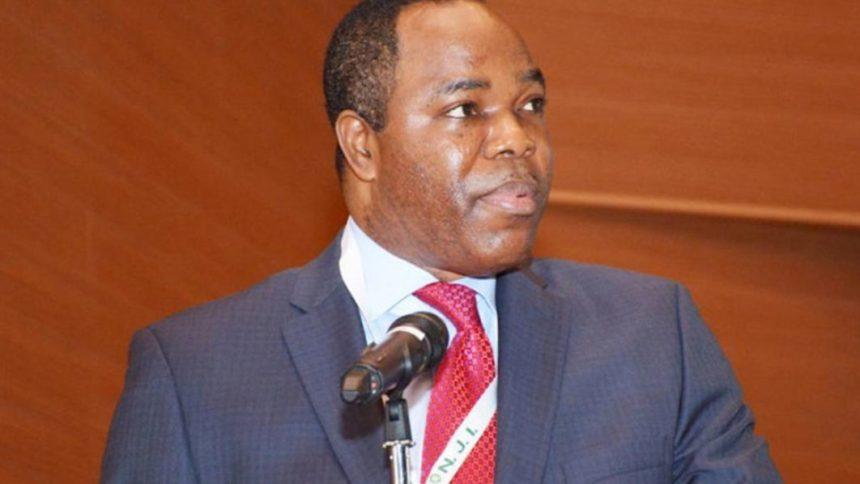
Senator Aliyu Sabi Abdullahi represents Niger North Senatorial District and chairman, Senate Committee on Media and Public Affairs. In this interview with OWEDE AGBAJILEKE, the All Progressives Congress (APC) lawmaker speaks on why he is sponsoring the Independent National Commission for Hate Speeches Bill. Excerpts:
What is the essence of the bill prohibiting hate speeches?
The essence of the bill is to promote national cohesion and integration to outlaw unfair discrimination, hate speeches and provide for the establishment of Independent National Commission for the Prohibition of Hate Speeches. Definitely, Nigeria has come at a crossroads because whether we like it or not, hate speeches have assumed a dimension that must be given all the necessary attention and must not be treated with kid’s glove.
It was due to hate speech that we had the genocide in Rwanda and ethnic inferno in Kenya and Bosnia and Herzegovina. It was due to hate speech that we have a very serious inferno in Kenya after their elections some years back. So, Nigeria has been grappling with this issue which suddenly had crept into our daily lexicon and to remove ambiguity associated with hate speech, and to ensure that everything that will amount to hate speech that can rock the very foundation of our existence is tackled. That is the essence of putting this Bill together.
Kenya has a similar commission. And you know the political experience of Kenya is similar to Nigeria’s and it is also a diverse country. That commission is stepping in and doing a very good job in toning down, especially after their last volatile crisis arising from the last election where Raila Odinga was voted out. It led to loss of lives. And that is why you can see that despite the treasonable felony of Raila Odinga, the situation has remained calm. Thanks to the work of that commission.
Some have argued that the then opposition All Progressives Congress (APC) effectively deployed hate speech to remove Jonathan’s administration from office. How will you react to that?
Well, they are entitled to their own opinion. But for me, what I have seen is that hate speech abounds and everybody is guilty one way or the other because when you talk about somebody saying something negative which hits at the very nerve of a person’s sensitivity and elicits a response that turns out to be very violent and unsettling the community, that is not fair. For example, there was an inferno in Kaduna last week and it started from exchanges, words they uttered and from that altercation, even though there is a source of the crisis but the words that they uttered must have led to the level of fighting you saw where some people were killed. And definitely we cannot continue to allow that to happen.
Does this not amount to duplication since laws on defamation of character and libel already exist?
Like I will continue to say in a democracy, everybody is entitled to his opinion. And this Bill came about from a very in-depth research that I have conducted personally. Arising from my worry over the spate of things I saw happening and I stumbled upon this idea because I was concerned.
Now defamation of character will continue to be defamation of character. It does not amount to hate speech. It is to say I am lying against you about saying something. But when you say hate speech, you are talking about something that appears to be deeply injurious to the psyche. It is offensive. Defamation may just be that I allege something against you and if that thing is proven not to be correct, then I have impugned on your character. And that happens between individuals and they are able to settle it out one way or the other.
But when you say hate speech, it turns out to have more of group action. Defamation of character does not lead to mob action. And when you talk about hate speech, it usually has to do with those things that are too sensitive to us: tribe, religion, grouping and so on. And I think that is why hate speech is in a different realm than defamation of character.
To me, it does not amount to duplication because the essence of the bill is that it has a lot of efforts at conciliation between groups. And today we know there are historical accounts of groups that feel very unfriendly to each other. And so one bad word coming from a particular group to another can elicit some of these historical sentiments. For example, you look at Fulani herdsmen, some people are saying that this is a continuation of Sokoto Jihad. There is no fact there but by saying so, you are touching the nerve of so many people. It is better we have too much law dealing with a subject than to allow a gap that some people will just take and begin to decimate our people’s lives as if they don’t matter. Life matters and we must give it every seriousness it deserves.
Is the bill not another way of gagging the Press?
The bill attempts to look at issues having to do with conciliation. There must be complaint by people. Theirs is to monitor and when they find people making statements, they engage them and advise. The Bill is not focusing on the punitive aspect because there are other laws that take care of punitive aspect. But this is to make sure that we have a body that deals with conciliation. Look at the beginning (of the bill) where it talks about discrimination to which the act applies. It talks about ethnic discrimination, hate speech, harassment on the basis of ethnicity, offence of ethnic or racist contempt, discrimination by way of victimisation. So you can see it is specific. If you look at the functions of the commission, it is to facilitate and promote a harmonious peaceful co-existence within the people of all ethnic groups indigenous to Nigeria and more importantly to achieve this objective by ensuring the elimination of all forms of hate speeches in Nigeria, and to advise the Government of the Federal Republic of Nigeria on all aspects thereof; promote the elimination of all forms of hate speeches against any person or ethnic group indigenous to Nigeria; discourage persons, institutions, political parties and associations from advocating or promoting discrimination or discriminatory practices through the use of hate speeches; promote tolerance, understanding and acceptance of diversity in all aspects of national life and encourage full participation by all ethnic communities in social, economic, cultural and political life of other communities; promote arbitration, conciliation, mediation and similar forms of dispute resolution mechanisms in order to secure and enhance ethnic and racial harmony and peace.
So it is not as if they will wait. But when they see you coming up with what the legislation had tagged as hate speech, the commission will approach you and begin to engage you do that you can tone down. Because you can achieve your objectives without necessarily being too hot with your words.
Will this bill not elicit the same outcry that greeted the anti-social media bill?
Nobody has mentioned social media here.
Does this mean the bill does not apply to social media platforms?
Like I said, the idea of what these people (in the commission) will do is when you are spreading hate speech, definitely they will engage you. They don’t have the power to stop you but their own is to engage so that as you come out to speak, they want you to be responsible enough to know that this is capable of leading the country on a path that nobody will ever want. After all, it is only when there is a country that you can claim to be a blogger except if you want to be a blogger feeding on the blood of other people. I don’t think anybody will want to be a blogger in that manner.
So, it takes a sane society for you to operate sanely. Even the free speech you talk about, it takes a society that exists for you to say so. If it is a jungle where there is no law and order, can you go there and say you are speaking freely? You can’t. So, I don’t think the focus is on that. The focus is to look at people either group, or individuals or institutions taking actions that are capable of leading us to path of war. The idea is not to gag anybody.
What if the person continues despite engagement by the commission?
They have remediation process and if at the end of the day, somebody is trying to appear offensive to government and you know it is capable of leading the country on a path of war, definitely the appropriate authority will have no option but to take those steps. But I don’t think the idea of this commission is to tell you what not to do. It is to advise, engage, dialogue and come to a reasonable and sound conclusion that we need to save our country. That is a responsible way to go because it means we are being proactive. We don’t have to wait until the damage is done before we realise that you should be engaged.

Join BusinessDay whatsapp Channel, to stay up to date
Open In Whatsapp