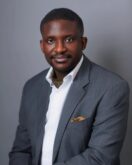
A Professor of International Relations at the Obafemi Awolowo University (OAU), Ile-Ife in Osun State, Williams Alade Fawole, has said Nigeria needed to be negotiated along the lines that promote unity, equity and justice for the benefit of its diverse people, not for the purpose of break-up.
While saying that it is better for all Nigerians to hang together so that none will hang separately said the hotbeds of sub-national agitations for break-up of Nigeria have necessitated the need for negotiation of the country’s existence.
Delivering a paper entitled: Understanding Nigerian Federalism: Origin, Trajectory, Dynamics and Travails, he presented at a media workshop organised by the Development Agenda for Western Nigeria (DAWN) Commission in Ibadan said restructuring of the country is not the sole panacea to the country’s many ills stressing that there are other ills such as failed state institutions, collapsed infrastructure, massive youth unemployment, harsh economic recession, pervasive insecurity across the land exemplified by the Boko Haram insurrection, unchecked armed robbery, relentless kidnappings and ritual murders, etc to be tackled.
He noted that ethnic hurt needed also to be assuaged, rather than ignored.
Fawole, who was the guest speaker at the programme, stated: “It is not for nothing that different parts of Nigeria are on the boil, as hotbeds of sub-national agitations, and there is no point pretending that all is well with the country.”
The don noted that the existence of the United Kingdom of Great Britain and Northern Ireland, which has existed for about 400 years as a single country, came up for negotiation recently through a referendum by Scotland, adding that Canada, another former British colony, has separatist agitations, whilst Spain is currently “grappling with Basque and Catalonian nationalism. In what ways is Nigeria, another multinational conglomerate state, different form these other countries?
“It is ludicrous if not utterly dangerous for the ruling elite to pretend that the current agitations for Biafra, Niger Delta Republic and similar centrifugal manifestations are mere inconveniences that will go away if we ignore them long enough, for they will not go away unless and until they are addressed.
“The first noble step is to change the archaic and obsolete thinking of Nigerian leaders, who want to equate restructuring with break-up of the country. It is without dispute that after nearly six decades of independence, various cracks have emerged in the fabric and political architecture of the country that call for urgent, comprehensive, holistic, honest and dispassionate reappraisal of the terms and principles of peaceful cohabitation for the sake of its corporate survival.
“This is simply the restructuring that is being advocated, not a negotiation of its break up. We must endeavour to strengthen the glue that holds Nigeria together, rather. Then let things fall apart because of the insensitivity and selfishness of the ruling elite.
“However, let no one be deceived to imagine that restructuring is the sole panacea to the country’s many ills, such as failed state institutions, collapsed infrastructure, massive youth unemployment, harsh economic recession, pervasive insecurity across the land exemplified by the Boko Haram insurrection, unchecked armed robbery, relentless kidnappings, ritual murders and so on, but it is an inevitable part of the solutions we must embrace at this historical conjecture. Ethnic hurt need to be assuaged, rather than ignored. Nigeria is much better a single country than if it is divided. All the agitations for and threats of secession are unhelpful
Fawole stressed the importance of reaching some elite consensus on the need to rescue Nigeria from “its current precarious perch on the edge of a precipice. It is not too late to prevent Nigeria from going the ‘Road to Kigali’ if the elite would stop following or romanticising ethnic exceptionalism, and curb their incendiary rhetoric so that our country can be saved from catastrophic implosion in an orgy of violence.
“We must not make the same mistakes that led to the pogrom of 1966, the Biafran secession and the attendant blood fest called the Nigerian civil war, the ‘June 12’ and its aftermath.”
“We must endeavour to strengthen the glue that holds Nigeria together rather than let things fall apart because of the insensitivity and selfishness of the ruling elites.
Finally, it is important to stress the imperative of reaching some elite consensus on the need to rescue Nigeria from its current precarious perch on the edge of a precipice”
While saying, “It is not too late to prevent Nigeria from going the “Road to Kigali” (apologies to foremost scholar, Professor Adebayo Williams) if the elites would stop following or romanticising ethnic exceptionalism, and curb their incendiary rhetoric so that our country can be saved from catastrophic implosion in an orgy of violence. We must not make the same mistakes that led to the pogrom of 1966, the Biafran secession and the attendant blood fest called the Nigerian civil war, the “June 12” imbroglio and its aftermath”.
The commission’s Acting Director General, Seye Oyeleye, said the programme was organised to enlighten journalists on the calls for restructuring of Nigeria, devolution of power, regional integration, and the debate on Nigerian federalism so that they would be better informed to play their role of agenda setting from informed perspectives.
Akinremi Feyisipo, Ibadan

Join BusinessDay whatsapp Channel, to stay up to date
Open In Whatsapp