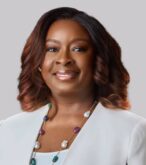
Deremi Atanda, executive director at SystemSpecs, Nigerian indigenous software giants, has said that the company is introducing services that will leverage technology to accelerate the rate of financial inclusion and aid the growth of Nigeria’s economy.
Financial inclusion is the quest to make financial services accessible at affordable costs to every individual regardless of net worth, and business irrespective of the size, with the aim of addressing and proffering solutions to the restrictions that keep people from participating in the financial sector.
According to the World Bank, financial inclusion is a key enabler to reducing poverty and boosting prosperity. Close to 2 billion people do not use formal financial services and more than 50 per cent of adults in the poorest households are unbanked, the Bank said on its website.
| NIGERIA’S FINANCIAL INCLUSION DATA FOR AGE 15+ AS AT 2015 (%) | |||
| Nigeria | Sub-Saharan Africa |
Lower Middle Income | |
| Account | |||
| All adults | 44.4 | 34.2 | 42.7 |
| Women | 34 | 29.9 | 36.3 |
| Adults belonging to the poorest 40% | 34.4 | 24.6 | 33.2 |
| Young adults ages 15–24) | 35.7 | 25.9 | 34.7 |
| Adults living in rural areas | 39.4 | 29.2 | 40 |
| Financial Institution Account | |||
| All adults | 44.2 | 28.9 | 41.8 |
| All adults, 2011 | 29.7 | 23.9 | 28.7 |
| Mobile Account | |||
| All adults | 2.3 | 11.5 | 2.5 |
| Access to Financial Institution Account | |||
| Has debit card | 35.6 | 17.9 | 21.2 |
| Has debit card, 2011 | 18.6 | 15 | 10.1 |
| ATM is the main mode of withdrawal (% with an account) | 70.5 | 53.8 | 42.4 |
| ATM is the main mode of withdrawal (% with an account), 2011 | 40.8 | 51.7 | 28.1 |
| Use of Account in the Past Year | |||
| Used an account to receive wages | 8.8 | 7.3 | 5.6 |
| Used an account to receive government transfers | 3 | 3.8 | 3.3 |
| Used a financial institution account to pay utility bills | 5.2 | 2.8 | 3.1 |
| Other Digital Payments in the Past Year | |||
| Used a debit card to make payments | 14.1 | 8.7 | 9.6 |
| Used a credit card to make payments | 1.9 | 1.9 | 2.8 |
| Used the Internet to pay bills or make purchases | 3.3 | 2.4 | 2.6 |
| Savings in the Past Year | |||
| Saved at a financial institution | 27.1 | 15.9 | 14.8 |
| Saved at a financial institution, 2011 | 23.6 | 14.3 | 11.1 |
| Saved using a savings club or person outside the family | 23 | 23.9 | 12.4 |
| Saved any money | 69 | 59.6 | 45.6 |
| Saved for old age | 16.3 | 9.8 | 12.6 |
| Saved for a farm or business | 31.7 | 22.7 | 11.8 |
| Saved for education or school fees | 32.5 | 22.9 | 20 |
Source: World Bank
The BusinessDay Fintech Summit, which theme was ‘Harnessing the power of disruptive innovation in FINTECH’, assembled key stakeholders in Nigeria’s Fintech ecosystem to discuss how to exploit the opportunities and overcome the obstacles inherent in the adoption of Fintech in the country.
Regulators, bankers, Fintech heavyweights and thought leaders spoke on the imperatives for collaboration in the Fintech ecosystem, the need for building knowledge and infrastructure capacity within the sector, and the impact of regulation on fintech adoption.
Atanda said that information obtained from the national identity card scheme could be used to develop products that will help bring other financial services to increased number of people, beyond just payments.
“So those are the things we think we are doing to encourage financial inclusion and deepen it within the national payment vision timelines,” he said.
With little access to banks, especially in rural in Nigeria, under-banked users mostly carry out transactions in cash or checks making them vulnerable to theft and street frauds.
Access to bank locations for conducting transactions like cash deposit, check cashing, money order, and funds transfer usually come at high costs in terms of banking fees.
Even some of the services that are being deployed to bring more people into the financial system presently come at a high cost to the poor people, and will eventually be counterproductive to the goal of financial inclusion.
This is not sustainable because if the cost of providing the services is high, then we cannot succeed in our efforts to bring financial services to the poor, said Deji Olowe, executive director, SystemSpecs.
“There is a correlation between networth and financial inclusion,” Olowe told BusinessDay. “Cost of providing services to the financial excluded is presently high. How do you expect a housemaid earning about N5,000 a month to pay N100 as transaction charge?”
Olowe said that the solution is to bring the financially excluded technology that will ensure that they are integrated into the financial system without digging a hole on the floor of their financial wellbeing, an initiative that SystemSpecs in presently pursuing using the platform of Fintech.

Join BusinessDay whatsapp Channel, to stay up to date
Open In Whatsapp